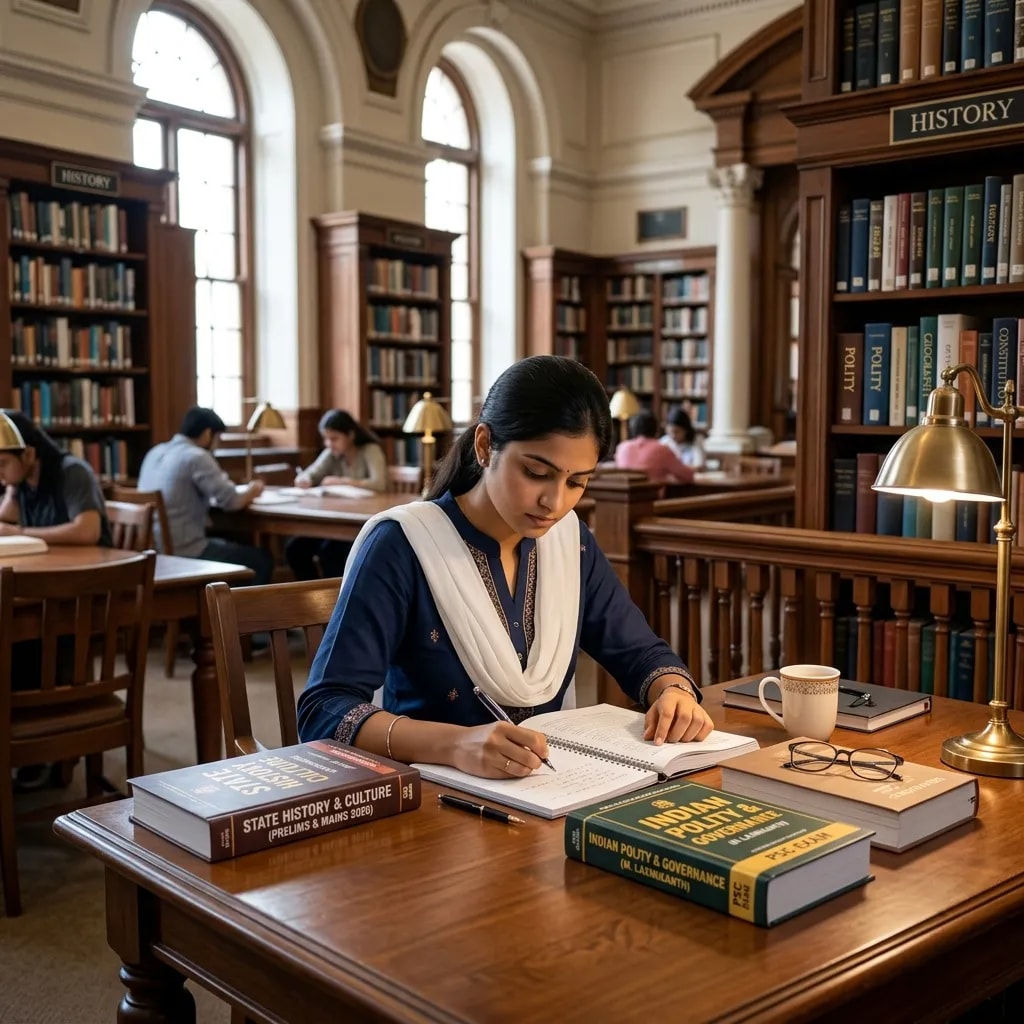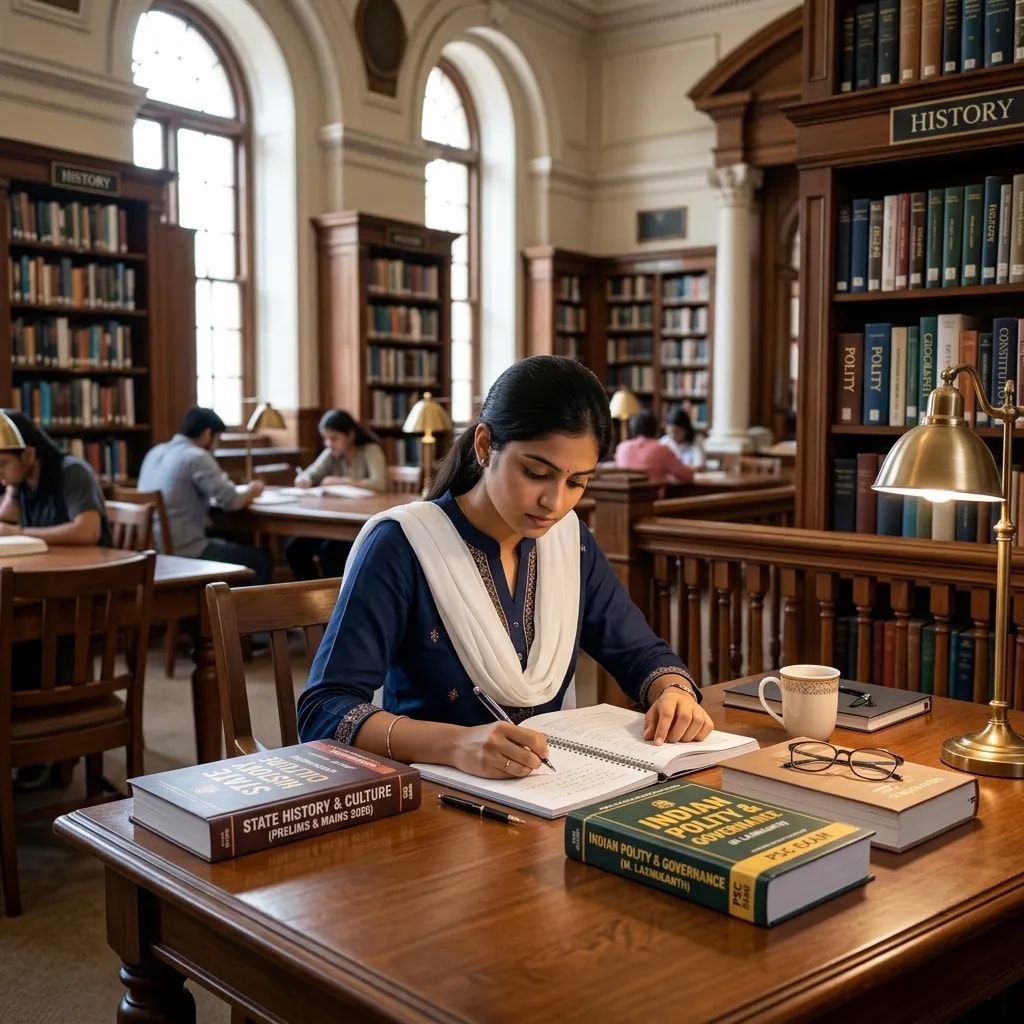
Introduction: Your Journey to Becoming an IAS/IPS Officer Starts Here
The UPSC Civil Services Examination (CSE) 2026 is India's most prestigious and challenging competitive exam, offering an opportunity to serve the nation as an IAS (Indian Administrative Service), IPS (Indian Police Service), IFS (Indian Foreign Service), and 21 other elite civil services. With over 10 lakh aspirants competing for approximately 1,000 vacancies, cracking UPSC requires not just hard work, but smart preparation, unwavering dedication, and the right strategy.
Quick Navigation: Exam Pattern | Syllabus | Preparation Strategy | Optional Subject | Interview Tips | FAQs
This comprehensive UPSC CSE 2026 preparation guide is designed to help you navigate through every stage of the examination - from understanding the basics to mastering advanced concepts, from choosing the right optional subject to acing the personality test. Whether you're a first-time aspirant or attempting again, this guide provides actionable insights based on strategies used by successful IAS/IPS toppers.
Why UPSC Civil Services?
- Prestige & Power: Highest administrative authority in the country
- Nation Building: Direct impact on policy-making and governance
- Job Security: Permanent government position with lifetime benefits
- Attractive Salary: ?56,100 to ?2,50,000 per month (7th Pay Commission)
- Perks & Benefits: Official residence, vehicle, staff, medical facilities
- Career Growth: Regular promotions up to Cabinet Secretary level
- Social Impact: Opportunity to transform lives of millions
- Respect & Recognition: Most respected position in Indian society
UPSC CSE 2026 at a Glance
| Parameter | Details |
|---|---|
| Conducting Body | Union Public Service Commission (UPSC) |
| Exam Name | Civil Services Examination (CSE) |
| Frequency | Once a year |
| Stages | 3 (Prelims, Mains, Interview) |
| Total Vacancies | ~1,000 (varies yearly) |
| Services Offered | 24 (IAS, IPS, IFS, IRS, etc.) |
| Age Limit | 21-32 years (relaxation for reserved categories) |
| Attempts Allowed | General: 6, OBC: 9, SC/ST: Unlimited |
| Exam Mode | Prelims: Offline (OMR), Mains: Offline (Descriptive), Interview: Personal |
| Official Website | upsc.gov.in |
Table of Contents
Exam Overview
Preparation Strategy
- 12-Month Preparation Plan
- Prelims Strategy
- Mains Strategy
- Optional Subject Selection
- Current Affairs Mastery
Resources & Tips
- Best Books & Study Material
- NCERT Strategy
- Answer Writing Practice
- Mock Test Strategy
- Interview Preparation
Success Mantras
Estimated Reading Time: 50 minutes | Last Updated: January 29, 2026
UPSC CSE 2026 Important Dates
Official Notification: UPSC releases the official notification in February every year. Mark your calendar and stay updated!
| Event | Expected Date | Status |
|---|---|---|
| Official Notification Release | February 12, 2026 | Awaited |
| Online Application Start | February 12, 2026 | Awaited |
| Last Date to Apply | March 5, 2026 (6:00 PM) | Awaited |
| Last Date for Fee Payment | March 5, 2026 (6:00 PM) | Awaited |
| Application Withdrawal Window | March 12-18, 2026 | Awaited |
| Prelims Admit Card Release | May 15, 2026 (Tentative) | Awaited |
| Prelims Exam Date | May 31, 2026 (Sunday) | Awaited |
| Prelims Answer Key Release | June 5, 2026 | Awaited |
| Prelims Result Declaration | July 10, 2026 | Awaited |
| Mains Admit Card Release | August 20, 2026 | Awaited |
| Mains Exam Dates | September 20-29, 2026 | Awaited |
| Mains Result Declaration | January 15, 2027 | Awaited |
| Interview/Personality Test | February-April 2027 | Awaited |
| Final Result Declaration | May 2027 | Awaited |
Important Notes:
- Dates are tentative based on previous year patterns
- Official dates will be announced on UPSC Official Website
- Set reminders for application deadlines
- Keep all documents ready before applying
Stay Updated:
- UPSC Official Website - Primary source
- UPSC Twitter - Quick updates
- Subscribe to our notifications - Get instant alerts
UPSC CSE 2026 Eligibility Criteria
Educational Qualification
Minimum Requirement:
- Bachelor's Degree from a recognized university (any stream)
- Final year students can also apply (degree must be completed before interview)
- Percentage/CGPA: No minimum marks required
- Distance/Open University: Degrees from UGC-recognized universities accepted
Special Cases:
- Professional degrees (MBBS, Engineering, CA, etc.) are valid
- Candidates with equivalent qualifications from foreign universities (approved by AIU) can apply
- Those who have appeared for final year exams but results are awaited can apply
Age Limit (As on August 1, 2026)
| Category | Minimum Age | Maximum Age | Attempts Allowed |
|---|---|---|---|
| General | 21 years | 32 years | 6 attempts |
| OBC | 21 years | 35 years | 9 attempts |
| SC/ST | 21 years | 37 years | Unlimited |
| PwD (General) | 21 years | 42 years | 9 attempts |
| PwD (OBC) | 21 years | 45 years | Unlimited |
| PwD (SC/ST) | 21 years | 47 years | Unlimited |
| Ex-Servicemen | 21 years | 37 years | Relaxation applicable |
| Defence Personnel (Disabled) | 21 years | 37 years | Relaxation applicable |
Age Calculation:
- If you are born on August 2, 1994, you are eligible (32 years on August 1, 2026)
- If you are born on August 1, 1994, you are eligible (exactly 32 years)
- If you are born on July 31, 1994, you are NOT eligible (32 years + 1 day)
Nationality Requirements
Candidates must be:
- A citizen of India, OR
- A subject of Nepal, OR
- A subject of Bhutan, OR
- A Tibetan refugee (came to India before January 1, 1962), OR
- A person of Indian origin migrated from Pakistan, Burma, Sri Lanka, East African countries (Kenya, Uganda, Tanzania, Zambia, Malawi, Zaire, Ethiopia, Vietnam) with intention to permanently settle in India
Note: Candidates in categories (2), (3), (4), and (5) must have a certificate of eligibility issued by the Government of India.
Number of Attempts
General Category:
- Maximum 6 attempts until age of 32 years
- Example: If you're 27 years old, you have 6 attempts (until age 32)
OBC Category:
- Maximum 9 attempts until age of 35 years
- Age relaxation of 3 years
SC/ST Category:
- Unlimited attempts until age of 37 years
- Age relaxation of 5 years
Important Points:
- Appearing in Prelims counts as one attempt (even if you don't qualify)
- Withdrawal of application after Prelims does NOT count as an attempt
- Age and attempts are calculated as on August 1 of the exam year
Physical Standards (For IPS Only)
For Male Candidates:
- Height: Minimum 165 cm (157.5 cm for ST candidates)
- Chest: 84 cm (unexpanded), 89 cm (expanded) - 5 cm expansion required
- Vision: 6/6 in one eye, 6/9 in other (corrective lenses allowed)
For Female Candidates:
- Height: Minimum 150 cm (145 cm for ST candidates)
- Vision: 6/6 in one eye, 6/9 in other (corrective lenses allowed)
Note: Physical standards are only for IPS. Other services don't have such requirements.
UPSC CSE 2026 Exam Pattern
UPSC CSE is conducted in 3 stages: Prelims (Screening), Mains (Written), and Interview (Personality Test). Let's understand each stage in detail.
Stage 1: Preliminary Examination (Screening Test)
Exam Mode: Offline (OMR-based)
Duration: 2 hours per paper
Total Papers: 2 (Both compulsory)
Total Marks: 400 marks (200 + 200)
Qualifying Nature: Yes (marks NOT counted for final merit)
Negative Marking: Yes (1/3rd penalty)
Paper-I: General Studies (GS)
| Component | Details |
|---|---|
| Questions | 100 MCQs |
| Marks | 200 (2 marks each) |
| Duration | 2 hours (9:30 AM - 11:30 AM) |
| Negative Marking | -0.66 marks (1/3rd) for wrong answer |
| Language | English & Hindi (bilingual) |
Syllabus Coverage:
- Current events of national and international importance
- History of India and Indian National Movement
- Indian and World Geography (Physical, Social, Economic)
- Indian Polity and Governance
- Economic and Social Development
- Environmental Ecology, Biodiversity, Climate Change
- General Science
Paper-II: CSAT (Civil Services Aptitude Test)
| Component | Details |
|---|---|
| Questions | 80 MCQs |
| Marks | 200 (2.5 marks each) |
| Duration | 2 hours (2:30 PM - 4:30 PM) |
| Negative Marking | -0.83 marks (1/3rd) for wrong answer |
| Qualifying Marks | 33% (66.66 marks out of 200) |
| Language | English only |
Syllabus Coverage:
- Comprehension (Reading passages)
- Interpersonal skills including communication skills
- Logical reasoning and analytical ability
- Decision-making and problem-solving
- General mental ability
- Basic numeracy (Class X level)
- Data interpretation (charts, graphs, tables)
Important Points:
- Paper-II is qualifying only (minimum 33% required)
- Marks of Paper-II NOT counted for Prelims merit
- Only Paper-I marks determine Prelims rank
- Both papers are compulsory to attend
- Candidates must qualify Paper-II to be eligible for Mains
Prelims Cut-off Trends (General Category):
| Year | Paper-I Cut-off | Qualified Candidates |
|---|---|---|
| 2024 | 88.66 marks | ~15,000 |
| 2023 | 87.34 marks | ~14,624 |
| 2022 | 88.00 marks | ~14,000 |
| 2021 | 87.66 marks | ~13,500 |
Stage 2: Main Examination (Written Test)
Exam Mode: Offline (Descriptive - Pen & Paper)
Duration: 3 hours per paper
Total Papers: 9 (7 counted for merit)
Total Marks: 1,750 marks
Qualifying Nature: Paper A & B qualifying, rest counted for merit
Language: English or Hindi (candidate's choice, except language papers)
Paper-wise Breakdown
| Paper | Subject | Marks | Duration | Nature |
|---|---|---|---|---|
| Paper A | Indian Language (from 8th Schedule) | 300 | 3 hours | Qualifying (25% required) |
| Paper B | English | 300 | 3 hours | Qualifying (25% required) |
| Paper I | Essay | 250 | 3 hours | Merit |
| Paper II | General Studies I | 250 | 3 hours | Merit |
| Paper III | General Studies II | 250 | 3 hours | Merit |
| Paper IV | General Studies III | 250 | 3 hours | Merit |
| Paper V | General Studies IV (Ethics) | 250 | 3 hours | Merit |
| Paper VI | Optional Subject - Paper 1 | 250 | 3 hours | Merit |
| Paper VII | Optional Subject - Paper 2 | 250 | 3 hours | Merit |
Total Merit Marks: 1,750 (Essay 250 + GS 1000 + Optional 500)
Detailed Syllabus of Each Paper
Paper A: Indian Language
- Comprehension of given passages
- Precis writing
- Usage and vocabulary
- Short essays
- Translation from English to Indian language and vice-versa
Paper B: English
- Comprehension
- Precis writing
- Usage and vocabulary
- Short essays
- Translation from Indian language to English and vice-versa
Paper I: Essay
- Candidates may be required to write essays on multiple topics
- Choice of topics from diverse areas
- Word limit: 1000-1200 words per essay
- Evaluation based on: Content, organization, language proficiency, and presentation
Paper II: General Studies I (Indian Heritage, History, Society)
- Indian culture, ancient to modern times
- Modern Indian history (mid-18th century to present)
- Freedom struggle and its various stages
- Post-independence consolidation and reorganization
- World history (events, forms of government, industrialization, colonization)
- Indian society: diversity, role of women, population issues
- Social empowerment, communalism, regionalism, secularism
Paper III: General Studies II (Governance, Constitution, Polity, Social Justice, International Relations)
- Indian Constitution: historical underpinnings, evolution, features, amendments
- Functions and responsibilities of Union and States
- Federal structure, devolution of powers, local bodies
- Separation of powers, dispute redressal mechanisms
- Parliament and State Legislatures, Executive and Judiciary
- Government policies and interventions
- Development processes and development industry
- Role of civil services in democracy
- India and its neighborhood relations
- Bilateral, regional, and global groupings
- Effect of policies and politics of developed and developing countries on India
Paper IV: General Studies III (Technology, Economic Development, Bio-diversity, Security, Disaster Management)
- Indian Economy and planning, resource mobilization, growth, development
- Inclusive growth and issues arising from it
- Government budgeting, land reforms, infrastructure, investment models
- Major crops, irrigation systems, agricultural marketing, e-technology
- Food processing and related industries
- Technology missions, animal-rearing economics
- Science and Technology developments and applications
- Achievements of Indians in science & technology, indigenization of technology
- Awareness in IT, Space, Computers, robotics, nano-technology, bio-technology
- Environmental security and issues, conservation, pollution
- Disaster and disaster management
- Linkages between development and extremism
- Role of external state and non-state actors in internal security
- Challenges to internal security, money-laundering, cyber-crime
- Security forces and agencies and their mandate
Paper V: General Studies IV (Ethics, Integrity, and Aptitude)
- Ethics and Human Interface
- Attitude: content, structure, function, influence on thought and behavior
- Moral and political attitudes, social influence and persuasion
- Aptitude and foundational values for Civil Service
- Integrity, probity in governance, ethical concerns and dilemmas
- Conscience as source of ethical guidance, laws, rules, regulations
- Accountability and ethical governance, ethical issues in international relations
- Case studies on ethics (real-life scenarios)
Paper VI & VII: Optional Subject
- Choose ONE optional subject from 48 available subjects
- Each optional has 2 papers of 250 marks each
- Total 500 marks from optional subject
- Detailed syllabus available on UPSC website
Stage 3: Personality Test (Interview)
Mode: Face-to-face interview with UPSC Board
Duration: 30-45 minutes (varies)
Marks: 275 marks
Board Members: 4-5 members including Chairman
Nature: Personality assessment, not knowledge test
What is Evaluated:
- Mental alertness and critical powers of assimilation
- Clear and logical exposition
- Balance of judgment and variety of interests
- Ability for social cohesion and leadership
- Intellectual and moral integrity
Interview Process:
- Entry: Candidate enters the room, greets the board
- Introduction: Brief self-introduction
- DAF-based Questions: Based on Detailed Application Form
- General Awareness: Current affairs, hobbies, interests
- Situation-based Questions: Ethical dilemmas, problem-solving
- Optional Subject: Few questions on optional (if board wishes)
- Conclusion: Candidate thanks the board and exits
Final Merit Calculation:
Final Score = Mains Score (1750) + Interview Score (275)
Total = 2025 marks
Important: Prelims marks are NOT counted in final merit. Only Mains + Interview marks determine your final rank.
12-Month Preparation Strategy for UPSC CSE 2026
Success Formula: Foundation (3 months) + Advanced Preparation (4 months) + Revision (3 months) + Mock Tests (2 months)
Month 1-3: Foundation Building Phase
Goal: Complete NCERT books (Class 6-12) and build strong basics
Daily Schedule (8-10 hours):
- Morning (6:00 AM - 9:00 AM): NCERT reading (History/Polity/Geography)
- Mid-Morning (9:30 AM - 12:30 PM): Note-making + Revision
- Afternoon (2:00 PM - 4:00 PM): Current Affairs (Newspaper + Magazine)
- Evening (5:00 PM - 8:00 PM): NCERT Science/Economy + Optional subject introduction
- Night (9:00 PM - 10:00 PM): Revision + Daily quiz
Books to Complete:
- History: NCERT Class 6-12 (Ancient, Medieval, Modern)
- Geography: NCERT Class 6-12 (Physical, Human, Indian)
- Polity: NCERT Class 11-12 + Laxmikanth (Introduction to Constitution)
- Economy: NCERT Class 9-12
- Science: NCERT Class 6-10 (Physics, Chemistry, Biology)
- Environment: NCERT Class 11-12 (Biology)
Weekly Tasks:
- Complete 2-3 NCERT books
- Make concise notes (max 50 pages per subject)
- Solve 100 previous year Prelims questions
- Read newspaper daily (The Hindu/Indian Express)
- Watch 2-3 educational videos on complex topics
Monthly Targets:
- Month 1: History + Geography NCERTs
- Month 2: Polity + Economy NCERTs
- Month 3: Science + Environment NCERTs + Optional subject basics
Month 4-7: Advanced Preparation Phase
Goal: Complete standard books, strengthen optional subject, start answer writing
Daily Schedule (10-12 hours):
- Morning (6:00 AM - 9:00 AM): Optional Subject (Theory + Practice)
- Mid-Morning (9:30 AM - 12:30 PM): GS Paper-wise preparation
- Afternoon (2:00 PM - 4:00 PM): Current Affairs + Magazine reading
- Evening (4:30 PM - 7:30 PM): Answer writing practice (2-3 answers daily)
- Night (8:00 PM - 10:00 PM): Revision + Previous year analysis
Books to Complete:
For Prelims:
- History: Spectrum Modern India, India's Struggle for Independence (Bipan Chandra)
- Geography: Certificate Physical and Human Geography (G.C. Leong), Oxford School Atlas
- Polity: Indian Polity by M. Laxmikanth (complete)
- Economy: Indian Economy by Ramesh Singh
- Environment: Environment by Shankar IAS
- Science & Tech: Science & Technology by Ravi Agrahari
For Mains:
- GS Paper 1: India's Ancient Past (R.S. Sharma), Medieval India (Satish Chandra), Modern India (Bipan Chandra)
- GS Paper 2: 2nd ARC Reports, Governance in India (M. Laxmikanth)
- GS Paper 3: Economic Survey, India Year Book (relevant chapters)
- GS Paper 4: Ethics by Lexicon Publications
- Optional: Standard books for your chosen optional subject
Weekly Tasks:
- Complete 1 standard book
- Write 10-15 mains answers (250 words)
- Solve 200 Prelims MCQs
- Revise previous month's notes
- Attend 1 test series (if enrolled)
Monthly Targets:
- Month 4: Complete Polity + Economy standard books
- Month 5: Complete History + Geography standard books
- Month 6: Complete Science + Environment + Ethics
- Month 7: Complete Optional Subject (Paper 1 & 2)
Month 8-10: Intensive Revision Phase
Goal: Revise entire syllabus 2-3 times, strengthen weak areas
Daily Schedule (10-12 hours):
- Morning (6:00 AM - 9:00 AM): Quick revision (Notes + Mind maps)
- Mid-Morning (9:30 AM - 12:30 PM): Previous year papers (topic-wise)
- Afternoon (2:00 PM - 4:00 PM): Current Affairs compilation (6 months)
- Evening (4:30 PM - 7:30 PM): Answer writing + Evaluation
- Night (8:00 PM - 10:00 PM): Optional subject revision
Revision Strategy:
- 1st Revision (Month 8): Complete syllabus (detailed)
- 2nd Revision (Month 9): Notes + Important topics (moderate speed)
- 3rd Revision (Month 10): Quick revision (formulas, facts, dates)
Weekly Tasks:
- Revise 2 subjects completely
- Solve 5 previous year papers (full-length)
- Write 20 mains answers
- Update current affairs notes
- Make formula sheets for quick revision
Focus Areas:
- Weak topics identified in mock tests
- High-weightage topics (based on trend analysis)
- Current affairs integration with static syllabus
- Answer writing speed and quality
Month 11-12: Mock Test & Final Preparation Phase
Goal: Attempt maximum mock tests, fine-tune exam strategy
Daily Schedule (12-14 hours):
- Morning (9:30 AM - 1:30 PM): Full-length Prelims mock test (4 hours)
- Afternoon (2:00 PM - 5:00 PM): Mock test analysis + Weak area practice
- Evening (5:30 PM - 8:30 PM): Mains answer writing (3 hours)
- Night (9:00 PM - 11:00 PM): Quick revision + Current affairs
Mock Test Strategy:
- Month 11: 15-20 Prelims mock tests + 10 Mains tests
- Month 12: 20-25 Prelims mock tests + 15 Mains tests
- Simulate exact exam conditions
- Analyze every question (right and wrong)
- Maintain error log
- Track your progress
Weekly Tasks:
- Attempt 4-5 full-length Prelims tests
- Write 2-3 full-length Mains papers
- Revise entire syllabus once
- Update current affairs (last 12 months)
- Practice OMR filling
Last 15 Days Before Prelims:
- Reduce study hours (8-9 hours)
- Focus on revision only (no new topics)
- Solve previous year papers
- Revise current affairs thoroughly
- Practice OMR filling speed
- Stay healthy and confident
Prelims Preparation Strategy
Paper-I (General Studies) Strategy
High-Weightage Topics (Focus 70% time here):
-
Current Affairs (25-30 questions)
- National events, government schemes, policies
- International relations, summits, agreements
- Awards, appointments, sports
- Science & technology developments
- Economic developments, budget highlights
-
History (18-20 questions)
- Ancient India: Indus Valley, Vedic period, Mauryas, Guptas
- Medieval India: Delhi Sultanate, Mughals, Regional kingdoms
- Modern India: British rule, Freedom struggle, Social reforms
- Art & Culture: Architecture, paintings, music, dance
-
Geography (15-18 questions)
- World Geography: Continents, oceans, climate, resources
- Indian Geography: Physical features, rivers, climate, agriculture
- Economic Geography: Industries, minerals, energy resources
- Maps and locations (very important)
-
Polity (12-15 questions)
- Constitutional provisions, amendments
- Fundamental Rights, DPSP, Fundamental Duties
- Union and State governments
- Parliament, Judiciary, Executive
- Local governance, Constitutional bodies
-
Economy (12-15 questions)
- Basic economic concepts, national income
- Budget, taxation, banking, inflation
- Economic reforms, government schemes
- Agriculture, industry, services sector
- International trade, organizations
-
Environment & Ecology (10-12 questions)
- Biodiversity, ecosystems, conservation
- Climate change, global warming
- Environmental laws and conventions
- Pollution, waste management
- Renewable energy, sustainable development
-
Science & Technology (8-10 questions)
- Physics: Motion, energy, light, sound, electricity
- Chemistry: Elements, compounds, acids, bases
- Biology: Cell, human body, diseases, genetics
- Recent developments in science & technology
Preparation Tips:
- Make concise notes (max 200 pages for entire GS)
- Focus on NCERT first, then standard books
- Integrate current affairs with static topics
- Practice MCQs daily (minimum 50 questions)
- Revise notes at least 5 times before exam
- Use mnemonics for facts, dates, lists
- Practice map-based questions regularly
Paper-II (CSAT) Strategy
Good News: You only need 33% (66.66 marks out of 200) to qualify!
Topic-wise Strategy:
-
Comprehension (30-35 questions, 75-87.5 marks)
- Weightage: Highest (40-45% of paper)
- Strategy: Read passage carefully, eliminate wrong options
- Practice: Solve 2-3 passages daily
- Time: 2-3 minutes per question
-
Logical Reasoning (15-20 questions, 37.5-50 marks)
- Topics: Syllogism, blood relations, coding-decoding, series
- Strategy: Learn basic patterns and shortcuts
- Practice: 20 questions daily
- Time: 1-2 minutes per question
-
Data Interpretation (10-15 questions, 25-37.5 marks)
- Topics: Tables, bar graphs, pie charts, line graphs
- Strategy: Quick calculation, approximation
- Practice: 10 questions daily
- Time: 2-3 minutes per question
-
Basic Numeracy (10-15 questions, 25-37.5 marks)
- Topics: Percentage, ratio, average, profit-loss, time-work
- Strategy: Learn formulas and shortcuts
- Practice: 15 questions daily
- Time: 1-2 minutes per question
-
Decision Making (5-10 questions, 12.5-25 marks)
- Topics: Situation-based questions, problem-solving
- Strategy: Use common sense and logic
- Practice: 5 questions daily
- Time: 2-3 minutes per question
CSAT Preparation Tips:
- Target: 70-75 marks (safe score, well above qualifying)
- Attempt: 50-55 questions (out of 80)
- Accuracy: Maintain 70%+ accuracy
- Time Management: 1.5 minutes per question average
- Practice: Solve 1 full paper daily (last 2 months)
- Books: CSAT Manual by TMH, Previous year papers
- Skip: Very lengthy or confusing questions
- Focus: Comprehension (easiest to score)
Common Mistakes to Avoid:
- Don't ignore CSAT thinking it's just qualifying
- Don't attempt all 80 questions (quality over quantity)
- Don't spend too much time on one question
- Don't leave easy questions for later
- Don't panic if paper seems tough (it's same for everyone)
Mains Preparation Strategy
Essay Paper Strategy (250 Marks)
Essay Structure (1000-1200 words):
-
Introduction (150-200 words)
- Hook: Start with a quote, fact, or question
- Context: Background of the topic
- Thesis statement: Your main argument
-
Body (700-800 words)
- Paragraph 1: First dimension/argument
- Paragraph 2: Second dimension/counter-argument
- Paragraph 3: Third dimension/examples
- Paragraph 4: Fourth dimension/case studies
- Use subheadings for clarity
- Include facts, data, quotes, examples
-
Conclusion (150-200 words)
- Summarize main points
- Provide way forward/solutions
- End with impactful statement
Essay Topics (Common Themes):
- Philosophy & Ethics
- Social issues & reforms
- Science & Technology
- Economy & Development
- Governance & Democracy
- Environment & Sustainability
- International relations
- Culture & Heritage
Preparation Tips:
- Write 2-3 essays per week
- Read quality newspapers (editorials)
- Maintain quote bank (50-100 quotes)
- Practice diverse topics
- Get essays evaluated
- Time yourself (90 minutes per essay)
- Develop your own writing style
Evaluation Criteria:
- Content quality (40%)
- Organization & structure (20%)
- Language & expression (20%)
- Presentation & handwriting (10%)
- Originality & creativity (10%)
GS Mains Answer Writing Strategy
Answer Structure (10/15/20 marks):
For 10 Marks (150 words):
- Introduction (2 lines)
- Body (3-4 points with explanation)
- Conclusion (1-2 lines)
- Time: 12-15 minutes
For 15 Marks (250 words):
- Introduction (3-4 lines)
- Body (5-6 points with examples)
- Diagram/Flowchart (if applicable)
- Conclusion (2-3 lines)
- Time: 18-20 minutes
For 20 Marks (400 words):
- Introduction (5-6 lines)
- Body (7-8 points with detailed explanation)
- Case studies/Examples
- Diagram/Table (if applicable)
- Way forward/Suggestions
- Conclusion (3-4 lines)
- Time: 25-30 minutes
Answer Writing Techniques:
- Use Keywords: Underline important terms
- Use Diagrams: Flowcharts, mind maps, tables
- Use Examples: Real-life cases, government schemes
- Use Data: Statistics, facts, figures
- Use Quotes: Relevant quotes from leaders, thinkers
- Use Headings: Break answer into sections
- Use Bullet Points: For listing multiple points
- Use Conclusion: Always end with way forward
Common Mistakes to Avoid:
- Writing too much or too little
- Poor handwriting and presentation
- No diagrams or flowcharts
- Generic answers without examples
- Not addressing the question directly
- Ignoring word limit
- Poor time management
Optional Subject Selection Guide
Choosing the Right Optional (Most Important Decision!):
Top 10 Popular Optional Subjects (Success Rate)
| Optional Subject | Success Rate | Difficulty | Scoring Potential |
|---|---|---|---|
| Geography | High | Moderate | High (130-140) |
| History | High | Moderate | Moderate (120-130) |
| Public Administration | Very High | Easy | High (130-145) |
| Sociology | Very High | Easy | High (130-140) |
| Anthropology | High | Moderate | High (130-140) |
| Political Science (PSIR) | High | Moderate | Moderate (120-130) |
| Psychology | Moderate | Moderate | Moderate (115-125) |
| Philosophy | Moderate | Difficult | Moderate (115-125) |
| Economics | Moderate | Difficult | High (125-135) |
| Literature (Hindi/English) | High | Easy | High (130-140) |
Factors to Consider:
1. Interest & Background
- Choose subject you enjoy studying
- Academic background helps but not mandatory
- Passion keeps you motivated
2. Overlap with GS
- Geography: 40% overlap with GS
- History: 35% overlap with GS
- Public Administration: 50% overlap with GS
- Sociology: 30% overlap with GS
3. Availability of Resources
- Standard books available?
- Coaching available (if needed)?
- Previous year papers available?
- Online resources available?
4. Scoring Potential
- Target: 250+ out of 500 (50%+)
- Good score: 300+ out of 500 (60%+)
- Excellent score: 350+ out of 500 (70%+)
5. Time Required
- Easy optionals: 3-4 months
- Moderate optionals: 4-6 months
- Difficult optionals: 6-8 months
Recommended Optionals for Different Backgrounds:
For Engineering Students:
- Geography (best choice)
- Public Administration
- Sociology
- Psychology
For Arts/Humanities Students:
- History
- Geography
- Public Administration
- Sociology
- Political Science
- Philosophy
For Commerce Students:
- Public Administration
- Sociology
- Geography
- Economics
For Science Students:
- Geography
- Anthropology
- Psychology
- Sociology
For Medical Students:
- Anthropology
- Sociology
- Public Administration
Optional Subject Preparation Strategy:
Phase 1: Foundation (2-3 months)
- Read NCERT books (if applicable)
- Complete standard books (1st reading)
- Make detailed notes
- Understand basic concepts
Phase 2: Advanced (2-3 months)
- Complete standard books (2nd reading)
- Make concise notes
- Solve previous year questions
- Identify important topics
Phase 3: Revision (1-2 months)
- Revise notes 3-4 times
- Practice answer writing
- Solve mock tests
- Update with current examples
Time Allocation:
- Daily: 2-3 hours
- Weekly: 15-20 hours
- Total: 400-500 hours
Current Affairs Preparation
Most Important for Both Prelims & Mains!
Daily Routine (2-3 hours)
Morning (1 hour):
- Read newspaper (The Hindu or Indian Express)
- Focus on: National, International, Economy, Science & Tech
- Make brief notes (bullet points)
Evening (1 hour):
- Watch news (Rajya Sabha TV, Lok Sabha TV)
- Read PIB releases (important government announcements)
- Update current affairs notes
Night (30 minutes):
- Revise today's current affairs
- Link with static syllabus
- Solve daily current affairs quiz
Monthly Compilation
Sources:
- Magazines: Yojana, Kurukshetra, Economic & Political Weekly
- Monthly Compilations: Vision IAS, Insights IAS, IASbaba
- Government Reports: Economic Survey, Budget, India Year Book
How to Make Notes:
- Topic-wise compilation (not date-wise)
- Integrate with GS papers
- Include facts, data, government schemes
- Add diagrams, flowcharts
- Highlight important points
Important Current Affairs Topics (2025-26)
National:
- Government schemes and policies
- Constitutional amendments
- Supreme Court judgments
- Economic reforms
- Social issues and movements
International:
- India's foreign policy
- Bilateral relations
- International organizations
- Global summits and conferences
- Geopolitical developments
Economy:
- Budget 2026 highlights
- Economic Survey findings
- RBI policies
- Banking sector reforms
- Trade agreements
Science & Technology:
- Space missions (ISRO)
- Defense technology
- Digital India initiatives
- AI and emerging technologies
- Health sector developments
Environment:
- Climate change conferences
- Environmental policies
- Renewable energy
- Wildlife conservation
- Pollution control measures
Best Books for UPSC CSE 2026
For Prelims
History:
- NCERT Class 6-12 (Ancient, Medieval, Modern)
- India's Struggle for Independence - Bipan Chandra
- Spectrum Modern India - Rajiv Ahir
- Art & Culture - Nitin Singhania
Geography:
- NCERT Class 6-12
- Certificate Physical and Human Geography - G.C. Leong
- Geography of India - Majid Husain
- Oxford School Atlas
Polity:
- NCERT Class 11-12
- Indian Polity - M. Laxmikanth
- Introduction to Constitution of India - D.D. Basu
Economy:
- NCERT Class 9-12
- Indian Economy - Ramesh Singh
- Economic Survey (latest)
- Budget (latest)
Environment:
- NCERT Class 11-12 (Biology)
- Environment - Shankar IAS
Science & Technology:
- NCERT Class 6-10 (Physics, Chemistry, Biology)
- Science & Technology - Ravi Agrahari
Current Affairs:
- The Hindu (Newspaper)
- Indian Express (Newspaper)
- Yojana Magazine
- Kurukshetra Magazine
- Vision IAS Monthly Magazine
For Mains
Essay:
- 151 Essays - Disha Publications
- Mains 365 - Insights IAS
GS Paper 1:
- India's Ancient Past - R.S. Sharma
- Medieval India - Satish Chandra
- History of Modern India - Bipan Chandra
- Certificate Physical and Human Geography - G.C. Leong
- Indian Society - Ram Ahuja
GS Paper 2:
- Indian Polity - M. Laxmikanth
- Governance in India - M. Laxmikanth
- 2nd ARC Reports
- India Year Book (relevant chapters)
GS Paper 3:
- Indian Economy - Ramesh Singh
- Economic Survey
- India Year Book
- Internal Security - Ashok Kumar
- Science & Technology - Ravi Agrahari
GS Paper 4:
- Ethics, Integrity & Aptitude - Lexicon Publications
- Ethics Case Studies - Chronicle IAS
For Optional Subjects
Geography:
- Physical Geography - Savindra Singh
- Human Geography - Majid Husain
- Geography of India - Majid Husain
- Oxford School Atlas
Public Administration:
- Public Administration - M. Laxmikanth
- Administrative Thinkers - Prasad & Prasad
- Indian Administration - Avasthi & Maheshwari
Sociology:
- Sociology - IGNOU Material
- Indian Society - Ram Ahuja
- Social Problems in India - Ram Ahuja
History:
- Ancient India - R.S. Sharma
- Medieval India - Satish Chandra
- Modern India - Bipan Chandra
- World History - Arjun Dev
NCERT Books Strategy
Why NCERTs are Important:
- Foundation of UPSC syllabus (40-50% questions)
- Clear and concise content
- Authentic and reliable information
- Easy to understand language
- Covers basic concepts thoroughly
NCERT Reading Strategy
Phase 1: First Reading (Detailed)
- Read slowly and carefully
- Understand every concept
- Mark important points
- Make notes in margins
- Time: 2-3 hours per book
Phase 2: Second Reading (Moderate)
- Read faster (focus on marked portions)
- Make concise notes
- Solve exercise questions
- Time: 1-2 hours per book
Phase 3: Third Reading (Quick)
- Revise notes only
- Focus on facts, dates, names
- Quick revision before exam
- Time: 30-45 minutes per book
Subject-wise NCERT List
History (Must Read):
- Class 6: Our Pasts I
- Class 7: Our Pasts II
- Class 8: Our Pasts III (Part 1 & 2)
- Class 11: Themes in World History
- Class 12: Themes in Indian History (Part 1, 2, 3)
Geography (Must Read):
- Class 6: The Earth Our Habitat
- Class 7: Our Environment
- Class 8: Resources and Development
- Class 9: Contemporary India I
- Class 10: Contemporary India II
- Class 11: Fundamentals of Physical Geography
- Class 11: India Physical Environment
- Class 12: Fundamentals of Human Geography
- Class 12: India People and Economy
Polity (Must Read):
- Class 11: Indian Constitution at Work
- Class 12: Contemporary World Politics
Economy (Must Read):
- Class 9: Economics
- Class 10: Understanding Economic Development
- Class 11: Indian Economic Development
- Class 12: Introductory Microeconomics
- Class 12: Introductory Macroeconomics
Science (Selective Reading):
- Class 6-10: Science (Physics, Chemistry, Biology chapters)
- Focus on: Environment, Health, Technology, Space
Environment (Must Read):
- Class 11: Biology (Chapters on Ecology)
- Class 12: Biology (Chapters on Environment)
UPSC Interview Preparation
Interview Marks: 275 out of 2025 (13.5% of total)
Duration: 30-45 minutes
Board Members: 4-5 members including Chairman
What UPSC Looks For:
-
Mental Alertness
- Quick thinking and presence of mind
- Ability to understand questions correctly
- Logical reasoning
-
Critical Powers of Assimilation
- Ability to analyze information
- Connect different concepts
- Form balanced opinions
-
Clear and Logical Exposition
- Articulate thoughts clearly
- Structured communication
- Confident body language
-
Balance of Judgment
- Unbiased opinions
- Consider multiple perspectives
- Avoid extreme views
-
Variety and Depth of Interests
- Hobbies and extracurricular activities
- Awareness beyond academics
- Genuine interests
-
Ability for Social Cohesion and Leadership
- Teamwork and cooperation
- Leadership qualities
- Social awareness
-
Intellectual and Moral Integrity
- Honesty and ethics
- Value system
- Commitment to public service
Interview Preparation Strategy
Phase 1: DAF Preparation (1 month before)
- Analyze your DAF thoroughly
- Prepare for every detail mentioned
- Anticipate questions on hobbies, hometown, education
- Research about your optional subject
- Prepare your introduction (2 minutes)
Phase 2: Current Affairs (Ongoing)
- Last 6 months current affairs
- National and international issues
- Government policies and schemes
- Recent developments in your state
- Controversial topics (balanced view)
Phase 3: Mock Interviews (2-3 weeks before)
- Attend 5-10 mock interviews
- Different panels and settings
- Record and analyze your performance
- Work on body language
- Improve communication skills
Common Interview Questions
Personal Background:
- Tell us about yourself
- Why do you want to join civil services?
- What are your strengths and weaknesses?
- Tell us about your hometown/state
- What are your hobbies? (Be prepared for deep questions)
Current Affairs:
- What do you think about [recent policy/event]?
- How would you solve [current problem]?
- What is your opinion on [controversial topic]?
- Compare India's approach with other countries
Optional Subject:
- Basic concepts from your optional
- Recent developments related to optional
- Application of optional knowledge
Ethical Dilemmas:
- What would you do in [situation]?
- How would you handle [conflict]?
- Choose between [two difficult options]
State/District Specific:
- Issues in your state/district
- Development challenges
- Cultural aspects
- Historical significance
Interview Day Tips
Before Interview:
- Reach venue 30 minutes early
- Dress formally (suit for men, saree/suit for women)
- Carry all documents
- Stay calm and confident
- Avoid discussing with other candidates
During Interview:
- Greet the board with smile
- Maintain eye contact
- Sit only when asked
- Listen carefully to questions
- Take pause before answering
- Speak clearly and confidently
- Admit if you don't know
- Don't argue with board members
- Stay polite and humble
After Interview:
- Thank the board
- Exit gracefully
- Don't discuss your interview
- Stay positive
Body Language Tips
Do's:
- Maintain good posture
- Smile naturally
- Make eye contact with all members
- Use hand gestures moderately
- Nod to show understanding
- Stay relaxed and confident
Don'ts:
- Don't fidget or shake legs
- Don't touch face or hair repeatedly
- Don't cross arms
- Don't look down or away
- Don't show nervousness
- Don't be overconfident
Common Mistakes to Avoid
During Preparation
-
Starting Without Plan
- Not having a structured study plan
- Jumping between topics randomly
- No clear timeline
-
Ignoring NCERT Books
- Directly starting with standard books
- Weak foundation
- Missing basic concepts
-
Not Making Notes
- Relying only on books
- Difficulty in revision
- No personalized material
-
Ignoring Current Affairs
- Focusing only on static syllabus
- Not reading newspaper daily
- No monthly compilation
-
Not Practicing Answer Writing
- Only reading, no writing practice
- Poor presentation in Mains
- Time management issues
-
Overloading with Resources
- Reading too many books
- Confusion and information overload
- No time for revision
-
Neglecting Optional Subject
- Starting optional too late
- Not giving enough time
- Poor scoring in Mains
-
Not Taking Mock Tests
- No exam simulation
- Poor time management
- Lack of confidence
During Exam
Prelims:
- Attempting all questions (quality over quantity)
- Not managing time properly
- Spending too much time on difficult questions
- Not revising marked answers
- Filling OMR incorrectly
Mains:
- Writing too much or too little
- Poor handwriting
- Not following word limit
- No diagrams or flowcharts
- Generic answers without examples
- Not addressing the question
- Poor time management
Interview:
- Being overconfident or under-confident
- Arguing with board members
- Giving politically biased answers
- Not admitting when you don't know
- Poor body language
- Not listening to questions carefully
Time Management Strategy
Daily Schedule (Flexible Template)
For Working Professionals (6-8 hours):
- Morning (5:00-7:00 AM): 2 hours - NCERT/Standard books
- Lunch Break (1:00-2:00 PM): 1 hour - Newspaper reading
- Evening (6:00-8:00 PM): 2 hours - Optional subject
- Night (9:00-11:00 PM): 2 hours - Revision + Current affairs
- Weekend: 10-12 hours - Mock tests + Answer writing
For Full-time Aspirants (10-12 hours):
- Morning (6:00-9:00 AM): 3 hours - Core subjects
- Mid-Morning (9:30-12:30 PM): 3 hours - Optional subject
- Afternoon (2:00-4:00 PM): 2 hours - Current affairs
- Evening (5:00-8:00 PM): 3 hours - Answer writing + Revision
- Night (9:00-10:00 PM): 1 hour - Daily quiz + Newspaper
Weekly Schedule
| Day | Focus Area | Hours |
|---|---|---|
| Monday | History + Geography | 10-12 |
| Tuesday | Polity + Economy | 10-12 |
| Wednesday | Science + Environment | 10-12 |
| Thursday | Optional Subject | 10-12 |
| Friday | Current Affairs + Revision | 10-12 |
| Saturday | Mock Test + Analysis | 10-12 |
| Sunday | Answer Writing + Weak Areas | 10-12 |
Time Management During Exam
Prelims (2 hours per paper):
- First 90 minutes: Attempt all known questions
- Next 20 minutes: Attempt doubtful questions
- Last 10 minutes: Revise and fill OMR
Mains (3 hours per paper):
- First 10 minutes: Read all questions, plan answers
- Next 160 minutes: Write answers (20 marks = 25 min)
- Last 10 minutes: Revise, check word limit
Revision Strategy
Why Revision is Important:
- Retention of information
- Quick recall during exam
- Confidence building
- Identifying weak areas
Revision Cycle
1st Revision (Detailed - 1 month):
- Read notes thoroughly
- Understand concepts again
- Add new information
- Make mind maps
2nd Revision (Moderate - 2 weeks):
- Read notes quickly
- Focus on important topics
- Solve previous year questions
- Update with current examples
3rd Revision (Quick - 1 week):
- Skim through notes
- Focus on facts, dates, names
- Revise formulas and lists
- Quick recall practice
4th Revision (Ultra Quick - 2-3 days):
- One-page notes
- Mind maps and flowcharts
- Formula sheets
- Important facts only
Revision Techniques
1. Spaced Repetition:
- Revise after 1 day, 3 days, 7 days, 15 days, 30 days
- Increases long-term retention
- Scientifically proven method
2. Active Recall:
- Close book and try to recall
- Write down what you remember
- Check and fill gaps
- More effective than passive reading
3. Mind Mapping:
- Visual representation of topics
- Connect related concepts
- Easy to remember
- Quick revision tool
4. Flashcards:
- Make cards for facts, dates, names
- Revise daily (5-10 minutes)
- Carry everywhere
- Quick recall practice
5. Group Study (Occasional):
- Discuss topics with peers
- Teach each other
- Clarify doubts
- Stay motivated
Mock Test Strategy
Why Mock Tests are Crucial:
- Exam simulation
- Time management practice
- Identify weak areas
- Build confidence
- Improve accuracy
Mock Test Schedule
3 Months Before Exam:
- 1 mock test per week
- Focus on completion
- Don't worry about score
2 Months Before Exam:
- 2 mock tests per week
- Focus on accuracy
- Analyze mistakes thoroughly
1 Month Before Exam:
- 3-4 mock tests per week
- Simulate exact exam conditions
- Track your progress
Last 15 Days:
- 1 mock test daily
- Focus on revision
- Build confidence
Mock Test Analysis (Most Important!)
After Every Mock Test (2-3 hours):
-
Calculate Score:
- Right answers
- Wrong answers
- Negative marking
- Net score
-
Analyze Each Question:
- Why did you get it wrong?
- Was it lack of knowledge or silly mistake?
- What is the correct answer?
- Which topic does it belong to?
-
Identify Patterns:
- Which topics are weak?
- Which type of questions you're getting wrong?
- Time management issues?
- Accuracy issues?
-
Make Action Plan:
- Revise weak topics
- Practice similar questions
- Improve time management
- Work on accuracy
-
Maintain Error Log:
- Note down all wrong questions
- Revise before exam
- Don't repeat mistakes
Best Mock Test Series
For Prelims:
- Vision IAS
- Insights IAS
- Forum IAS
- Vajiram & Ravi
- Drishti IAS
For Mains:
- Vision IAS
- Insights IAS
- Forum IAS
- GS Score
Topper Insights and Strategies
Common Traits of UPSC Toppers
- Consistency: Study daily, no long breaks
- Discipline: Follow schedule strictly
- Focus: Limited resources, multiple revisions
- Answer Writing: Regular practice
- Current Affairs: Daily newspaper reading
- Mock Tests: Attempt maximum tests
- Revision: Multiple revisions (5-7 times)
- Positive Attitude: Stay motivated and confident
Topper Strategies
Tina Dabi (AIR 1, 2015):
- Focused on NCERT books
- Made concise notes
- Revised 7-8 times
- Practiced answer writing daily
- Chose Geography as optional
Anudeep Durishetty (AIR 1, 2017):
- Engineering background
- Prepared while working
- Focused on basics
- Limited resources
- Strong optional (Anthropology)
Kanishak Kataria (AIR 1, 2018):
- IIT background
- Chose Mathematics optional
- Strong analytical skills
- Consistent preparation
- Good answer writing
Pradeep Singh (AIR 1, 2019):
- Chose Sociology optional
- Focused on current affairs
- Good answer writing
- Multiple revisions
- Balanced preparation
Key Takeaways from Toppers
- No shortcuts: Hard work and smart work both needed
- Basics first: NCERT books are foundation
- Limited resources: Don't read too many books
- Multiple revisions: Revise at least 5-7 times
- Answer writing: Practice daily
- Current affairs: Read newspaper daily
- Mock tests: Attempt maximum tests
- Stay positive: Believe in yourself
Frequently Asked Questions (FAQs)
General Questions
Q1: Can I crack UPSC in first attempt? A: Yes, many candidates crack UPSC in first attempt. With proper strategy, dedication, and consistent preparation, it's definitely possible. However, don't be disheartened if you don't succeed in first attempt - most toppers clear in 2nd or 3rd attempt.
Q2: How many hours should I study daily? A: For full-time aspirants: 10-12 hours. For working professionals: 6-8 hours. Quality matters more than quantity. Focus on effective study, not just sitting with books.
Q3: Is coaching necessary for UPSC? A: No, coaching is not mandatory. Many toppers have cleared UPSC through self-study. However, coaching can provide structure, guidance, and peer learning. Choose based on your learning style and resources.
Q4: Which optional subject should I choose? A: Choose based on: (1) Interest, (2) Overlap with GS, (3) Availability of resources, (4) Scoring potential. Popular choices: Geography, Public Administration, Sociology, History. Don't choose just because others are choosing.
Q5: How important is current affairs? A: Extremely important! 30-40% of Prelims and 50-60% of Mains questions are directly or indirectly from current affairs. Read newspaper daily and make monthly compilations.
Preparation Related
Q6: When should I start preparation? A: Ideally, start 12-15 months before the exam. However, if you have less time, focus on high-weightage topics and smart preparation. Many candidates have cleared with 6-8 months of focused preparation.
Q7: Should I read all NCERT books? A: Yes, NCERT books (Class 6-12) are must-read for UPSC. They form the foundation of your preparation. Don't skip NCERTs thinking they are basic - 40-50% questions come from NCERTs.
Q8: How many times should I revise? A: Minimum 5-7 times before the exam. First revision should be detailed, subsequent revisions should be quicker. Last revision should be ultra-quick (just facts and formulas).
Q9: Should I make notes? A: Yes, making notes is crucial for revision. Make concise notes (max 200-300 pages for entire syllabus). Use bullet points, diagrams, flowcharts. Your notes should be your final revision material.
Q10: How to prepare current affairs? A: (1) Read newspaper daily (The Hindu/Indian Express), (2) Make monthly compilations, (3) Integrate with static syllabus, (4) Revise regularly, (5) Solve daily quizzes.
Exam Related
Q11: What is the success rate of UPSC? A: Overall success rate is around 0.1-0.2% (1-2 candidates out of 1000). However, with proper preparation, your chances increase significantly. Don't get demotivated by statistics.
Q12: How many questions should I attempt in Prelims? A: In Paper-I (GS): Attempt 85-90 questions with 70%+ accuracy. In Paper-II (CSAT): Attempt 50-55 questions with 70%+ accuracy. Quality over quantity!
Q13: What is a good score in Prelims? A: For General category: 95-100+ in Paper-I. For OBC: 90-95+. For SC/ST: 80-85+. However, cut-offs vary every year based on difficulty level.
Q14: How to improve answer writing? A: (1) Practice daily (2-3 answers), (2) Follow proper structure, (3) Use diagrams and flowcharts, (4) Include examples and case studies, (5) Get answers evaluated, (6) Learn from model answers.
Q15: What is a good score in Mains? A: For General category: 900-950+ out of 1750. For OBC: 850-900+. For SC/ST: 800-850+. However, it depends on the difficulty level and competition.
Interview Related
Q16: How to prepare for UPSC interview? A: (1) Analyze your DAF thoroughly, (2) Prepare current affairs (last 6 months), (3) Attend mock interviews, (4) Work on communication skills, (5) Stay confident and honest.
Q17: What is a good score in interview? A: Average score: 150-170 out of 275. Good score: 180-200. Excellent score: 200+. Interview can make or break your rank, so prepare well.
Q18: What to wear for interview? A: Men: Formal suit (preferably dark color) with tie. Women: Saree or formal suit. Avoid flashy colors, heavy jewelry, or casual wear. First impression matters!
Strategy Related
Q19: Should I join test series? A: Yes, joining a good test series is highly recommended. It helps in exam simulation, time management, and identifying weak areas. Attempt at least 30-40 mock tests before Prelims.
Q20: How to stay motivated during preparation? A: (1) Set realistic goals, (2) Take regular breaks, (3) Stay healthy (exercise, meditation), (4) Connect with fellow aspirants, (5) Read success stories, (6) Remember your 'why', (7) Stay positive and believe in yourself.
Conclusion: Your Journey to Success
Cracking UPSC CSE 2026 is not just about hard work - it's about smart work, consistency, and unwavering determination. Remember, this is a marathon, not a sprint. There will be ups and downs, moments of doubt and frustration, but what matters is that you keep moving forward.
Key Takeaways:
- Start Early: Begin your preparation at least 12 months before the exam
- Build Strong Foundation: Complete NCERT books thoroughly
- Stay Updated: Read newspaper daily and make current affairs notes
- Practice Answer Writing: Write 2-3 answers daily for Mains
- Revise Multiple Times: Aim for 5-7 revisions before exam
- Attempt Mock Tests: Simulate exam conditions regularly
- Choose Right Optional: Based on interest and scoring potential
- Stay Healthy: Physical and mental health are crucial
- Stay Positive: Believe in yourself and your preparation
Final Words of Motivation:
"Success is not final, failure is not fatal: it is the courage to continue that counts." - Winston Churchill
Remember, every IAS/IPS officer was once where you are today - preparing, struggling, doubting, but they didn't give up. Your dedication, hard work, and smart preparation will definitely pay off. Stay focused, stay motivated, and give your best shot!
All the best for UPSC CSE 2026!
Important Resources & Links
Official Websites
- UPSC Official Website - Notifications, syllabus, results
- UPSC Previous Year Papers - Last 10 years papers
- UPSC Exam Calendar - Important dates
Government Resources
- PIB (Press Information Bureau) - Government announcements
- Rajya Sabha TV - Quality discussions
- Lok Sabha TV - Parliamentary proceedings
- India Year Book - Annual reference
Newspapers & Magazines
- The Hindu - Best for current affairs
- Indian Express - Editorials and analysis
- Yojana Magazine - Government schemes
- Kurukshetra Magazine - Rural development
Online Resources
- Vision IAS - Study material and test series
- Insights IAS - Daily current affairs
- IASbaba - Integrated approach
- ClearIAS - Free study material
Stay Connected
- Subscribe to Our Notifications - Get instant updates
- Join Our Telegram Channel - Daily updates
- Follow on Twitter - Quick alerts
Share This Guide: Help your friends succeed! Share this comprehensive UPSC CSE 2026 guide with aspirants who need guidance.
Last Updated: January 29, 2026 | Next Update: After official notification release
Disclaimer: This guide is based on previous year patterns and expert analysis. Always refer to official UPSC notifications for accurate information.
Wishing you all the success in your UPSC journey! Remember, the nation needs dedicated civil servants like you. Stay focused, stay motivated, and make India proud!