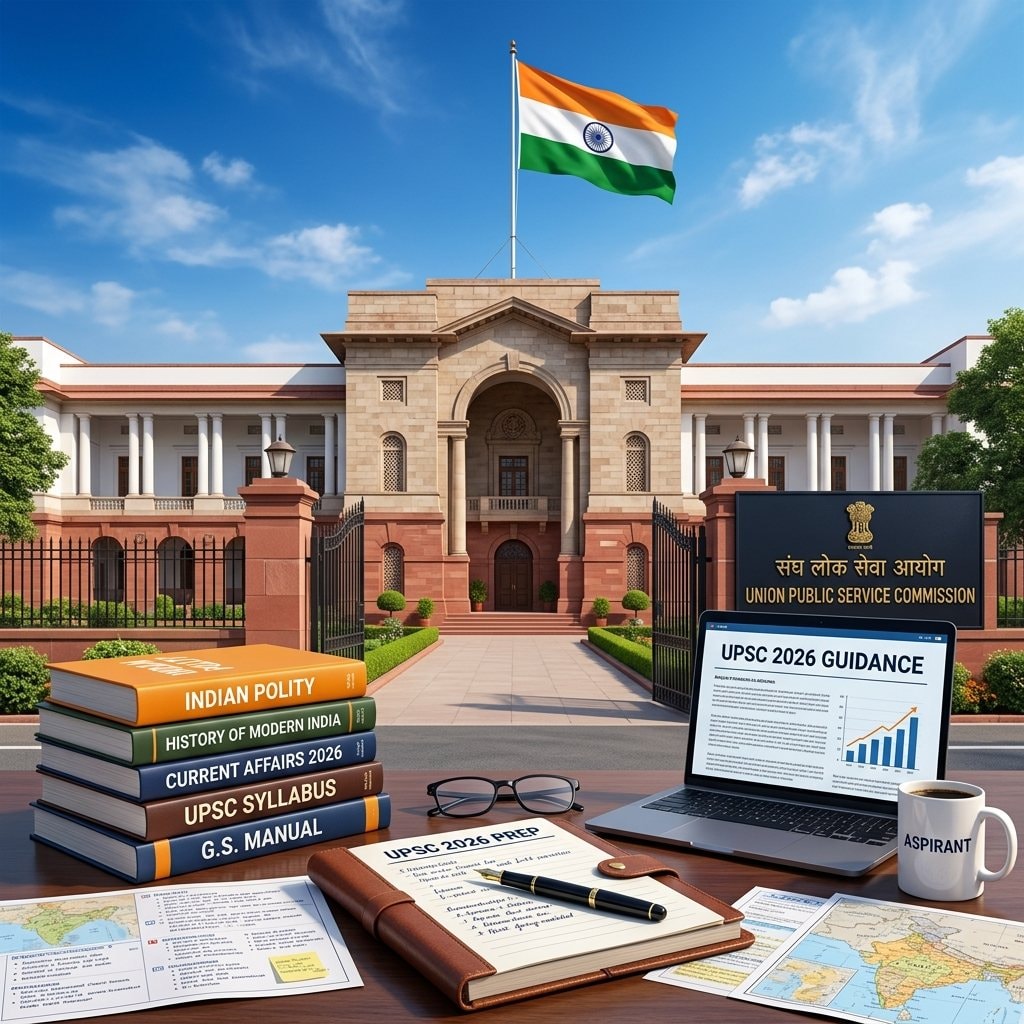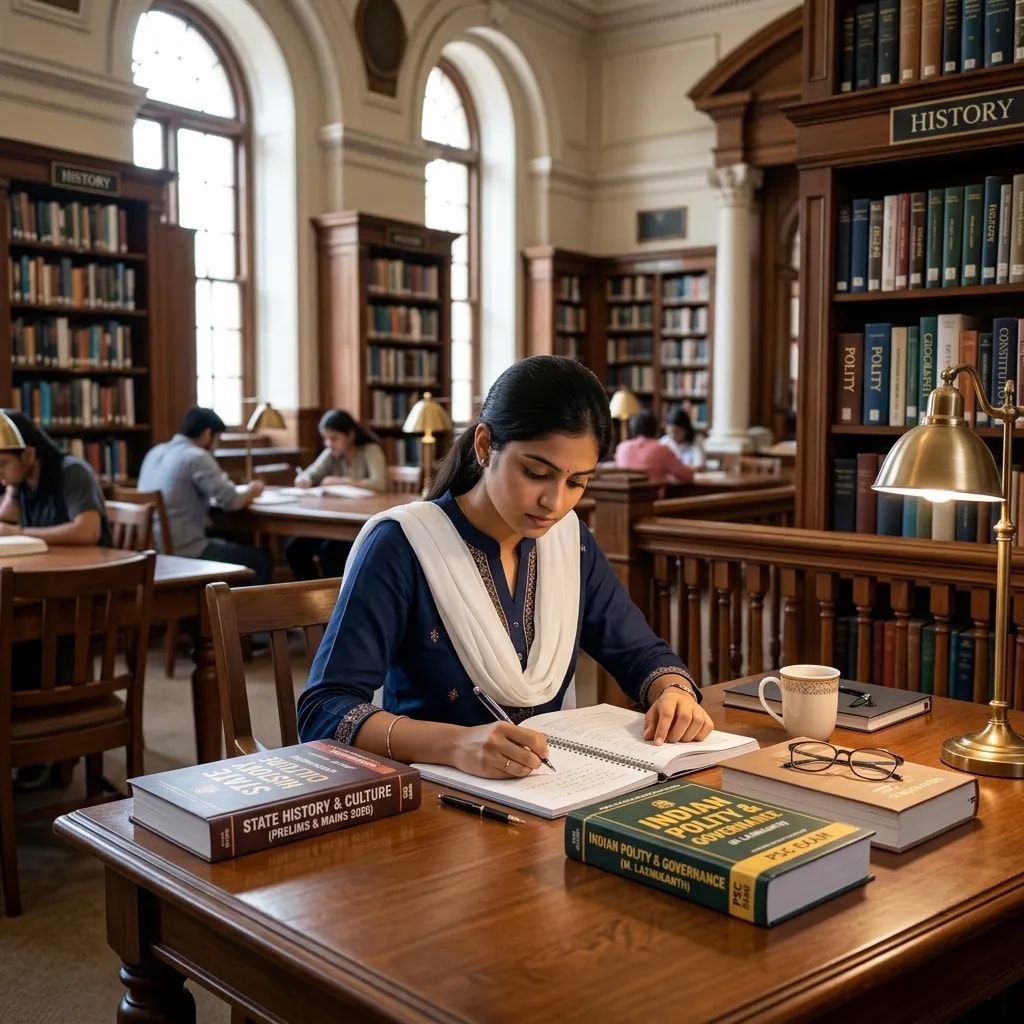
Introduction: Your Journey to Becoming an IAS/IPS/IFS Officer Starts Here
The UPSC Civil Services Examination (CSE) 2026 is India's most prestigious and challenging competitive exam, offering you the opportunity to serve the nation as an IAS (Indian Administrative Service), IPS (Indian Police Service), or IFS (Indian Foreign Service) officer. With over 10 lakh aspirants competing for approximately 1000 vacancies, cracking UPSC requires not just hard work, but smart work with the right strategy.
Quick Navigation: Exam Pattern | Prelims Strategy | Mains Strategy | Interview Tips | Optional Subject | Study Plan | Booklist
In this comprehensive UPSC CSE 2026 preparation guide, we'll cover everything from basic eligibility to advanced preparation strategies that have helped thousands of aspirants achieve their dream of becoming civil servants. Whether you're a beginner or a repeater, this guide will provide you with a clear roadmap to success.
Why Choose UPSC Civil Services?
- Prestige & Power: Highest administrative authority in the country
- Attractive Salary: ₹56,100 to ₹2,50,000 per month (7th Pay Commission)
- Job Security: Permanent government position with pension
- Nation Building: Direct impact on policy-making and governance
- Career Growth: Rapid promotions and diverse postings
- Respect: Most respected position in Indian society
- Benefits: Official residence, vehicle, staff, medical facilities, LTC
UPSC CSE 2026 Success Statistics
- Total Applicants: 10+ lakh candidates
- Prelims Qualified: ~15,000 candidates (1.5%)
- Mains Qualified: ~2,500 candidates (0.25%)
- Final Selection: ~1,000 candidates (0.1%)
- Average Attempts: 3-4 attempts for successful candidates
- Preparation Time: 12-18 months recommended
UPSC CSE 2026 Important Dates & Notification
Official Notification: UPSC releases the Civil Services Examination notification in February every year.
| Event | Expected Date 2026 | Status |
|---|---|---|
| Official Notification | February 2026 | Awaited |
| Online Application Start | February 2026 | Awaited |
| Last Date to Apply | March 2026 | Awaited |
| Prelims Exam Date | May 31, 2026 (Sunday) | Tentative |
| Prelims Result | June-July 2026 | Awaited |
| Mains Exam Date | September 2026 | Awaited |
| Mains Result | January 2027 | Awaited |
| Interview/Personality Test | February-April 2027 | Awaited |
| Final Result | May 2027 | Awaited |
Official Website: https://upsc.gov.in/
Application Portal: https://upsconline.nic.in/
UPSC CSE 2026 Eligibility Criteria
Educational Qualification
Minimum Requirement:
- Bachelor's Degree from a recognized university (any stream)
- Final year students can also apply
- Percentage/Marks: No minimum percentage required
- Distance/Open University: Degrees from UGC-recognized universities accepted
Age Limit (As on August 1, 2026)
| Category | Minimum Age | Maximum Age | Maximum Attempts |
|---|---|---|---|
| General/EWS | 21 years | 32 years | 6 attempts |
| OBC | 21 years | 35 years | 9 attempts |
| SC/ST | 21 years | 37 years | Unlimited |
| PwD (General) | 21 years | 42 years | 9 attempts |
| PwD (OBC) | 21 years | 45 years | Unlimited |
| PwD (SC/ST) | 21 years | No limit | Unlimited |
Nationality Requirements
- Indian citizen, OR
- Subject of Nepal/Bhutan, OR
- Tibetan refugee (came before Jan 1, 1962), OR
- Person of Indian origin from Pakistan, Burma, Sri Lanka, East African countries
Physical Standards (For IPS Only)
Male Candidates:
- Height: 165 cm (157.5 cm for ST/Scheduled Tribes)
- Chest: 84 cm (unexpanded), 89 cm (expanded)
Female Candidates:
- Height: 150 cm (147.5 cm for ST)
- Weight: Proportionate to height
Vision Standards:
- Better eye: 6/6 or 6/9
- Worse eye: 6/12 or 6/9
- Myopia: Not more than -4.00D
- Hypermetropia: Not more than +4.00D
UPSC CSE 2026 Exam Pattern: Three-Stage Selection
Stage 1: Preliminary Examination (Objective Type)
Nature: Screening test (marks not counted for final merit)
Mode: Offline (OMR-based)
Qualifying Marks: General - 33%, OBC/SC/ST - 25%
Paper-I: General Studies (200 marks)
Duration: 2 hours
Questions: 100 MCQs (2 marks each)
Negative Marking: 1/3 mark (0.66) for each wrong answer
Syllabus Coverage:
- Current events of national and international importance
- History of India and Indian National Movement
- Indian and World Geography (Physical, Social, Economic)
- Indian Polity and Governance
- Economic and Social Development
- Environmental Ecology, Biodiversity, Climate Change
- General Science
Paper-II: CSAT (200 marks)
Duration: 2 hours
Questions: 80 MCQs (2.5 marks each)
Negative Marking: 1/3 mark (0.83) for each wrong answer
Qualifying Nature: Only need to score 33% (66 marks)
Syllabus Coverage:
- Comprehension
- Interpersonal skills including communication skills
- Logical reasoning and analytical ability
- Decision-making and problem-solving
- General mental ability
- Basic numeracy (Class X level)
- Data interpretation (charts, graphs, tables)
Important: You must qualify both papers to clear Prelims, but only GS Paper-I marks determine your rank.
Stage 2: Main Examination (Descriptive Type)
Nature: Merit-based (marks counted for final ranking)
Mode: Offline (Pen & Paper)
Total Marks: 1750 marks
Paper Structure
| Paper | Subject | Marks | Duration | Medium |
|---|---|---|---|---|
| Paper-A | Indian Language (Qualifying) | 300 | 3 hours | Regional |
| Paper-B | English (Qualifying) | 300 | 3 hours | English |
| Paper-I | Essay | 250 | 3 hours | English/Hindi |
| Paper-II | General Studies-I | 250 | 3 hours | English/Hindi |
| Paper-III | General Studies-II | 250 | 3 hours | English/Hindi |
| Paper-IV | General Studies-III | 250 | 3 hours | English/Hindi |
| Paper-V | General Studies-IV (Ethics) | 250 | 3 hours | English/Hindi |
| Paper-VI | Optional Subject - Paper 1 | 250 | 3 hours | English/Hindi |
| Paper-VII | Optional Subject - Paper 2 | 250 | 3 hours | English/Hindi |
Total Merit Marks: 1750 (Essay + 4 GS Papers + 2 Optional Papers)
Note: Language papers are qualifying (minimum 25% marks required) but not counted for merit.
Stage 3: Personality Test (Interview)
Marks: 275 marks
Duration: 30-45 minutes
Nature: Merit-based (added to Mains marks)
Board: 5-member UPSC board
Final Merit = Mains (1750) + Interview (275) = 2025 marks
Prelims Preparation Strategy (Stage 1)
Understanding Prelims Pattern
Success Mantra: Prelims is about elimination, not selection. Your goal is to qualify, not top.
Key Statistics:
- Average cutoff: 95-105 marks out of 200 (General category)
- Questions attempted: 85-95 out of 100
- Accuracy required: 60-65%
- Preparation time: 4-6 months dedicated preparation
GS Paper-I Strategy
1. Current Affairs (25-30 questions)
Coverage Period: Last 12 months before exam
Sources:
- Daily Newspaper: The Hindu or Indian Express (must read)
- Monthly Magazine: Vision IAS Current Affairs or Drishti IAS
- PIB (Press Information Bureau): Government schemes and policies
- Yojana & Kurukshetra: Government magazines
- Economic Survey: For economic current affairs
- Budget: Key highlights and allocations
Preparation Method:
Daily Routine:
├── Morning: Read newspaper (1.5 hours)
│   ├── National news
│   ├── International news
│   ├── Economy section
│   └── Editorial page
├── Evening: Make notes (30 minutes)
│   ├── Important events
│   ├── Government schemes
│   ├── Appointments
│   └── Awards & honors
└── Weekly: Revise notes (2 hours)
Topics to Focus:
- Government schemes (PM-KISAN, Ayushman Bharat, etc.)
- International relations (India's bilateral relations)
- Economic developments (GDP, inflation, budget)
- Science & technology (ISRO missions, new discoveries)
- Environment (Climate summits, biodiversity)
- Awards & honors (Nobel Prize, Padma Awards)
- Sports (Olympics, Asian Games, World Cups)
- Books & authors (important publications)
2. History (18-20 questions)
Ancient India (4-5 questions):
- Indus Valley Civilization
- Vedic Period
- Mauryan Empire (Ashoka)
- Gupta Period (Golden Age)
- South Indian kingdoms
- Art, architecture, literature
Medieval India (4-5 questions):
- Delhi Sultanate
- Mughal Empire
- Bhakti & Sufi movements
- Regional kingdoms
- Architecture (monuments)
Modern India (10-12 questions):
- British expansion in India
- 1857 Revolt
- Indian National Movement
- Gandhi, Nehru, Patel, Bose
- Important sessions of Congress
- Revolutionary movements
- Partition and Independence
Preparation Strategy:
- NCERT (Class 6-12): Must read thoroughly
- Spectrum Modern History: For detailed modern India
- Bipin Chandra: India's Struggle for Independence
- Previous Year Questions: Identify important topics
- Make timeline charts: For chronological clarity
3. Geography (15-18 questions)
Physical Geography (5-6 questions):
- Earth and solar system
- Atmosphere and climate
- Ocean currents
- Landforms (mountains, plateaus, plains)
- Natural disasters
Indian Geography (6-8 questions):
- Physical features (Himalayas, rivers, plateaus)
- Climate and monsoon
- Natural resources
- Agriculture and irrigation
- Industries and minerals
- Transportation
World Geography (4-5 questions):
- Continents and oceans
- Important countries and capitals
- Major rivers and mountains
- Climate zones
- Natural resources distribution
Preparation Strategy:
- NCERT (Class 6-12): Foundation building
- Certificate Physical Geography: G.C. Leong
- Oxford School Atlas: For maps
- Practice map pointing: Rivers, mountains, states
- Current affairs integration: Cyclones, earthquakes, floods
4. Polity & Governance (15-18 questions)
Indian Constitution (8-10 questions):
- Historical background
- Preamble and features
- Fundamental Rights (Articles 12-35)
- Directive Principles (Articles 36-51)
- Fundamental Duties
- Union and State relations
- Emergency provisions
- Constitutional amendments
Political System (5-6 questions):
- President, Prime Minister, Council of Ministers
- Parliament (Lok Sabha, Rajya Sabha)
- Supreme Court and High Courts
- State government structure
- Local government (Panchayati Raj, Municipalities)
Governance (2-3 questions):
- Important constitutional bodies (CAG, Election Commission)
- Statutory bodies
- Government schemes
- Transparency and accountability
Preparation Strategy:
- NCERT (Class 11-12): Indian Constitution at Work
- M. Laxmikanth: Indian Polity (Bible for Polity)
- 2nd ARC Reports: For governance topics
- Current affairs: Recent judgments, bills, amendments
- Make notes: Article-wise important provisions
5. Economy (12-15 questions)
Basic Concepts (3-4 questions):
- National income (GDP, GNP, NNP)
- Inflation and deflation
- Fiscal and monetary policy
- Banking system
- Money supply
Indian Economy (6-8 questions):
- Five Year Plans
- Economic reforms (1991)
- Agriculture and food security
- Industry and services sector
- Infrastructure
- Poverty and unemployment
- Government schemes
Current Economic Affairs (3-4 questions):
- Budget highlights
- Economic Survey
- GST and taxation
- Digital economy
- International trade
Preparation Strategy:
- NCERT (Class 9-12): Economics textbooks
- Ramesh Singh: Indian Economy
- Economic Survey: Current year (summary)
- Budget: Key highlights
- Newspapers: Economic section daily
- Yojana magazine: Government schemes
6. Environment & Ecology (12-15 questions)
Ecology Basics (4-5 questions):
- Ecosystem and biodiversity
- Food chain and food web
- Conservation
- National parks and wildlife sanctuaries
- Endangered species
Environmental Issues (5-6 questions):
- Climate change and global warming
- Pollution (air, water, soil)
- Ozone depletion
- Deforestation
- Sustainable development
Current Environmental Affairs (3-4 questions):
- International conventions (Paris Agreement, COP)
- Government initiatives (Clean India, Green India)
- Recent environmental issues
- Renewable energy
Preparation Strategy:
- NCERT (Class 11-12): Biology (Ecology chapters)
- Shankar IAS Environment: Comprehensive book
- Current affairs: Environmental news
- Government reports: State of Forest Report, Climate reports
- International conventions: Know key points
7. Science & Technology (10-12 questions)
General Science (5-6 questions):
- Physics (motion, energy, electricity)
- Chemistry (elements, compounds, reactions)
- Biology (human body, diseases, nutrition)
- Scientific principles in daily life
Technology (5-6 questions):
- Space technology (ISRO missions)
- Defense technology
- Information technology
- Biotechnology
- Nanotechnology
- Artificial Intelligence
- Recent scientific discoveries
Preparation Strategy:
- NCERT (Class 6-10): Science textbooks
- Current affairs: Science & tech section
- ISRO website: Space missions
- Government initiatives: Digital India, Startup India
- Focus on applications: How technology impacts society
CSAT Paper-II Strategy
Important: CSAT is qualifying (33% marks needed), but don't take it lightly!
Preparation Approach
Time Allocation:
- 1-2 hours daily for CSAT practice
- Focus more if weak in mathematics/reasoning
- Last 2 months: Intensive practice
Section-wise Strategy:
1. Comprehension (30-35 questions):
- Read English newspapers daily
- Practice 2-3 passages daily
- Focus on understanding, not speed initially
- Learn to identify main idea, inference, tone
- Time management: 1.5 minutes per question
2. Logical Reasoning (15-20 questions):
- Syllogism
- Blood relations
- Coding-decoding
- Seating arrangement
- Puzzles
- Practice from CAT/MAT materials
3. Analytical Ability (10-12 questions):
- Data interpretation (tables, graphs, charts)
- Data sufficiency
- Critical reasoning
- Practice mental calculations
4. Decision Making (5-8 questions):
- Situation-based questions
- Ethical dilemmas
- Administrative scenarios
- No fixed answers, use common sense
5. Basic Numeracy (10-15 questions):
- Percentage, ratio, proportion
- Average, profit-loss
- Time-speed-distance
- Simple and compound interest
- Class X level mathematics
Recommended Books:
- NCERT Mathematics (Class 6-10): For basics
- TMH CSAT Manual: Comprehensive coverage
- Arihant CSAT: Good practice questions
- Previous year papers: Must solve
CSAT Success Tips:
- Attempt 65-70 questions with 90%+ accuracy
- Skip difficult questions, come back later
- No negative marking fear - attempt all you know
- Time management is crucial
- Practice mock tests regularly
Prelims Mock Test Strategy
Timeline:
- 4 months before exam: Start with sectional tests
- 3 months before exam: 1 full-length test per week
- 2 months before exam: 2 full-length tests per week
- Last month: 3-4 full-length tests per week
Mock Test Analysis (Most Important):
After Every Mock Test:
├── Immediate Review (2 hours)
│   ├── Check all answers
│   ├── Understand why wrong
│   ├── Note silly mistakes
│   └── Identify weak areas
├── Deep Analysis (2 hours)
│   ├── Subject-wise performance
│   ├── Topic-wise accuracy
│   ├── Time spent per question
│   └── Guessing vs knowledge
└── Improvement Plan (1 hour)
    ├── Topics to revise
    ├── Concepts to strengthen
    ├── Strategy adjustments
    └── Next test targets
Mock Test Sources:
- Vision IAS Test Series
- Insights IAS Test Series
- Forum IAS Test Series
- Vajiram & Ravi Test Series
- Previous year papers (last 10 years)
Target Setting:
- First mock: 60-70 marks (baseline)
- After 1 month: 80-90 marks
- After 2 months: 95-105 marks
- Before exam: 105-115 marks consistently
Prelims Last Month Strategy
Revision Schedule:
Week 1-2: Intensive Revision
- Revise all NCERT books (quick reading)
- Go through all notes
- Focus on weak subjects
- Solve previous year questions again
Week 3: Mock Tests + Current Affairs
- 1 mock test daily
- Thorough analysis
- Current affairs revision (last 12 months)
- Formula and fact revision
Week 4: Final Revision
- Quick revision of all subjects
- Current affairs (last 3 months focus)
- Solve previous year papers
- Stay calm and confident
Last 3 Days:
- No new topics
- Light revision only
- Read current affairs notes
- Stay healthy and relaxed
- Avoid social media and news
Mains Preparation Strategy (Stage 2)
Understanding Mains Examination
Key Differences from Prelims:
- Descriptive answers (not MCQs)
- In-depth knowledge required
- Answer writing skill crucial
- Time management critical
- Quality over quantity
Mains Success Formula:
Mains Score = Content (40%) + Presentation (30%) +
              Answer Writing (20%) + Current Affairs (10%)
Essay Paper Strategy (250 marks)
Pattern:
- 2 sections with 4 topics each (total 8 topics)
- Choose 1 topic from each section
- Each essay: 1000-1200 words
- Time: 3 hours (1.5 hours per essay)
Essay Types:
- Philosophical: Abstract concepts (Truth, Justice, Freedom)
- Social: Social issues (Gender equality, Education)
- Economic: Economic topics (Globalization, Poverty)
- Political: Governance, democracy, leadership
- Environmental: Climate change, sustainability
- Technological: AI, digitalization, innovation
- Cultural: Indian culture, diversity, heritage
Essay Writing Framework:
Introduction (150 words):
- Hook/Quote to grab attention
- Define key terms
- Provide context
- Thesis statement (your main argument)
Body (700-800 words):
- 3-4 main arguments
- Each argument in separate paragraph
- Use examples, data, case studies
- Multiple dimensions (social, economic, political)
- Balance different viewpoints
- Use quotes from thinkers/leaders
Conclusion (150 words):
- Summarize main points
- Restate thesis
- Forward-looking statement
- End with impactful quote/thought
Essay Preparation Strategy:
- Read 2-3 quality essays daily
- Write 1 essay per week (practice)
- Read editorials for ideas
- Maintain quote bank
- Study previous toppers' essays
- Get essays evaluated by mentors
Recommended Resources:
- Drishti IAS Essay compilation
- Vision IAS Essay material
- The Hindu editorials
- Economic & Political Weekly
- Previous toppers' essays
General Studies Papers Strategy
GS Paper-I: Indian Heritage, History, Society (250 marks)
Syllabus Coverage:
1. Indian Culture (30-40 marks):
- Ancient Indian art and architecture
- Medieval Indian art and architecture
- Modern Indian art and literature
- Performing arts (music, dance, drama)
- Indian philosophy and thinkers
2. Modern Indian History (40-50 marks):
- 18th century events
- British expansion and consolidation
- Economic impact of British rule
- Social and religious reform movements
- Indian National Movement (detailed)
- Post-independence consolidation
3. Post-Independence History (20-30 marks):
- Partition and integration of states
- Reorganization of states
- Nehruvian era
- Green Revolution
- Emergency period
- Economic reforms
4. World History (20-30 marks):
- Industrial Revolution
- World Wars
- Colonization and decolonization
- Cold War
- Redrawing of national boundaries
5. Indian Society (40-50 marks):
- Diversity of India
- Role of women
- Population and associated issues
- Poverty and developmental issues
- Urbanization
- Social empowerment
- Communalism, regionalism, secularism
6. Geography (40-50 marks):
- Salient features of world's physical geography
- Distribution of key natural resources
- Geophysical phenomena (earthquakes, tsunamis, volcanoes)
- Important geophysical phenomena
Preparation Strategy:
- NCERT (Class 6-12): History, Geography, Culture
- Nitin Singhania: Indian Art and Culture
- Spectrum: Modern India
- Bipin Chandra: India's Struggle for Independence
- Tamil Nadu Board: Modern India
- Newspapers: Social issues, cultural events
Answer Writing Tips:
- Use maps, diagrams, flowcharts
- Provide historical context
- Use examples from different regions
- Mention government initiatives
- Balanced perspective on social issues
GS Paper-II: Governance, Constitution, Polity, Social Justice (250 marks)
Syllabus Coverage:
1. Indian Constitution (40-50 marks):
- Historical underpinnings
- Evolution and features
- Amendments and significance
- Comparison with other countries
- Fundamental Rights and Duties
- Directive Principles
2. Functions and Responsibilities (30-40 marks):
- Union and States
- Issues and challenges of federalism
- Devolution of powers
- Local bodies
- Separation of powers
3. Governance (40-50 marks):
- Comparison of Indian constitutional scheme with other countries
- Parliament and State Legislatures
- Executive and Judiciary
- Statutory, regulatory, and quasi-judicial bodies
- Government policies and interventions
- Development processes
- Role of civil services
4. Social Justice (40-50 marks):
- Welfare schemes for vulnerable sections
- Mechanisms, laws, institutions for protection
- Issues relating to poverty and hunger
- Important aspects of governance, transparency, accountability
- E-governance applications, models, successes
- Role of NGOs, SHGs, various groups
5. International Relations (40-50 marks):
- India and its neighborhood
- Bilateral, regional, global groupings
- Effect of policies of developed and developing countries
- Important international institutions
- India's interests and diaspora
Preparation Strategy:
- M. Laxmikanth: Indian Polity (detailed reading)
- 2nd ARC Reports: Governance topics
- Newspapers: Government schemes, policies, international news
- PRS India: For bills and policies
- Yojana magazine: Government schemes
- Economic Survey: Social sector
Answer Writing Tips:
- Use constitutional articles
- Mention recent judgments
- Cite government schemes
- Use flowcharts for processes
- Provide examples of good governance
- Suggest reforms and way forward
GS Paper-III: Technology, Economic Development, Environment, Security (250 marks)
Syllabus Coverage:
1. Indian Economy (60-70 marks):
- Economic planning and mobilization of resources
- Inclusive growth and issues
- Government budgeting
- Major crops, irrigation, agricultural marketing
- Issues related to direct and indirect farm subsidies
- Food processing and related industries
- Land reforms in India
- Effects of liberalization on economy
- Industrial policy changes
- Infrastructure: Energy, Ports, Roads, Airports, Railways
- Investment models
- Science and Technology in everyday life
- Achievements of Indians in science & technology
- Indigenization of technology
- Developments in IT, Space, Computers, Robotics, Nano-technology, Bio-technology
2. Environment & Biodiversity (40-50 marks):
- Conservation
- Environmental pollution and degradation
- Environmental impact assessment
- Disaster and disaster management
3. Security (40-50 marks):
- Linkages between development and spread of extremism
- Role of external state and non-state actors
- Challenges to internal security
- Money laundering and its prevention
- Security forces and agencies
- Various security forces and agencies and their mandate
- Border management
- Organized crime
- Cyber security
- Role of media and social networking sites
4. Science & Technology (40-50 marks):
- Developments and applications
- Effects on everyday life
- Achievements of Indians in S&T
- Indigenization of technology
- New technology developments
Preparation Strategy:
- Ramesh Singh: Indian Economy
- Economic Survey: Detailed reading
- Budget: Key highlights
- Newspapers: Economy, environment, security news
- NITI Aayog reports
- Government websites: ISRO, DRDO, DST
- Shankar IAS Environment
- Internal Security by Ashok Kumar
Answer Writing Tips:
- Use data, statistics, graphs
- Mention government initiatives
- Provide examples of successful models
- Discuss challenges and solutions
- Use diagrams for scientific concepts
- Current affairs integration is crucial
GS Paper-IV: Ethics, Integrity, Aptitude (250 marks)
Syllabus Coverage:
1. Ethics and Human Interface (30-40 marks):
- Essence, determinants, consequences of ethics
- Dimensions of ethics
- Ethics in private and public relationships
- Human values
- Role of family, society, educational institutions
- Attitude: content, structure, function
- Moral and political attitudes
- Social influence and persuasion
2. Aptitude and Foundational Values (30-40 marks):
- Integrity
- Objectivity
- Dedication to public service
- Empathy, tolerance, compassion
- Emotional intelligence
- Concepts, utilities, application in administration
3. Public/Civil Service Values (30-40 marks):
- Status and problems
- Ethical concerns and dilemmas
- Laws, rules, regulations, conscience
- Accountability and ethical governance
- Strengthening of ethical and moral values
- International relations and funding
- Corporate governance
4. Probity in Governance (30-40 marks):
- Concept of public service
- Philosophical basis of governance
- Information sharing and transparency
- Right to Information
- Codes of Ethics
- Codes of Conduct
- Citizen's Charters
- Work culture
- Quality of service delivery
- Utilization of public funds
- Challenges of corruption
5. Case Studies (80-100 marks):
- 5-6 case studies based on above topics
- Real-life ethical dilemmas
- Administrative situations
- Moral choices
Preparation Strategy:
- Lexicon Ethics by Niraj Kumar
- Ethics, Integrity & Aptitude by G. Subba Rao
- 2nd ARC 4th Report: Ethics in Governance
- Newspapers: Ethical issues, scams, governance
- Think about ethical dilemmas
- Practice case study answers
Answer Writing Tips:
- Use ethical frameworks (Utilitarianism, Kantian, etc.)
- Mention stakeholders
- Discuss multiple perspectives
- Provide balanced view
- Suggest ethical course of action
- Use examples from real life
- Be empathetic in case studies
Optional Subject Selection Guide
Choosing the Right Optional:
Factors to Consider:
- Interest: Subject you enjoy studying
- Background: Academic background helps
- Scoring Potential: Check previous years' marks
- Availability of Resources: Books, coaching, guidance
- Overlap with GS: Subjects like Geography, History, Public Administration
- Current Affairs Linkage: Subjects like Geography, Public Administration
Popular Optional Subjects:
1. Geography (Most Popular)
- Pros: Overlap with GS, map-based answers, scoring
- Cons: Vast syllabus, requires diagram practice
- Average Score: 280-320/500
- Recommended for: Science and arts students
2. History
- Pros: Interesting, overlap with GS, factual
- Cons: Vast syllabus, requires good memory
- Average Score: 270-310/500
- Recommended for: Arts students, history enthusiasts
3. Public Administration
- Pros: High overlap with GS-II, directly useful for interview
- Cons: Abstract concepts, requires understanding
- Average Score: 290-330/500
- Recommended for: All backgrounds, especially working professionals
4. Sociology
- Pros: Manageable syllabus, overlap with GS, scoring
- Cons: Requires analytical thinking
- Average Score: 280-320/500
- Recommended for: All backgrounds
5. Political Science & International Relations (PSIR)
- Pros: Overlap with GS-II, current affairs integration
- Cons: Requires continuous current affairs reading
- Average Score: 280-320/500
- Recommended for: Arts students, current affairs enthusiasts
6. Anthropology
- Pros: Compact syllabus, scoring, overlap with GS
- Cons: Limited coaching availability
- Average Score: 290-330/500
- Recommended for: Science students, beginners
7. Psychology
- Pros: Interesting, practical applications, scoring
- Cons: Limited resources, requires case study practice
- Average Score: 280-320/500
- Recommended for: Science students, those interested in human behavior
8. Engineering Subjects (Mechanical, Civil, Electrical)
- Pros: Technical background advantage, scoring
- Cons: Limited overlap with GS
- Average Score: 270-310/500
- Recommended for: Engineering graduates
Optional Subject Preparation Strategy:
- Start after Prelims (if first attempt)
- Start with Prelims preparation (if repeater)
- Complete syllabus in 4-5 months
- Practice answer writing from day one
- Make concise notes
- Integrate current affairs
- Join test series
- Get answers evaluated
Interview Preparation Strategy (Stage 3)
Understanding UPSC Interview
Nature: Personality test, not knowledge test
Marks: 275 marks
Duration: 30-45 minutes
Board: 5 members (1 Chairman + 4 Members)
What UPSC Looks For:
- Mental alertness
- Critical powers of assimilation
- Clear and logical exposition
- Balance of judgment
- Variety and depth of interest
- Ability for social cohesion and leadership
- Intellectual and moral integrity
Interview Preparation Timeline
After Mains Exam (3-4 months):
Month 1: Foundation
- Read your DAF (Detailed Application Form) thoroughly
- List all points that can be asked
- Prepare answers for each point
- Read about your hometown, state, university
- Read about your hobbies in detail
- Current affairs revision
Month 2: Current Affairs
- Read newspapers daily (detailed reading)
- Make notes on important issues
- Form opinions on controversial topics
- Read government reports
- Follow international news
- Read about your optional subject developments
Month 3: Mock Interviews
- Join mock interview sessions
- Practice with friends, family
- Record yourself
- Work on body language
- Improve communication skills
- Get feedback and improve
Last Month: Final Preparation
- Revise DAF thoroughly
- Quick current affairs revision
- Practice staying calm
- Work on confidence
- Stay updated with news
- Prepare your dress
DAF-Based Preparation
Your DAF is Your Syllabus for Interview!
1. Educational Background:
- Why did you choose this subject?
- Favorite subjects and why?
- Projects, research work
- Teachers who influenced you
- What did you learn from your education?
2. Work Experience (if any):
- Roles and responsibilities
- Challenges faced
- Learnings from work
- Why leaving current job?
- How will work experience help in civil services?
3. Hobbies:
- Why this hobby?
- How long have you been pursuing?
- Achievements in hobby
- What have you learned?
- Recent developments in your hobby area
4. Hometown/State:
- History of your place
- Famous personalities
- Tourist attractions
- Economic activities
- Social issues
- Government schemes
- Recent developments
5. Optional Subject:
- Why did you choose this optional?
- Recent developments in the field
- Application in administration
- Challenges in the field
- Government policies related to it
Current Affairs for Interview
Areas to Cover:
1. National Issues:
- Economic situation (GDP, inflation, unemployment)
- Social issues (education, health, poverty)
- Political developments (elections, bills, policies)
- Internal security (terrorism, naxalism, cyber security)
- Governance issues (corruption, transparency)
2. International Affairs:
- India's relations with neighbors
- India's role in international organizations
- Global issues (climate change, terrorism)
- Trade relations
- Geopolitical developments
3. State-Specific Issues:
- Your state's economy
- Social issues in your state
- Political situation
- Development initiatives
- Challenges and solutions
4. Service-Specific Issues:
- Role of civil servants
- Challenges in administration
- Ethics in governance
- Recent reforms
- Your vision for civil services
Communication Skills Development
Verbal Communication:
- Speak clearly and confidently
- Use simple language
- Avoid jargon
- Pause before answering
- Think before you speak
- Don't rush
Non-Verbal Communication:
- Maintain eye contact
- Sit upright
- Use hand gestures moderately
- Smile when appropriate
- Show enthusiasm
- Stay calm and composed
Handling Difficult Questions:
- Don't panic
- Take a moment to think
- If you don't know, say so politely
- Don't bluff or make up facts
- Show willingness to learn
- Stay humble
Common Tricky Questions:
- Why do you want to join civil services?
- Why not private sector?
- What if you don't get your preferred service?
- Your views on controversial topics
- Ethical dilemmas
- Stress questions
Mock Interview Strategy
Types of Mock Interviews:
- Formal Mock: With coaching institutes
- Peer Mock: With fellow aspirants
- Family Mock: With family members
- Self Mock: Record and analyze yourself
After Each Mock:
- Note down questions asked
- Identify weak areas
- Work on body language
- Improve answers
- Build confidence
Number of Mocks:
- Minimum 10-15 formal mocks
- Multiple peer and family mocks
- Practice until confident
12-Month Preparation Plan
Month 1-2: Foundation Building
Goals:
- Complete NCERT (Class 6-12)
- Understand exam pattern
- Start newspaper reading
- Build basic concepts
Daily Schedule (8-10 hours):
- Morning (3 hours): NCERT reading
- Afternoon (2 hours): Newspaper + notes
- Evening (3 hours): NCERT + note-making
- Night (2 hours): Revision + current affairs
Month 3-4: Prelims Preparation
Goals:
- Complete standard books
- Start test series
- Current affairs compilation
- Previous year papers
Daily Schedule (10-12 hours):
- Morning (4 hours): Subject study
- Afternoon (2 hours): Newspaper + current affairs
- Evening (3 hours): Practice questions
- Night (2 hours): Revision
Month 5: Prelims Intensive
Goals:
- Complete syllabus revision
- Mock tests daily
- Current affairs mastery
- Weak area improvement
Daily Schedule (12-14 hours):
- Morning (2 hours): Mock test
- Afternoon (3 hours): Analysis + improvement
- Evening (4 hours): Revision
- Night (3 hours): Current affairs
Month 6-9: Mains Preparation
Goals:
- Complete GS papers syllabus
- Start optional subject
- Answer writing practice
- Essay writing
Daily Schedule (12-14 hours):
- Morning (4 hours): GS paper study
- Afternoon (3 hours): Optional subject
- Evening (3 hours): Answer writing
- Night (2 hours): Current affairs + revision
Month 10-11: Mains Intensive
Goals:
- Complete optional subject
- Answer writing mastery
- Test series
- Revision
Daily Schedule (14-16 hours):
- Morning (4 hours): Answer writing
- Afternoon (4 hours): Optional subject
- Evening (4 hours): Revision
- Night (2 hours): Current affairs
Month 12: Final Revision
Goals:
- Quick revision of all subjects
- Mock tests
- Current affairs
- Stay confident
Daily Schedule (10-12 hours):
- Morning (3 hours): Revision
- Afternoon (3 hours): Mock test + analysis
- Evening (3 hours): Current affairs
- Night (2 hours): Light revision
Recommended Books for UPSC CSE 2026
For Prelims
History:
- NCERT (Class 6-12): Old and New
- Spectrum: Modern India
- Bipin Chandra: India's Struggle for Independence
Geography:
- NCERT (Class 6-12): Geography
- Certificate Physical Geography: G.C. Leong
- Oxford School Atlas
Polity:
- NCERT (Class 11-12): Political Science
- M. Laxmikanth: Indian Polity
Economy:
- NCERT (Class 9-12): Economics
- Ramesh Singh: Indian Economy
Environment:
- NCERT (Class 11-12): Biology
- Shankar IAS: Environment
Science & Technology:
- NCERT (Class 6-10): Science
- Current affairs sources
Current Affairs:
- The Hindu / Indian Express (Daily)
- Vision IAS / Drishti IAS Monthly Magazine
- Yojana & Kurukshetra
CSAT:
- NCERT Mathematics (Class 6-10)
- TMH CSAT Manual
- Arihant CSAT
For Mains
Essay:
- Drishti Essay Book
- Vision IAS Essay Material
- Previous toppers' essays
GS Paper-I:
- Same as Prelims + detailed reading
- Nitin Singhania: Art and Culture
- Tamil Nadu Board: Modern India
GS Paper-II:
- M. Laxmikanth: Indian Polity (detailed)
- 2nd ARC Reports
- PRS India website
GS Paper-III:
- Ramesh Singh: Indian Economy (detailed)
- Economic Survey
- Shankar IAS: Environment
- Internal Security by Ashok Kumar
GS Paper-IV:
- Lexicon Ethics by Niraj Kumar
- 2nd ARC 4th Report
Optional Subject:
- Subject-specific standard books
- Previous year papers
- Test series material
Success Tips from IAS Toppers
Time Management
Daily Routine:
- Wake up early (5-6 AM)
- Study in focused blocks (2-3 hours)
- Take short breaks (15-20 minutes)
- Exercise daily (30 minutes)
- Sleep 6-7 hours
Weekly Planning:
- Set weekly targets
- Allocate time for each subject
- Keep one day for revision
- Track your progress
Note-Making Strategy
Effective Notes:
- Concise and to the point
- Use bullet points
- Highlight important facts
- Use diagrams and flowcharts
- Separate notebook for current affairs
- Revise notes regularly
Revision Strategy
Revision Cycles:
- 1st Revision: After completing a topic
- 2nd Revision: After 1 week
- 3rd Revision: After 1 month
- 4th Revision: Before exam
Revision Techniques:
- Quick reading of notes
- Solve previous year questions
- Make mind maps
- Teach others
- Group study for discussion
Staying Motivated
Motivation Tips:
- Remember your goal
- Read success stories
- Stay away from negative people
- Take breaks when needed
- Celebrate small victories
- Stay healthy and fit
Dealing with Failure
If You Don't Clear:
- Analyze your performance
- Identify weak areas
- Improve strategy
- Stay determined
- Learn from mistakes
- Try again with better preparation
Frequently Asked Questions (FAQs)
Q1: Can I crack UPSC in first attempt?
Answer: Yes, many candidates clear UPSC in their first attempt. However, it requires:
- Dedicated preparation (12-18 months)
- Right strategy and guidance
- Consistent hard work
- Smart work with proper planning
- Good answer writing skills
- Current affairs knowledge
Average successful candidates take 2-3 attempts, but first attempt success is definitely possible with proper preparation.
Q2: Is coaching necessary for UPSC?
Answer: Coaching is not mandatory but can be helpful:
Advantages of Coaching:
- Structured approach
- Guidance from experts
- Peer learning
- Regular tests
- Answer writing evaluation
Self-Study Advantages:
- Flexible schedule
- Cost-effective
- Personalized pace
- Better retention
Recommendation: Start with self-study. Join test series for answer writing practice. Consider coaching if you need guidance or structure.
Q3: How many hours should I study daily?
Answer:
- Beginners: 6-8 hours
- Serious Preparation: 8-10 hours
- Intensive Phase: 10-12 hours
- Last Month: 12-14 hours
Quality matters more than quantity. Focus on effective study, not just hours.
Q4: Which optional subject should I choose?
Answer: Choose based on:
- Your interest and background
- Scoring potential
- Availability of resources
- Overlap with GS
Popular choices: Geography, Public Administration, Sociology, Anthropology, PSIR
Q5: How important is current affairs?
Answer: Extremely important!
- 30-40% questions in Prelims
- Essential for Mains answer writing
- Crucial for Interview
Preparation:
- Read newspaper daily (The Hindu/Indian Express)
- Monthly magazine (Vision IAS/Drishti IAS)
- Make notes regularly
- Revise monthly
Q6: Can I prepare while working?
Answer: Yes, but challenging:
- Requires strong determination
- Time management is crucial
- Study 3-4 hours daily
- Utilize weekends effectively
- May take longer (18-24 months)
- Consider taking study leave before exam
Q7: What is the success rate of UPSC?
Answer:
- Total applicants: 10+ lakh
- Prelims qualified: ~15,000 (1.5%)
- Mains qualified: ~2,500 (0.25%)
- Final selection: ~1,000 (0.1%)
Success rate is low, but with proper preparation, you can be in that 0.1%!
Q8: Is UPSC getting tougher?
Answer: The exam pattern remains same, but:
- Competition is increasing
- Questions are more application-based
- Current affairs integration is crucial
- Answer writing quality matters more
With right preparation, it's still achievable!
Q9: Can I clear UPSC without coaching?
Answer: Absolutely! Many toppers are self-study candidates.
Requirements:
- Good study material
- Proper strategy
- Self-discipline
- Answer writing practice
- Test series for evaluation
- Online resources and guidance
Q10: What after clearing UPSC?
Answer: After final selection:
- Training at LBSNAA (Mussoorie) for IAS
- Training at respective academies for other services
- Probation period (2 years)
- Field posting
- Career progression with promotions
- Opportunity to serve the nation
Conclusion: Your Path to Success
Cracking UPSC CSE 2026 is a challenging but achievable goal. Remember:
Key Success Mantras:
- Consistency is Key: Study regularly, don't take long breaks
- Smart Work > Hard Work: Follow the right strategy
- Answer Writing: Practice is non-negotiable
- Current Affairs: Stay updated daily
- Revision: Multiple revisions ensure retention
- Stay Healthy: Physical and mental health matter
- Stay Motivated: Keep your goal in sight
- Learn from Failures: Every attempt teaches something
- Be Patient: Success takes time
- Believe in Yourself: You can do it!
Final Words:
The journey to becoming an IAS/IPS/IFS officer is long and demanding, but the reward is worth every effort. You'll have the opportunity to serve 1.4 billion Indians, shape policies, and make a real difference in people's lives.
Start your preparation today with determination and dedication. Follow this guide, stay consistent, and success will be yours!
All the best for UPSC CSE 2026! 🇮🇳
Stay Updated:
- UPSC Official Website
- Subscribe to Our Notifications
- Join Our Community
- Latest Government Job Updates
Share This Guide: Help your fellow aspirants! Share this comprehensive guide with friends preparing for UPSC CSE 2026.
Disclaimer: This guide is based on previous years' patterns and expert analysis. Always refer to the official UPSC notification for accurate and updated information.