Introduction: Why UPSC IAS is India's Most Prestigious Exam
The UPSC Civil Services Examination (CSE) 2026 is India's most prestigious and challenging competitive examination, conducted by the Union Public Service Commission to recruit officers for Indian Administrative Service (IAS), Indian Police Service (IPS), Indian Foreign Service (IFS), and 21 other All India and Central Services. With over 10 lakh candidates competing for approximately 1000 vacancies, UPSC CSE demands extraordinary dedication, strategic preparation, and unwavering commitment.
Quick Navigation: Exam Pattern | Syllabus | Preparation Strategy | Optional Subject | Best Books | Current Affairs | FAQs
In this comprehensive UPSC IAS 2026 preparation guide, we'll cover everything from basic eligibility to advanced preparation strategies, optional subject selection, answer writing techniques, and interview preparation that have helped thousands of aspirants crack this exam and become IAS, IPS, and IFS officers.
What Makes UPSC IAS Special?
- Highest Administrative Position: Become District Collector, Secretary to Government
- Power to Serve: Implement policies affecting millions of lives
- Attractive Salary: ₹56,100 to ₹2,50,000 per month (7th Pay Commission)
- Perks & Benefits: Official residence, vehicle, staff, medical facilities
- Job Security: Permanent government position with pension
- Social Prestige: Most respected position in Indian society
- Career Growth: Regular promotions up to Cabinet Secretary level
- Global Exposure: Opportunities for international postings
UPSC CSE 2026 Key Statistics
| Parameter | Details |
|---|---|
| Total Applicants (Expected) | 10+ Lakh |
| Prelims Qualified | 15,000-20,000 |
| Mains Qualified | 2,000-2,500 |
| Final Selection | 900-1,000 |
| Success Rate | 0.1% (1 in 1000) |
| Average Attempts | 3-4 attempts |
| Preparation Time | 12-18 months minimum |
Table of Contents
Quick Links to Navigate This Guide:
Exam Overview
Syllabus & Preparation
- Complete Syllabus (Prelims & Mains)
- 18-Month Preparation Plan
- Optional Subject Selection
- Best Books & Resources
Strategy & Tips
Career & Services
FAQs & Resources
Estimated Reading Time: 60 minutes | Last Updated: January 29, 2026
UPSC CSE 2026 Important Dates
UPSC CSE 2026 Notification: The Union Public Service Commission will release the official notification in February 2026. Keep checking the official website for updates.
| Event | Expected Date | Status |
|---|---|---|
| Official Notification Release | February 2026 | Awaited |
| Online Application Start | February 2026 | Awaited |
| Last Date to Apply | March 2026 | Awaited |
| Prelims Exam Date | Last Sunday of May 2026 | Awaited |
| Prelims Result | June-July 2026 | Awaited |
| Mains Exam Date | September-October 2026 | Awaited |
| Mains Result | January-February 2027 | Awaited |
| Interview/Personality Test | February-April 2027 | Awaited |
| Final Result Declaration | May-June 2027 | Awaited |
| Training Start (LBSNAA) | August-September 2027 | Awaited |
Note: Official dates will be announced on UPSC Official Website. The entire process takes 15-16 months from notification to final result.
UPSC CSE 2026 Eligibility Criteria
Educational Qualification
Minimum Qualification:
- Bachelor's Degree from a recognized university in any discipline
- Final year students can also apply (degree must be completed before interview)
- Any stream accepted (Arts, Science, Commerce, Engineering, Medical)
- No minimum percentage required
Special Cases:
- Professional and Technical Qualifications recognized by Government
- Candidates with equivalent qualifications from foreign universities
Age Limit (As on 1st August 2026)
| Category | Minimum Age | Maximum Age | Maximum Attempts |
|---|---|---|---|
| General | 21 years | 32 years | 6 attempts |
| EWS | 21 years | 32 years | 6 attempts |
| OBC | 21 years | 35 years | 9 attempts |
| SC/ST | 21 years | 37 years | Unlimited |
| PwD (General) | 21 years | 42 years | 9 attempts |
| PwD (OBC) | 21 years | 45 years | Unlimited |
| PwD (SC/ST) | 21 years | No limit | Unlimited |
Age Relaxation for Special Categories:
- Ex-Servicemen: 5 years
- Defence Personnel (Disabled in Operation): 3 years
- J&K Domicile (1980-1989): 5 years
- J&K Domicile (1990-1999): 3 years
Physical Standards
For IPS (Indian Police Service):
Male Candidates:
- Height: 165 cm (157.5 cm for ST)
- Chest: 84 cm (unexpanded), 89 cm (expanded)
- Vision: 6/6 in one eye, 6/12 in other
Female Candidates:
- Height: 150 cm (145 cm for ST)
- Vision: 6/6 in one eye, 6/12 in other
Note: Physical standards not applicable for IAS, IFS, and other services.
Nationality Requirements
Eligible Candidates:
- Citizen of India
- Subject of Nepal
- Subject of Bhutan
- Tibetan refugee (came before 1st Jan 1962)
- Person of Indian origin from Pakistan, Burma, Sri Lanka, Kenya, Uganda, Tanzania, Zambia, Malawi, Zaire, Ethiopia, Vietnam
Note: For IAS and IPS, only Indian citizens are eligible.
Number of Attempts
Attempt Calculation:
- Appearing in Prelims counts as one attempt
- Qualifying Prelims but not appearing in Mains counts as one attempt
- Age limit is the deciding factor for maximum attempts
UPSC CSE 2026 Three-Stage Exam Pattern
Stage 1: Preliminary Examination (Screening Test)
Exam Mode: Offline (OMR Based)
Nature: Objective Type (MCQs)
Qualifying: Yes (marks not counted for final merit)
Negative Marking: Yes (1/3rd marks deducted)
Paper-wise Details
Paper-I: General Studies (GS)
- Duration: 2 hours
- Questions: 100 MCQs
- Marks: 200
- Negative Marking: -0.66 marks per wrong answer
Paper-II: CSAT (Civil Services Aptitude Test)
- Duration: 2 hours
- Questions: 80 MCQs
- Marks: 200
- Qualifying Nature: 33% marks required (66 marks)
- Negative Marking: -0.83 marks per wrong answer
Important Points:
- Both papers compulsory
- Paper-I marks decide Prelims qualification
- Paper-II is qualifying (minimum 33% required)
- Approximately 15,000-20,000 candidates qualify for Mains
Stage 2: Main Examination (Written Test)
Exam Mode: Offline (Descriptive)
Nature: Subjective Type (Essay, Long Answers)
Duration: 9 Papers over 5 days
Total Marks: 1750 marks (counted for final merit)
Paper-wise Distribution
| Paper | Subject | Marks | Duration | Qualifying |
|---|---|---|---|---|
| Paper-A | Indian Language | 300 | 3 hours | Qualifying |
| Paper-B | English | 300 | 3 hours | Qualifying |
| Paper-I | Essay | 250 | 3 hours | Merit |
| Paper-II | GS-I (History, Culture, Geography) | 250 | 3 hours | Merit |
| Paper-III | GS-II (Polity, Governance, IR) | 250 | 3 hours | Merit |
| Paper-IV | GS-III (Economy, Environment, Security) | 250 | 3 hours | Merit |
| Paper-V | GS-IV (Ethics, Integrity, Aptitude) | 250 | 3 hours | Merit |
| Paper-VI | Optional Subject - Paper 1 | 250 | 3 hours | Merit |
| Paper-VII | Optional Subject - Paper 2 | 250 | 3 hours | Merit |
Total Merit Marks: 1750 (Essay 250 + GS 1000 + Optional 500)
Important Points:
- Language papers are qualifying (minimum 25% required)
- Marks of language papers not counted for merit
- Optional subject carries 500 marks (28.5% weightage)
- Approximately 2,000-2,500 candidates qualify for Interview
Stage 3: Personality Test (Interview)
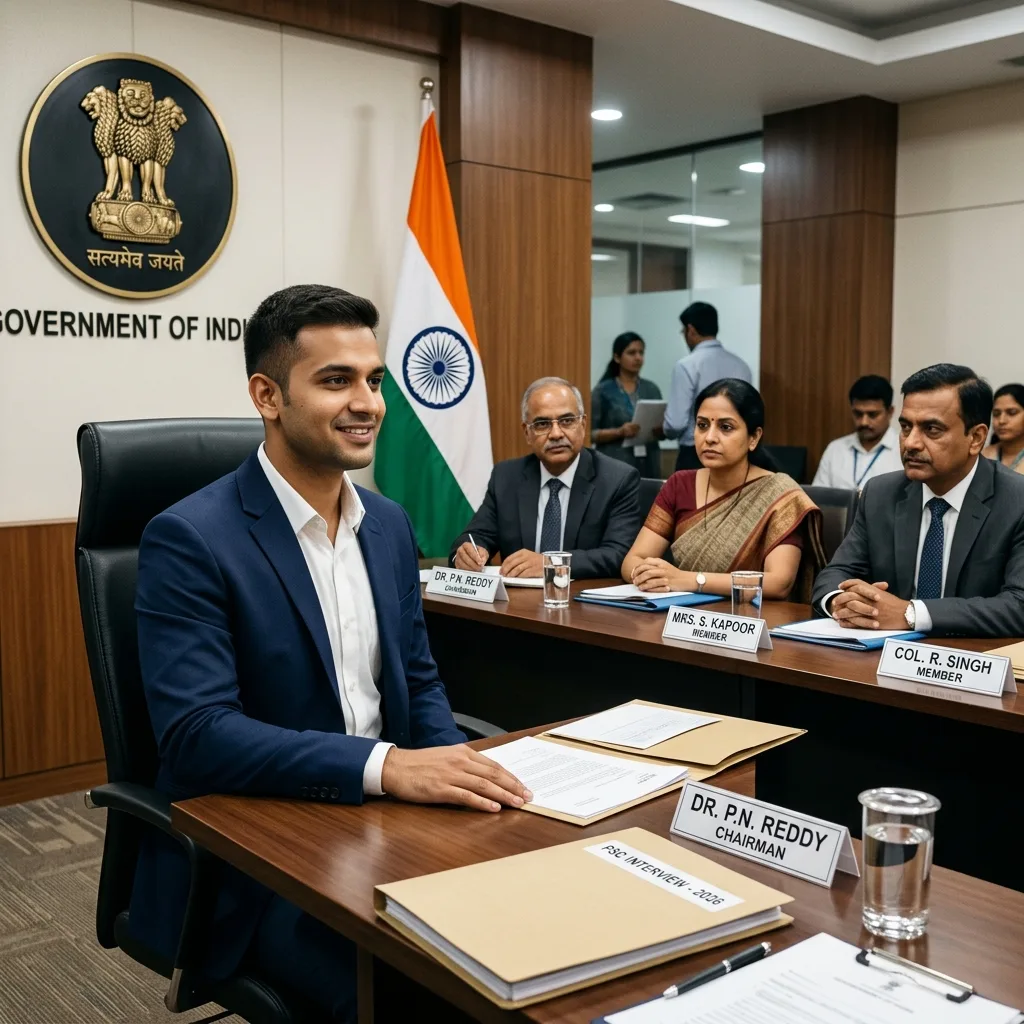
Nature: Face-to-face interview with UPSC Board
Duration: 30-45 minutes
Marks: 275 marks
Weightage: 13.6% of total marks
Interview Board Composition:
- Chairman (Senior UPSC Member)
- 4-5 Board Members (Retired Bureaucrats, Academicians)
Areas of Assessment:
- General awareness and current affairs
- Mental alertness and critical thinking
- Clarity of thought and expression
- Balanced judgment and variety of interests
- Ability to assimilate and communicate
- Leadership qualities and integrity
- Social cohesion and tolerance
Final Merit Calculation:
Total Marks = Mains (1750) + Interview (275) = 2025 marks
Final Rank based on total marks
UPSC Services and Vacancies
All India Services (AIS)
1. Indian Administrative Service (IAS)
- Vacancies: 180-200
- Training: LBSNAA, Mussoorie (2 years)
- Posting: District Collector, Secretary
- Cadre: State-based allotment
2. Indian Police Service (IPS)
- Vacancies: 150-180
- Training: NPA, Hyderabad (2 years)
- Posting: SP, DIG, IG, DGP
- Cadre: State-based allotment
3. Indian Forest Service (IFoS)
- Vacancies: 100-120
- Training: IGNFA, Dehradun (2 years)
- Posting: Forest Officer, PCCF
- Cadre: State-based allotment
Central Services - Group A
4. Indian Foreign Service (IFS)
- Vacancies: 25-30
- Training: FSI, New Delhi
- Posting: Embassies, High Commissions
- International exposure
5. Indian Revenue Service (IRS - IT)
- Vacancies: 100-120
- Training: NADT, Nagpur
- Posting: Income Tax Department
6. Indian Revenue Service (IRS - C&CE)
- Vacancies: 80-100
- Training: NACIN, Faridabad
- Posting: Customs & Central Excise
7. Indian Audit & Accounts Service (IA&AS)
- Vacancies: 80-100
- Training: NAAA, Shimla
- Posting: CAG Office
8. Indian Defence Accounts Service (IDAS)
- Vacancies: 15-20
- Posting: Defence Accounts Department
9. Indian Civil Accounts Service (ICAS)
- Vacancies: 15-20
- Posting: Civil Accounts Department
10. Indian Railway Traffic Service (IRTS)
- Vacancies: 40-50
- Posting: Railway Operations
11. Indian Railway Accounts Service (IRAS)
- Vacancies: 20-25
- Posting: Railway Finance
12. Indian Railway Personnel Service (IRPS)
- Vacancies: 20-25
- Posting: Railway HR
13. Indian Postal Service (IPoS)
- Vacancies: 40-50
- Posting: Postal Department
14. Indian Ordnance Factories Service (IOFS)
- Vacancies: 15-20
- Posting: Ordnance Factories
15. Indian Defence Estates Service (IDES)
- Vacancies: 5-10
- Posting: Defence Estates
16. Indian Information Service (IIS)
- Vacancies: 15-20
- Posting: PIB, Media
17. Indian Trade Service (ITS)
- Vacancies: 10-15
- Posting: DGFT, Trade
18. Indian Corporate Law Service (ICLS)
- Vacancies: 5-10
- Posting: MCA
Central Services - Group B
19. Armed Forces Headquarters Civil Service
- Vacancies: 10-15
20. DANICS (Delhi, Andaman & Nicobar Islands Civil Service)
- Vacancies: 5-10
21. DANIPS (Delhi, Andaman & Nicobar Islands Police Service)
- Vacancies: 5-10
22. Pondicherry Civil Service
- Vacancies: 2-5
23. Pondicherry Police Service
- Vacancies: 2-5
Total Vacancies: Approximately 900-1,000 per year
UPSC CSE 2026 Complete Syllabus
Prelims Syllabus
Paper-I: General Studies (200 Marks)
1. Current Events of National and International Importance
- National Affairs (Government Policies, Schemes)
- International Relations
- Important Personalities
- Awards and Honors
- Sports Events
- Books and Authors
2. History of India and Indian National Movement
- Ancient India (Indus Valley, Vedic Period, Mauryan, Gupta)
- Medieval India (Delhi Sultanate, Mughal Empire, Regional Kingdoms)
- Modern India (British Rule, Freedom Struggle, Post-Independence)
- Art and Culture (Architecture, Sculpture, Painting, Music, Dance)
3. Indian and World Geography
- Physical Geography (Landforms, Climate, Vegetation, Soils)
- Indian Geography (Rivers, Mountains, Plateaus, Coastal Areas)
- World Geography (Continents, Oceans, Important Places)
- Economic Geography (Agriculture, Industries, Resources)
- Environmental Geography (Climate Change, Biodiversity)
4. Indian Polity and Governance
- Constitution of India (Features, Amendments, Schedules)
- Fundamental Rights and Duties
- Directive Principles of State Policy
- Union and State Government
- Parliament and State Legislatures
- Judiciary (Supreme Court, High Courts)
- Local Government (Panchayati Raj, Municipalities)
- Constitutional Bodies (Election Commission, CAG, UPSC)
5. Economic and Social Development
- Indian Economy (GDP, GNP, National Income)
- Planning and Economic Reforms
- Budget and Taxation
- Banking and Financial Institutions
- Poverty and Unemployment
- Social Sector Initiatives (Health, Education)
- Government Schemes and Programs
6. Environmental Ecology, Biodiversity and Climate Change
- Ecosystem and Biodiversity
- Environmental Pollution
- Climate Change and Global Warming
- Wildlife Conservation
- National Parks and Sanctuaries
- International Environmental Agreements
7. General Science
- Physics (Motion, Force, Energy, Light, Sound, Electricity)
- Chemistry (Elements, Compounds, Acids, Bases, Metals)
- Biology (Cell, Human Body, Diseases, Genetics)
- Biotechnology and Nanotechnology
- Space Technology
- Computer and Information Technology
Paper-II: CSAT (200 Marks - Qualifying)
1. Comprehension
- Reading passages (400-500 words)
- Understanding main ideas
- Drawing inferences
- Vocabulary in context
2. Interpersonal Skills and Communication
- Effective communication
- Social skills
- Emotional intelligence
3. Logical Reasoning and Analytical Ability
- Analogies
- Series completion
- Coding-decoding
- Blood relations
- Direction sense
- Syllogism
- Puzzles
4. Decision Making and Problem Solving
- Data interpretation
- Data sufficiency
- Problem-solving techniques
5. General Mental Ability
- Number series
- Letter series
- Odd one out
- Classification
6. Basic Numeracy
- Number system
- Percentages
- Ratio and proportion
- Average
- Simple and compound interest
- Profit and loss
- Time and work
- Time, speed and distance
- Data interpretation (Tables, Graphs, Charts)
7. Data Interpretation
- Tables
- Bar graphs
- Line graphs
- Pie charts
- Mixed graphs
Mains Syllabus
Paper-A: Indian Language (300 Marks - Qualifying)
Sections:
- Comprehension of given passages
- Precis writing
- Usage and vocabulary
- Short essays
- Translation from English to Indian language and vice-versa
Minimum Qualifying Marks: 75 marks (25%)
Paper-B: English (300 Marks - Qualifying)
Sections:
- Comprehension of given passages
- Precis writing
- Usage and vocabulary
- Short essays
- Translation from Indian language to English and vice-versa
Minimum Qualifying Marks: 75 marks (25%)
Paper-I: Essay (250 Marks)
Format:
- Three sections (Philosophy, Social, Political)
- Choose one topic from each section
- Write three essays (approximately 1000-1200 words each)
Topics Cover:
- Philosophy and abstract themes
- Social issues and problems
- Political and governance issues
- Economic development
- Science and technology
- Environmental concerns
Evaluation Criteria:
- Content quality and relevance
- Logical presentation
- Language proficiency
- Coherence and flow
- Conclusion and recommendations
Paper-II: GS-I (250 Marks)
Indian Heritage and Culture:
- Ancient to modern Indian culture
- Art forms, literature, architecture
- Salient features of world's art forms
History:
- Modern Indian history (18th century to present)
- Freedom struggle and national movement
- Post-independence consolidation
- World history (events, forms of government, colonization)
Society:
- Indian society and diversity
- Role of women
- Population and associated issues
- Poverty and developmental issues
- Urbanization and migration
Geography:
- World physical geography
- Distribution of key natural resources
- Geophysical phenomena (earthquakes, tsunamis, volcanoes)
- Geographical features and their location
Paper-III: GS-II (250 Marks)
Governance:
- Constitution and constitutional provisions
- Parliament and state legislatures
- Judiciary and judicial reforms
- Government policies and interventions
- Welfare schemes and their performance
- Regulatory bodies and mechanisms
Polity:
- Comparison of Indian constitutional scheme with other countries
- Functions and responsibilities of Union and States
- Federal structure and devolution of powers
- Separation of powers and dispute redressal mechanisms
Social Justice:
- Issues relating to development and management of social sector
- Education, human resources, public health
- Poverty and hunger
- Vulnerable sections of population
International Relations:
- India and its neighborhood relations
- Bilateral, regional and global groupings
- Effect of policies and politics of developed and developing countries
- Important international institutions
Paper-IV: GS-III (250 Marks)
Economic Development:
- Indian economy and planning
- Mobilization of resources
- Growth and development
- Employment generation
- Land reforms
- Infrastructure development
- Investment models
Technology:
- Science and technology developments
- Achievements of Indians in science and technology
- Technology missions
- Indigenization of technology
- IT, Space, Computers, Robotics, Nano-technology, Bio-technology
Environment:
- Conservation and environmental pollution
- Environmental impact assessment
- Disaster management
Security:
- Internal security challenges
- Role of external state and non-state actors
- Linkages between development and extremism
- Role of media and social networking sites
- Cyber security
- Money laundering
- Border management
Paper-V: GS-IV (250 Marks)
Ethics and Human Interface:
- Essence, determinants and consequences of ethics
- Dimensions of ethics
- Ethics in private and public relationships
- Human values and lessons from lives of great leaders
Attitude:
- Content, structure, function
- Influence and relation with thought and behavior
- Moral and political attitudes
- Social influence and persuasion
Aptitude:
- Civil service values and ethics in public administration
- Status and problems
- Ethical concerns and dilemmas
- Laws, rules, regulations and conscience
- Accountability and ethical governance
- Strengthening of ethical and moral values
Emotional Intelligence:
- Concepts and utilities
- Application in administration and governance
Case Studies:
- Practical application of ethics
- Problem-solving approach
- Decision-making in ethical dilemmas
Optional Subject (500 Marks)
Two Papers of 250 marks each
Popular Optional Subjects:
- Geography
- History
- Public Administration
- Sociology
- Anthropology
- Political Science and International Relations (PSIR)
- Psychology
- Law
- Economics
- Philosophy
Other Optional Subjects:
- Literature (Hindi, English, Regional Languages)
- Mathematics
- Physics
- Chemistry
- Botany
- Zoology
- Medical Science
- Agriculture
- Animal Husbandry and Veterinary Science
- Civil Engineering
- Electrical Engineering
- Mechanical Engineering
- Commerce and Accountancy
- Management
- Statistics
Proven 18-Month Preparation Strategy
Month-wise Study Plan Overview
Visual Timeline:
Month 1-6: Foundation Building (NCERT + Basic Books)
    ↓
Month 7-12: Advanced Preparation (Standard Books + Current Affairs)
    ↓
Month 13-15: Prelims Intensive (Mock Tests + Revision)
    ↓
Month 16-18: Mains Preparation (Answer Writing + Optional)
    ↓
UPSC CSE 2026 → Prelims → Mains → Interview → IAS Officer
Phase 1: Foundation Building (Month 1-6)
Goals:
- Complete NCERT (Class 6-12) for all subjects
- Build strong conceptual foundation
- Understand basic concepts of Polity, Economy, Geography, History
- Start reading newspaper daily
Daily Schedule (8-10 hours):
| Time | Activity | Duration |
|---|---|---|
| 6:00 AM - 7:00 AM | Newspaper Reading (The Hindu/Indian Express) | 1 hour |
| 7:00 AM - 8:00 AM | Breakfast + Current Affairs Notes | 1 hour |
| 8:00 AM - 11:00 AM | NCERT Reading (History/Polity) | 3 hours |
| 11:00 AM - 11:30 AM | Break | 30 min |
| 11:30 AM - 2:00 PM | NCERT Reading (Geography/Economy) | 2.5 hours |
| 2:00 PM - 3:00 PM | Lunch + Rest | 1 hour |
| 3:00 PM - 5:00 PM | NCERT Reading (Science/Environment) | 2 hours |
| 5:00 PM - 5:30 PM | Tea Break | 30 min |
| 5:30 PM - 7:30 PM | Revision + Notes Making | 2 hours |
| 7:30 PM - 8:30 PM | Dinner | 1 hour |
| 8:30 PM - 10:00 PM | Current Affairs Revision | 1.5 hours |
Books to Complete:
- NCERT History (Class 6-12)
- NCERT Geography (Class 6-12)
- NCERT Polity (Class 11-12)
- NCERT Economy (Class 9-12)
- NCERT Science (Class 6-10)
- NCERT Environment (Class 11-12)
Weekly Tasks:
- Complete 3-4 NCERT books
- Make chapter-wise notes
- Revise previous week topics on Sunday
- Read 7 newspapers thoroughly
- Make current affairs notes
Important Tips:
- Read NCERT line by line
- Understand concepts, don't memorize
- Make concise notes
- Link topics across subjects
- Start building answer writing habit
Phase 2: Advanced Preparation (Month 7-12)
Goals:
- Complete standard reference books
- Strengthen conceptual understanding
- Build comprehensive notes
- Master current affairs
- Start optional subject preparation
Daily Schedule (10-12 hours):
| Time | Activity | Duration |
|---|---|---|
| 5:30 AM - 6:30 AM | Newspaper Reading | 1 hour |
| 6:30 AM - 7:30 AM | Breakfast + CA Notes | 1 hour |
| 7:30 AM - 10:30 AM | Standard Books (Polity/Economy) | 3 hours |
| 10:30 AM - 11:00 AM | Break | 30 min |
| 11:00 AM - 2:00 PM | Standard Books (History/Geography) | 3 hours |
| 2:00 PM - 3:00 PM | Lunch + Rest | 1 hour |
| 3:00 PM - 6:00 PM | Optional Subject | 3 hours |
| 6:00 PM - 6:30 PM | Tea Break | 30 min |
| 6:30 PM - 8:30 PM | Revision + Notes | 2 hours |
| 8:30 PM - 9:30 PM | Dinner | 1 hour |
| 9:30 PM - 11:00 PM | Current Affairs + Monthly Magazine | 1.5 hours |
Books to Complete:
- Laxmikanth (Indian Polity)
- Spectrum (Modern History)
- Certificate Physical and Human Geography (GC Leong)
- Indian Economy (Ramesh Singh)
- Environment (Shankar IAS)
- Optional Subject Standard Books
Weekly Tasks:
- Complete 2-3 chapters from standard books
- Revise NCERT again
- Make integrated notes
- Read monthly current affairs magazine
- Start optional subject seriously
Focus Areas:
- Conceptual clarity
- Inter-linking of topics
- Current affairs integration
- Optional subject foundation
- Answer writing practice (weekly)
Phase 3: Prelims Intensive (Month 13-15)
Goals:
- Complete entire syllabus revision
- Attempt 50+ mock tests
- Master MCQ solving techniques
- Achieve 90+ marks in GS Paper-I
- Clear CSAT comfortably
Daily Schedule (12-14 hours):
Morning:
- 5:00 AM - 8:00 AM: Prelims Mock Test (3 hours)
- 8:00 AM - 9:00 AM: Breakfast
- 9:00 AM - 12:00 PM: Mock Test Analysis (3 hours)
Afternoon:
- 12:00 PM - 1:00 PM: Lunch + Rest
- 1:00 PM - 4:00 PM: Weak Topics Practice (3 hours)
- 4:00 PM - 4:30 PM: Tea Break
Evening:
- 4:30 PM - 7:00 PM: Syllabus Revision (2.5 hours)
- 7:00 PM - 8:00 PM: Dinner
- 8:00 PM - 10:00 PM: Current Affairs (2 hours)
- 10:00 PM - 11:00 PM: Previous Year Papers (1 hour)
Weekly Tasks:
- Attempt 5-6 full-length mock tests
- Analyze every question thoroughly
- Revise complete syllabus once
- Solve 5 previous year papers
- Focus on time management
Mock Test Strategy:
- Take test in exam-like environment
- Time each paper properly (2 hours each)
- Don't check answers during test
- Analyze mistakes thoroughly
- Maintain error log
Target Scores:
- GS Paper-I: 120-130 marks (90-95 correct)
- CSAT Paper-II: 100+ marks (50+ correct)
- Total: 220-230 marks
Phase 4: Mains Preparation (Month 16-18)
Goals:
- Master answer writing
- Complete optional subject
- Practice 100+ answers
- Develop writing speed
- Build exam temperament
Daily Schedule (14-16 hours):
Morning:
- 5:00 AM - 8:00 AM: Answer Writing Practice (3 hours)
- 8:00 AM - 9:00 AM: Breakfast
- 9:00 AM - 12:00 PM: Optional Subject (3 hours)
Afternoon:
- 12:00 PM - 1:00 PM: Lunch + Rest
- 1:00 PM - 4:00 PM: GS Papers Revision (3 hours)
- 4:00 PM - 4:30 PM: Tea Break
Evening:
- 4:30 PM - 7:30 PM: Essay Writing + Ethics (3 hours)
- 7:30 PM - 8:30 PM: Dinner
- 8:30 PM - 11:00 PM: Current Affairs Integration (2.5 hours)
Weekly Tasks:
- Write 20-25 answers
- Complete 2 full-length mains test series
- Revise optional subject thoroughly
- Practice essay writing (2-3 essays)
- Integrate current affairs with static topics
How to Choose Optional Subject
Factors to Consider
1. Interest and Background
- Choose subject you enjoy studying
- Academic background helps but not mandatory
- Passion leads to better retention
2. Scoring Potential
- Check previous year toppers' scores
- Analyze subject-wise average marks
- Consider examiner's marking pattern
3. Availability of Resources
- Standard books availability
- Coaching and guidance
- Study material and notes
4. Overlap with GS Papers
- Geography overlaps with GS-I
- Public Administration overlaps with GS-II
- History overlaps with GS-I
5. Time Required
- Some subjects need more preparation time
- Consider your available time
- Balance with GS preparation
Top 10 Optional Subjects Analysis
1. Geography (Most Popular)
- Pros: Overlaps with GS, map-based, scoring
- Cons: Vast syllabus, diagram-intensive
- Average Score: 280-320/500
- Preparation Time: 6-8 months
- Best For: Science/Arts students
2. Public Administration
- Pros: Overlaps with GS-II, current affairs friendly
- Cons: Abstract concepts, less scoring
- Average Score: 260-300/500
- Preparation Time: 4-6 months
- Best For: All backgrounds
3. Sociology
- Pros: Easy to understand, scoring, less syllabus
- Cons: Limited resources, abstract
- Average Score: 270-310/500
- Preparation Time: 5-7 months
- Best For: All backgrounds
4. History
- Pros: Overlaps with GS-I, interesting
- Cons: Vast syllabus, memory-intensive
- Average Score: 270-310/500
- Preparation Time: 8-10 months
- Best For: Arts students
5. Anthropology
- Pros: Scoring, manageable syllabus
- Cons: Limited coaching, less resources
- Average Score: 280-320/500
- Preparation Time: 5-7 months
- Best For: Science/Arts students
6. PSIR (Political Science & IR)
- Pros: Overlaps with GS-II, current affairs
- Cons: Abstract, opinion-based
- Average Score: 260-300/500
- Preparation Time: 6-8 months
- Best For: Arts students
7. Psychology
- Pros: Interesting, scientific approach
- Cons: Limited resources, case studies
- Average Score: 270-310/500
- Preparation Time: 6-8 months
- Best For: Science students
8. Law
- Pros: Scoring, structured syllabus
- Cons: Needs legal background
- Average Score: 280-320/500
- Preparation Time: 5-7 months
- Best For: Law graduates
9. Economics
- Pros: Overlaps with GS-III, analytical
- Cons: Mathematical, technical
- Average Score: 260-300/500
- Preparation Time: 7-9 months
- Best For: Economics graduates
10. Philosophy
- Pros: Scoring, less competition
- Cons: Abstract, difficult concepts
- Average Score: 270-310/500
- Preparation Time: 6-8 months
- Best For: Arts students
Best Books for UPSC IAS 2026
For Prelims
History:
- NCERT (Class 6-12) ⭐⭐⭐⭐⭐
- Spectrum's Modern History (Rajiv Ahir) ⭐⭐⭐⭐⭐
- India's Struggle for Independence (Bipan Chandra) ⭐⭐⭐⭐
- Ancient India (RS Sharma) ⭐⭐⭐⭐
- Medieval India (Satish Chandra) ⭐⭐⭐⭐
Geography:
- NCERT (Class 6-12) ⭐⭐⭐⭐⭐
- Certificate Physical and Human Geography (GC Leong) ⭐⭐⭐⭐⭐
- Geography of India (Majid Husain) ⭐⭐⭐⭐
- Oxford School Atlas ⭐⭐⭐⭐⭐
Polity:
- NCERT (Class 11-12) ⭐⭐⭐⭐⭐
- Indian Polity (M Laxmikanth) ⭐⭐⭐⭐⭐
- Introduction to Constitution of India (DD Basu) ⭐⭐⭐⭐
Economy:
- NCERT (Class 9-12) ⭐⭐⭐⭐⭐
- Indian Economy (Ramesh Singh) ⭐⭐⭐⭐⭐
- Economic Survey (Latest) ⭐⭐⭐⭐⭐
- Budget (Latest) ⭐⭐⭐⭐
Environment:
- NCERT (Class 11-12) ⭐⭐⭐⭐⭐
- Environment (Shankar IAS) ⭐⭐⭐⭐⭐
Science & Technology:
- NCERT (Class 6-10) ⭐⭐⭐⭐⭐
- Science & Technology (Ravi P Agrahari) ⭐⭐⭐⭐
Current Affairs:
- The Hindu Newspaper (Daily) ⭐⭐⭐⭐⭐
- Indian Express (Daily) ⭐⭐⭐⭐
- Vision IAS Monthly Magazine ⭐⭐⭐⭐⭐
- Yojana Magazine ⭐⭐⭐⭐
- Kurukshetra Magazine ⭐⭐⭐⭐
CSAT:
- CSAT Manual (TMH) ⭐⭐⭐⭐
- Analytical Reasoning (MK Pandey) ⭐⭐⭐⭐
- Quantitative Aptitude (RS Aggarwal) ⭐⭐⭐⭐
For Mains
Essay:
- 151 Essays (Disha Publication) ⭐⭐⭐⭐
- Mains 365 (Vision IAS) ⭐⭐⭐⭐⭐
GS-I:
- India's Ancient Past (RS Sharma) ⭐⭐⭐⭐
- Medieval India (Satish Chandra) ⭐⭐⭐⭐
- Modern India (Bipan Chandra) ⭐⭐⭐⭐⭐
- India After Gandhi (Ramachandra Guha) ⭐⭐⭐⭐
- Certificate Geography (GC Leong) ⭐⭐⭐⭐⭐
- Indian Society (NCERT Class 12) ⭐⭐⭐⭐⭐
GS-II:
- Indian Polity (M Laxmikanth) ⭐⭐⭐⭐⭐
- Governance in India (M Laxmikanth) ⭐⭐⭐⭐
- 2nd ARC Reports ⭐⭐⭐⭐
- International Relations (Pushpesh Pant) ⭐⭐⭐⭐
GS-III:
- Indian Economy (Ramesh Singh) ⭐⭐⭐⭐⭐
- Economic Survey ⭐⭐⭐⭐⭐
- Science & Technology (Ravi Agrahari) ⭐⭐⭐⭐
- Internal Security (Ashok Kumar) ⭐⭐⭐⭐
- Environment (Shankar IAS) ⭐⭐⭐⭐⭐
GS-IV (Ethics):
- Ethics, Integrity & Aptitude (Lexicon) ⭐⭐⭐⭐⭐
- Ethics Case Studies (Chronicle) ⭐⭐⭐⭐
Current Affairs Strategy
Daily Routine
Morning (1.5 hours):
- Read The Hindu newspaper thoroughly
- Focus on editorials and opinion pieces
- Note down important facts and data
- Underline key points
Evening (1 hour):
- Read Indian Express (selected articles)
- Watch news channels (30 minutes)
- Make concise notes
- Link with static topics
Monthly Compilation
Sources:
- Vision IAS Monthly Magazine
- Insights on India Monthly
- Yojana Magazine
- Kurukshetra Magazine
- PIB (Press Information Bureau)
How to Use:
- Read monthly magazine thoroughly
- Make topic-wise notes
- Integrate with static syllabus
- Revise previous months regularly
Topic-wise Current Affairs
1. National Affairs
- Government schemes and policies
- Important bills and acts
- Supreme Court judgments
- Constitutional amendments
2. International Relations
- India's bilateral relations
- International organizations
- Global summits and conferences
- Geopolitical issues
3. Economy
- Budget highlights
- Economic indicators (GDP, inflation)
- Banking and financial sector
- Trade and commerce
4. Science & Technology
- Space missions
- Defense technology
- Medical breakthroughs
- IT and digital initiatives
5. Environment
- Climate change conferences
- Environmental policies
- Biodiversity conservation
- Pollution control measures
6. Social Issues
- Education and health
- Women and child welfare
- Poverty and unemployment
- Social justice initiatives
Integration with Static Topics
Example:
- Current: New Education Policy 2020
- Static: Article 21A (Right to Education)
- Integration: Link NEP with constitutional provisions, previous policies, challenges, and way forward
Answer Writing for Mains
Structure of a Good Answer
Introduction (10-15% - 2-3 lines)
- Define the topic
- Give context
- Mention significance
Body (70-80% - 12-15 points)
- Main content with subheadings
- Use facts, data, examples
- Multiple dimensions
- Balanced approach
Conclusion (10-15% - 2-3 lines)
- Summarize key points
- Way forward
- Positive note
Answer Writing Techniques
1. Keyword Identification
- Analyze: Break down the topic
- Discuss: Present multiple viewpoints
- Examine: Detailed investigation
- Critically evaluate: Pros and cons
- Comment: Your opinion with justification
2. Content Enhancement
- Use facts and data
- Quote committees and reports
- Mention government schemes
- Give examples (national and international)
- Use diagrams and flowcharts
3. Presentation Skills
- Clear handwriting
- Proper spacing
- Underline keywords
- Use bullet points
- Draw margins
4. Time Management
- 30 minutes per 250-mark answer
- 15 minutes per 150-mark answer
- 10 minutes per 100-mark answer
- Leave time for revision
Practice Strategy
Daily Practice:
- Write 2-3 answers daily
- Time yourself
- Get feedback
- Improve based on feedback
Weekly Practice:
- Write 1 full-length test
- Cover all GS papers
- Practice essay writing
- Focus on weak areas
Monthly Practice:
- Complete test series
- Analyze performance
- Identify patterns
- Work on improvement areas
Personality Test (Interview) Preparation
Understanding the Interview
Purpose:
- Assess personality traits
- Test mental alertness
- Evaluate communication skills
- Check suitability for civil services
Duration: 30-45 minutes
Marks: 275 (13.6% of total)
Board Members: 4-5 members
Areas of Questioning
1. DAF (Detailed Application Form)
- Educational background
- Work experience
- Hobbies and interests
- Optional subject
- Home state/district
2. Current Affairs
- National issues
- International relations
- Government policies
- Recent developments
3. Optional Subject
- Basic concepts
- Recent developments
- Application in governance
4. Home State/District
- Geography and culture
- Economic profile
- Social issues
- Development initiatives
5. Hobbies and Interests
- In-depth knowledge
- Practical experience
- Recent developments
6. Situational Questions
- Ethical dilemmas
- Problem-solving
- Decision-making
- Leadership qualities
Preparation Strategy
Phase 1: Self-Analysis (1 month)
- Analyze your DAF thoroughly
- Identify potential questions
- Prepare answers
- Practice with friends
Phase 2: Knowledge Building (2 months)
- Read about your state/district
- Study optional subject deeply
- Follow current affairs religiously
- Read about hobbies
Phase 3: Mock Interviews (1 month)
- Attend 5-10 mock interviews
- Get feedback
- Work on body language
- Improve communication
Do's and Don'ts
Do's:
- Be honest and genuine
- Maintain eye contact
- Speak clearly and confidently
- Admit if you don't know
- Stay calm and composed
- Dress formally
- Be punctual
Don'ts:
- Don't lie or bluff
- Don't argue with board
- Don't be overconfident
- Don't speak too fast/slow
- Don't fidget
- Don't use mobile phone
- Don't be nervous
Comparison: IAS vs IPS vs IFS
Indian Administrative Service (IAS)
Role:
- District administration
- Policy formulation
- Implementation of schemes
- Revenue collection
Career Progression:
- Sub-Divisional Magistrate (SDM)
- District Magistrate (DM)
- Divisional Commissioner
- Secretary to Government
- Cabinet Secretary
Salary:
- Entry: ₹56,100/month
- Mid-career: ₹1,18,500/month
- Senior: ₹2,25,000/month
- Cabinet Secretary: ₹2,50,000/month
Perks:
- Official residence
- Government vehicle
- Staff (peon, driver, cook)
- Medical facilities
- LTC and other allowances
Indian Police Service (IPS)
Role:
- Law and order maintenance
- Crime investigation
- Intelligence gathering
- VIP security
Career Progression:
- Assistant Superintendent of Police (ASP)
- Superintendent of Police (SP)
- Deputy Inspector General (DIG)
- Inspector General (IG)
- Director General of Police (DGP)
Salary:
- Entry: ₹56,100/month
- Mid-career: ₹1,18,500/month
- Senior: ₹2,25,000/month
- DGP: ₹2,25,000/month
Perks:
- Official residence
- Government vehicle
- Security staff
- Medical facilities
- Uniform allowance
Indian Foreign Service (IFS)
Role:
- Diplomatic relations
- Trade negotiations
- Consular services
- Cultural exchange
Career Progression:
- Third Secretary
- Second Secretary
- First Secretary
- Counsellor
- Minister
- Ambassador
Salary:
- Entry: ₹56,100/month
- Mid-career: ₹1,18,500/month
- Senior: ₹2,25,000/month
- Ambassador: ₹2,25,000/month
Perks:
- Official residence (abroad)
- Government vehicle
- Staff
- Foreign allowance
- Children's education allowance
UPSC Salary Structure and Benefits
Pay Scale (7th Pay Commission)
| Level | Basic Pay | Grade Pay | Total |
|---|---|---|---|
| Entry Level (Junior Scale) | ₹56,100 | - | ₹56,100 |
| Senior Time Scale | ₹67,700 | - | ₹67,700 |
| Junior Administrative Grade | ₹78,800 | - | ₹78,800 |
| Selection Grade | ₹1,18,500 | - | ₹1,18,500 |
| Super Time Scale | ₹1,31,100 | - | ₹1,31,100 |
| Above Super Time Scale | ₹1,44,200 | - | ₹1,44,200 |
| Apex Scale | ₹2,05,400 | - | ₹2,05,400 |
| Cabinet Secretary | ₹2,50,000 | - | ₹2,50,000 |
Allowances
1. Dearness Allowance (DA)
- Currently 50% of basic pay
- Revised twice a year
2. House Rent Allowance (HRA)
- X-class cities: 24% of basic
- Y-class cities: 16% of basic
- Z-class cities: 8% of basic
3. Transport Allowance (TA)
- ₹3,600 to ₹7,200 per month
4. Other Allowances
- Medical allowance
- Children education allowance
- LTC (Leave Travel Concession)
- Telephone allowance
- Newspaper allowance
Total Monthly Income (Approximate)
Entry Level:
- Basic: ₹56,100
- DA (50%): ₹28,050
- HRA (24%): ₹13,464
- TA: ₹3,600
- Total: ₹1,01,214/month
Mid-Career (Selection Grade):
- Basic: ₹1,18,500
- DA (50%): ₹59,250
- HRA (24%): ₹28,440
- TA: ₹7,200
- Total: ₹2,13,390/month
Senior Level (Apex Scale):
- Basic: ₹2,05,400
- DA (50%): ₹1,02,700
- HRA (24%): ₹49,296
- TA: ₹7,200
- Total: ₹3,64,596/month
Retirement Benefits
1. Pension
- 50% of last drawn basic pay
- Indexed to inflation
2. Gratuity
- ₹20 lakhs (maximum)
3. Leave Encashment
- Up to 300 days
4. CGHS (Medical)
- Lifetime medical coverage
Frequently Asked Questions
Q1: What is the success rate of UPSC CSE? A: Approximately 0.1% (1 in 1000 candidates). Out of 10 lakh applicants, only 900-1000 get selected.
Q2: How many attempts are allowed in UPSC? A: General/EWS: 6 attempts, OBC: 9 attempts, SC/ST: Unlimited attempts (till age limit).
Q3: Can I crack UPSC in first attempt? A: Yes, but it requires exceptional preparation, dedication, and strategy. About 10-15% of selected candidates clear in first attempt.
Q4: Is coaching necessary for UPSC? A: Not mandatory. Many toppers have cleared through self-study. However, coaching provides guidance, study material, and peer learning.
Q5: Which optional subject is best? A: Depends on your interest and background. Geography, Public Administration, and Sociology are popular choices with good scoring potential.
Q6: How many hours should I study daily? A: 8-10 hours during foundation phase, 10-12 hours during advanced phase, 12-14 hours during intensive phase.
Q7: Is NCERT enough for UPSC? A: NCERT is foundation but not sufficient. You need standard reference books, current affairs, and answer writing practice.
Q8: When should I start UPSC preparation? A: Ideally after graduation. However, you can start during final year. Minimum 12-18 months of dedicated preparation required.
Q9: Can working professionals crack UPSC? A: Yes, many working professionals have cleared UPSC. Requires time management, dedication, and smart preparation strategy.
Q10: What is the role of current affairs in UPSC? A: Very important. 40-50% questions in Prelims and 60-70% content in Mains come from current affairs integrated with static topics.
Success Stories from UPSC Toppers
Topper 1: Tina Dabi (UPSC 2015 - AIR 1)
Background:
- From Delhi
- Political Science graduate
- First attempt success
Strategy:
- Focused on NCERT and standard books
- Made comprehensive notes
- Practiced answer writing daily
- Integrated current affairs with static topics
Key Advice: "Consistency is the key. Study daily without fail. Make your own notes. Practice answer writing from day one. Stay updated with current affairs."
Topper 2: Kanishak Kataria (UPSC 2018 - AIR 1)
Background:
- From Rajasthan
- B.Tech from IIT Bombay
- Mathematics optional
Strategy:
- Balanced job and preparation
- Focused on quality over quantity
- Strong optional subject preparation
- Regular mock tests
Key Advice: "Don't run after multiple books. Stick to standard books and revise them multiple times. Optional subject can be a game changer."
Topper 3: Srushti Jayant Deshmukh (UPSC 2018 - AIR 5)
Background:
- From Maharashtra
- Chemistry graduate
- Sociology optional
Strategy:
- Self-study approach
- Made detailed notes
- Focused on answer writing
- Strong current affairs preparation
Key Advice: "Believe in yourself. Make your own notes. Practice answer writing extensively. Stay positive throughout the journey."
Important Resources and Links
Official Websites
- UPSC Official: https://upsc.gov.in/
- UPSC Syllabus: https://upsc.gov.in/examinations/syllabus
- UPSC Previous Papers: https://upsc.gov.in/previous-question-papers
Recommended Websites
- Insights on India: https://www.insightsonindia.com/
- Vision IAS: https://www.visionias.in/
- ClearIAS: https://www.clearias.com/
- IASbaba: https://iasbaba.com/
YouTube Channels
- Study IQ Education
- Unacademy UPSC
- Drishti IAS
- Vision IAS
- Vajiram and Ravi
Mobile Apps
- UPSC Pathshala
- ClearIAS
- Insights IAS
- Byju's IAS Prep
- Unacademy
Final Words of Motivation
Remember:
- UPSC is a marathon, not a sprint
- Consistency beats intensity
- Smart work with hard work
- Stay healthy and positive
- Believe in yourself
Success Mantra:
Dedication + Strategy + Consistency + Perseverance = UPSC Success
All the Best for UPSC CSE 2026!
Your dream of becoming an IAS/IPS/IFS officer is achievable. Stay focused, work hard, and never give up. The nation needs dedicated civil servants like you.
Jai Hind!
Disclaimer: This guide is for informational purposes only. Please refer to official UPSC website for accurate and updated information.
Last Updated: January 29, 2026