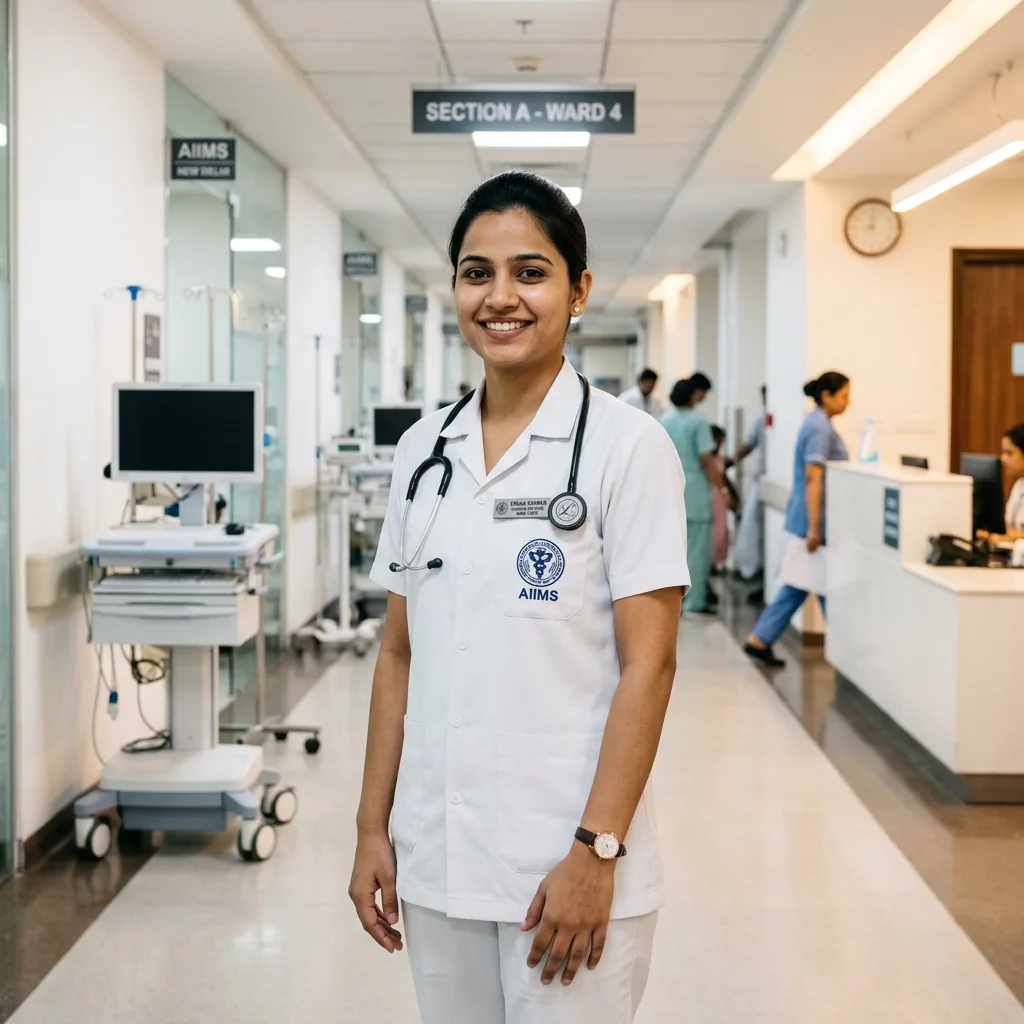
Introduction: AIIMS NORCET 11 — India's Premier Nursing Career Opportunity
On July 24, 2026, AIIMS (All India Institute of Medical Sciences) released the official notification for NORCET 11 — Nursing Officer Recruitment Common Eligibility Test — inviting applications for 2,218 Nursing Officer posts across all AIIMS campuses in India.
For every B.Sc Nursing graduate, Post-Basic BSc Nursing holder, and GNM nurse in India — AIIMS NORCET is the ultimate career destination. Level 7 pay. India's most prestigious medical institutions. Centralized national-level selection.
What makes NORCET 11 extraordinary:
- Level 7 pay (Rs.44,900 basic) — higher than SSC CGL Group B posts, higher than SSC CPO Sub-Inspector, higher than RRB JE
- ALL 23 AIIMS campuses recruit together in ONE centralized exam — like IBPS for banking, but for nursing
- 2,218 posts — largest nursing government recruitment of 2026
- Fast timeline — Apply by August 13, Exam September 12 (Prelims), September 30 (Mains)
- Three qualification routes — B.Sc Nursing OR Post-Basic B.Sc OR GNM + 2 years experience
Critical Dates:
| Event | Date |
|---|---|
| Application Start | July 24, 2026 |
| Application Last Date | August 13, 2026 (5:00 PM) |
| City Intimation | September 3, 2026 |
| Admit Card Release | September 9, 2026 |
| Stage-I (Prelims) | September 12, 2026 |
| Stage-II (Mains) | September 30, 2026 |
| Website | aiimsexams.ac.in |
Part 1: What is NORCET? — India's Centralized Nursing Exam Explained
NORCET (Nursing Officer Recruitment Common Eligibility Test) is to nursing what IBPS is to banking — a single centralized examination that recruits Nursing Officers for ALL AIIMS campuses simultaneously.
History of NORCET:
- NORCET 1.0: First conducted in 2021 — a landmark moment creating a common national nursing exam
- NORCET has been conducted annually/biannually since then
- NORCET 11 (2026): The 11th edition — demonstrating AIIMS's commitment to regular nursing recruitment
- Each NORCET cycle creates fresh vacancies from all AIIMS campuses
Why NORCET is Revolutionary for Nursing Careers:
Before NORCET: Each AIIMS campus conducted its own separate exam. A nurse wanting to apply to AIIMS Delhi, AIIMS Bhopal, and AIIMS Rishikesh had to appear in THREE different exams with different dates, different syllabi, different fee payments.
After NORCET: ONE exam. ONE fee. ONE application. Qualify NORCET — and you are eligible for posting across any participating AIIMS campus based on merit and preference.
This centralization has made AIIMS nursing careers more accessible to nurses across India and significantly increased the prestige of AIIMS nursing recruitment.
Part 2: All 23 AIIMS Campuses — Your Potential Workplace
AIIMS NORCET recruits for posting across India's AIIMS network:
| AIIMS Campus | Location | Established | Specialty Known For |
|---|---|---|---|
| AIIMS New Delhi | New Delhi | 1956 | India's premier medical institution, apex referral center |
| AIIMS Bhopal | Bhopal, MP | 2012 | Trauma center, teaching hospital |
| AIIMS Bhubaneswar | Bhubaneswar, Odisha | 2012 | Regional referral for East India |
| AIIMS Jodhpur | Jodhpur, Rajasthan | 2012 | Desert medicine, trauma |
| AIIMS Patna | Patna, Bihar | 2012 | Bihar's premier medical center |
| AIIMS Raipur | Raipur, Chhattisgarh | 2012 | Central India referral |
| AIIMS Rishikesh | Rishikesh, Uttarakhand | 2012 | Yoga and wellness integration |
| AIIMS Nagpur | Nagpur, Maharashtra | 2022 | Central India hub |
| AIIMS Gorakhpur | Gorakhpur, UP | 2019 | Eastern UP referral |
| AIIMS Kalyani | Kalyani, West Bengal | 2019 | West Bengal tertiary care |
| AIIMS Mangalagiri | Mangalagiri, Andhra | 2019 | South India hub |
| AIIMS Bathinda | Bathinda, Punjab | 2019 | Punjab tertiary care |
| AIIMS Bibinagar | Hyderabad area, Telangana | 2019 | Telangana hub |
| AIIMS Rajkot | Rajkot, Gujarat | 2023 | New institute |
| AIIMS Madurai | Madurai, Tamil Nadu | 2023 | South Tamil Nadu hub |
| AIIMS Bilaspur | Bilaspur, HP | 2020 | Himachal Pradesh |
| AIIMS Deoghar | Deoghar, Jharkhand | 2020 | Jharkhand tertiary |
| AIIMS Darbhanga | Darbhanga, Bihar | 2023 | North Bihar hub |
| AIIMS Guwahati | Guwahati, Assam | 2023 | Northeast India hub |
| AIIMS Jammu | Vijaypur, J&K | 2023 | J&K tertiary care |
| AIIMS Srinagar | Srinagar, J&K | 2023 | Kashmir valley hub |
| AIIMS Awantipora | Awantipora, J&K | New | J&K expansion |
| AIIMS Rewari | Rewari, Haryana | New | Haryana hub |
Posting preference: After qualifying NORCET, candidates indicate campus preferences. Final posting based on merit rank and seat availability at each campus.
Part 3: Eligibility — Three Routes to AIIMS Nursing
Route A: B.Sc (Hons.) Nursing / B.Sc Nursing
Qualification: B.Sc (Hons.) Nursing or B.Sc Nursing from an Indian Nursing Council (INC) or State Nursing Council recognized institute/university
Duration of course: 4-year degree program Registration required: Must be registered as Nurse with State Nursing Council Experience: Not mandatory (fresher eligible)
This is the PRIMARY route — the majority of NORCET applicants are B.Sc Nursing graduates.
Route B: Post-Basic B.Sc Nursing
Qualification: Post-Basic B.Sc Nursing (also called B.Sc Nursing Post-Certificate) from INC/State Nursing Council recognized institute
Duration of course: 2-year program for GNM holders upgrading to degree Registration: Must be registered with State Nursing Council Experience: Not mandatory
This route enables GNM nurses who completed Post-Basic B.Sc to compete at degree-holder level.
Route C: GNM + 2 Years Experience
Qualification: Diploma in General Nursing Midwifery (GNM) from INC/State Nursing Council recognized institute/board
Additional requirements:
- Registered as Nurse AND Midwife with State Nursing Council
- Minimum 2 years of experience in a hospital with minimum 50 beds
Experience certificate: From employer hospital — must specify duration, designation, bed strength of hospital.
GNM candidates note: Route C requires 2 years experience — freshly qualified GNM holders cannot apply. This filters younger GNM nurses from competition, making the pool primarily experienced GNMs and fresh B.Sc Nursing graduates.
Age Limit:
| Category | Maximum Age |
|---|---|
| General/EWS | 30 years |
| OBC (NCL) | 33 years |
| SC/ST | 35 years |
| PwBD (General) | 40 years |
Age calculated as on August 13, 2026 (application closing date).
Application Fee:
| Category | Fee |
|---|---|
| General/OBC | Rs.3,000 |
| SC/ST/EWS | Rs.2,400 |
| PwBD | Exempted (Rs.0) |
Part 4: Salary — Level 7 Pay Complete Breakdown
AIIMS Nursing Officer is one of the best-paid nursing positions in India's government sector:
Level 7 Pay Scale:
Basic Pay: Rs.44,900 (Level 7 entry under 7th Pay Commission)
| Component | Amount |
|---|---|
| Basic Pay | Rs.44,900 |
| Dearness Allowance (DA) | Rs.23,000-26,000 |
| HRA (8-24% of basic based on city) | Rs.3,600-10,800 |
| NPA (Nursing Practice Allowance) | Rs.4,400-5,400 |
| Night Duty Allowance | Rs.2,000-4,000 (if applicable) |
| Transport Allowance | Rs.3,600-7,200 |
| Gross Total | Rs.81,500-98,300 |
| Deductions (NPS + Income Tax + CGHS) | Rs.8,000-14,000 |
| Net In-Hand | Rs.68,000-84,000 |
Nursing Practice Allowance (NPA):
NPA is a special allowance for nursing professionals in central government health services:
- Paid as percentage of basic pay
- Compensates for the specific professional risks and demands of nursing work
- Applicable for AIIMS Nursing Officers as per GoI orders
Additional Benefits:
| Benefit | Detail |
|---|---|
| CGHS | Central Government Health Scheme — excellent medical coverage for employee and family |
| Hospital Accommodation | Staff quarters/hostel on AIIMS campus (priority for posted nurses) |
| AIIMS Medical Care | Treated at AIIMS as a patient — access to India's best specialists for free |
| Children's Education | AIIMS campus schools, KV nearby, education allowance |
| NPS Pension | Government contributes 14% of Basic + DA |
| Leave Encashment | Up to 300 days earned leave encashed at retirement |
| LTC | Leave Travel Concession |
Salary Comparison — AIIMS Nursing vs Other Nursing Opportunities:
| Position | Basic Pay | Level | Gross Approx |
|---|---|---|---|
| AIIMS Nursing Officer (NORCET) | Rs.44,900 | Level 7 | Rs.81,000-98,000 |
| ESIC Nursing Officer | Rs.44,900 | Level 7 | Rs.78,000-90,000 |
| Railway Nursing Sister | Rs.35,400 | Level 6 | Rs.60,000-70,000 |
| State Government Nurse (Central India) | Rs.29,200-35,400 | Level 5-6 | Rs.45,000-60,000 |
| Army/Navy/AF Nursing Officer | Rs.56,100+ | Level 10 | Rs.90,000-1,10,000 (with military allowances) |
| Private Hospital Nurse | Rs.25,000-50,000 | N/A | Rs.25,000-50,000 (no benefits) |
Part 5: Selection Process — Two-Stage CBT
Stage 1: Prelims (September 12, 2026)
Nature: Qualifying Computer-Based Test Purpose: Shortlist candidates for Mains Questions: 100 MCQs (verify from official notification) Duration: 90 minutes Negative Marking: As per notification (verify)
Prelims covers general nursing concepts — not highly specialized. Focus on:
- Fundamentals of Nursing
- Medical-Surgical Nursing basics
- Anatomy and Physiology
- General Pharmacology
- Community Health Nursing basics
Prelims strategy: Since it is QUALIFYING — aim to clear the cut-off, not top it. Save intensive preparation energy for Mains.
Stage 2: Mains (September 30, 2026)
Nature: Merit-based — this determines your final rank and campus posting Questions: 200 MCQs (verify from official notification) Duration: 3 hours All nursing specialty subjects covered in depth
Final merit list for posting at AIIMS campuses is based on Mains score. Prelims score is NOT added to final merit.
Document Verification
After Mains shortlisting:
- Nursing degree/diploma certificate
- State Nursing Council registration certificate
- Experience certificate (for GNM route — Route C)
- Category certificate (OBC NCL/SC/ST/EWS)
- Age proof (10th certificate)
- Identity proof
Medical Examination
Standard medical fitness test. Nursing involves physical demands — candidates must be medically fit for duty.
Part 6: Exam Syllabus — Complete Subject-wise Breakdown
Anatomy and Physiology (15-20% weightage):
Systems covered:
- Musculoskeletal system — bones, muscles, joints; fractures and nursing care
- Cardiovascular system — heart anatomy, cardiac cycle, blood pressure regulation, ECG basics
- Respiratory system — lungs anatomy, respiratory mechanics, blood gas values (PaO2, PaCO2, SpO2)
- Nervous system — CNS and PNS, autonomic nervous system, spinal cord tracts
- Endocrine system — pituitary, thyroid, parathyroid, adrenal, pancreas — hormones and functions
- Renal system — nephron function, glomerular filtration, urine formation, electrolyte balance
- Gastrointestinal system — digestive organs, enzymes, absorption
- Reproductive system — male and female anatomy, menstrual cycle
Fundamentals of Nursing (10-15%):
- Nursing theories — Florence Nightingale, Virginia Henderson (14 Basic Needs), Dorothea Orem (Self-Care Theory), Betty Neuman Systems Model
- Nursing process — Assessment, Diagnosis, Planning, Implementation, Evaluation (ADPIE)
- Vital signs — normal values and monitoring (Temperature: 36.5-37.5C, Pulse: 60-100 bpm, BP: 120/80 mmHg, RR: 12-20/min)
- Patient positioning — Fowler's, Trendelenburg, Lithotomy, Sim's — when used
- Wound care — types, dressing procedures, infection prevention
- Injection techniques — IM (Z-track, sites), IV, SC, ID
- Infection control — standard precautions, PPE, sterilization vs disinfection
Medical-Surgical Nursing (20-25% — highest weightage):
Cardiovascular:
- Myocardial Infarction — signs (STEMI, NSTEMI), nursing interventions, thrombolytics
- Heart Failure — left-sided vs right-sided, management
- Hypertension — antihypertensive drug classes, nursing implications
- Cardiac arrhythmias — AF, VF, VT — defibrillation nursing role
Respiratory:
- COPD — emphysema vs chronic bronchitis, spirometry values, pursed-lip breathing
- Asthma — bronchodilator hierarchy (SABA, LABA, ICS), spacer use
- Pneumonia — community-acquired vs hospital-acquired, antibiotic nursing implications
- Tuberculosis — DOTS therapy, Mantoux test interpretation, infection isolation
Endocrine:
- Diabetes Mellitus — Type 1 vs Type 2, insulin types (rapid, short, intermediate, long), hypoglycemia vs hyperglycemia signs, HbA1c targets
- Thyroid disorders — hypothyroidism vs hyperthyroidism signs, medications, thyroid storm emergency
Neurological:
- Stroke — ischemic vs hemorrhagic, FAST recognition, tPA criteria, nursing post-stroke care
- Epilepsy — seizure types, status epilepticus management, anti-epileptic drugs
- Meningitis — signs (Kernig, Brudzinski), LP (lumbar puncture) nursing care
- Head injury — Glasgow Coma Scale, ICP monitoring, herniation signs
Renal:
- Acute Kidney Injury — causes (pre-renal, renal, post-renal), nursing management
- Chronic Kidney Disease — ESRD, dialysis types (hemodialysis vs peritoneal), diet restrictions
- Nephrotic syndrome — edema management, protein loss
Obstetric and Gynecological Nursing (12-15%):
Antenatal:
- Normal pregnancy — dating, fetal development stages, ANC schedule (visits, tests)
- High-risk pregnancy — PIH (Preeclampsia, Eclampsia — HELLP syndrome)
- Abnormal presentations — breech, transverse lie
Intranatal:
- Stages of labor — cervical dilation, effacement, fetal descent
- Fetal monitoring — CTG (cardiotocography), variable vs late decelerations
- Normal delivery — episiotomy, AMTSL (Active Management of Third Stage of Labor)
- Complications — PPH (Postpartum Hemorrhage — most common cause: uterine atony), placenta previa, abruptio placenta
Postnatal:
- Lochia types — rubra, serosa, alba (timeline)
- Breastfeeding — correct latch, engorgement management, breastfeeding positions
- Postpartum depression — Edinburgh Postnatal Depression Scale
Newborn:
- APGAR score — components and scoring (0-10)
- Neonatal resuscitation — bag-mask ventilation, chest compressions
- Low Birth Weight (LBW) — Kangaroo Mother Care
Gynecological:
- Menstrual disorders — dysmenorrhea, menorrhagia, PCOS
- Cervical cancer — Pap smear (staging), HPV vaccine
- Uterine fibroids — myomectomy vs hysterectomy nursing care
Pediatric Nursing (10-12%):
- Growth and development — Erikson's psychosocial stages, Piaget's cognitive stages, developmental milestones (motor, language, social)
- Immunization schedule — India's Universal Immunization Programme (BCG, OPV, DPT, Measles, MMR, Hepatitis B)
- Common childhood diseases — measles, mumps, varicella, dengue, malaria in children
- Malnutrition — MUAC (Mid-Upper Arm Circumference), Kwashiorkor vs Marasmus
- Pediatric fluid calculation — Holliday-Segar formula
- IMNCI (Integrated Management of Neonatal and Childhood Illness)
Mental Health Nursing (8-10%):
- Mental health acts — Mental Healthcare Act 2017 (replaced 1987 Act)
- Psychiatric disorders — schizophrenia (positive/negative symptoms), bipolar disorder, depression, anxiety disorders, OCD
- Therapeutic communication — techniques (open-ended questions, reflection, clarification)
- Psychotropic medications — antipsychotics (typical vs atypical), antidepressants (SSRIs, TCAs, MAOIs), mood stabilizers (Lithium monitoring)
- ECT (Electroconvulsive Therapy) — nursing care before, during, after
- Therapeutic relationship — rapport, trust, boundaries
Community Health Nursing (8-10%):
- National Health Programs — RNTCP (TB), NVBDCP (malaria, dengue), NCD programs
- Reproductive and Child Health — ANC components, safe delivery, family planning methods
- Primary Health Care — Alma Ata Declaration 1978, components of PHC
- Epidemiology — incidence, prevalence, attack rate, herd immunity
- Social and preventive medicine — levels of prevention (primordial, primary, secondary, tertiary)
- National Rural Health Mission (NRHM) / NHM — ASHA, ANM roles
- Health indicators — IMR, MMR, LBR, TFR (India current values)
Pharmacology (5-8%):
- Drug classes — antibiotics (penicillin, cephalosporins, aminoglycosides, fluoroquinolones — mechanism and nursing implications)
- Cardiovascular drugs — antihypertensives (ACE inhibitors, ARBs, beta-blockers, calcium channel blockers), digoxin toxicity signs
- Analgesics — opioids (morphine, fentanyl — respiratory depression monitoring), NSAIDs
- Anticoagulants — heparin (aPTT monitoring, protamine sulfate antidote), warfarin (PT/INR monitoring, Vitamin K antidote)
- Insulins — rapid-acting (lispro, aspart), short-acting (regular), intermediate (NPH), long-acting (glargine, detemir)
- Calculation questions — dosage calculation (mg to ml), pediatric weight-based dosing, IV drip rate calculation
Part 7: Life as an AIIMS Nursing Officer — Career Reality
Day-in-the-Life of AIIMS Nursing Officer (Ward Setting):
07:00 AM: Morning shift begins. Receive handover from night shift — patient census, critical patients, pending investigations.
07:15 AM: Morning rounds with resident doctor. Update patient status, discuss care plans, flag deteriorating patients.
07:30-11:00 AM: Active patient care:
- Vital signs recording — all patients (q4h or more frequent for critical)
- Medication administration — oral, IV, IM as per doctor's orders
- IV line care — saline locks, IV fluid rates, infusion pump management
- Wound dressing — post-operative wounds, decubitus ulcers
- Patient hygiene assistance for bedridden patients
- Documentation — nursing notes, input-output charts
11:00-12:00 PM: Investigations coordination — blood samples to lab, pre-procedure preparation for patients going to ICU/OT/radiology.
1:00-3:00 PM: Continue care + Patient and family education:
- Teaching diabetic patients insulin self-injection technique
- Teaching post-MI patients lifestyle modification
- Discharge counseling for patients going home
3:00 PM: Afternoon handover to next shift. Complete documentation.
AIIMS Specialty Units — Career Advancement Opportunities:
After initial ward posting, AIIMS Nursing Officers can specialize:
Critical Care / ICU: Mechanical ventilator management, hemodynamic monitoring (arterial line, CVP, Swan-Ganz catheter), vasoactive drug infusions. ICU nursing at AIIMS is among the most advanced in India.
Operation Theatre (OT): Scrub nurse / Circulating nurse roles. Instrumentation for complex surgeries — cardiac surgery, neurosurgery, transplants (AIIMS Delhi performs liver and kidney transplants). Highly specialized and intellectually stimulating.
Emergency and Casualty: Triage, trauma nursing, resuscitation. AIIMS emergency departments are India's busiest trauma centers. Fast-paced, high-adrenaline environment.
Oncology Nursing: Chemotherapy administration (with certification), central line care (PICC, PORT-A-CATH), radiation therapy support. Oncology nursing has growing demand globally.
Neonatology NICU: Caring for premature infants (23-27 weeks gestation), incubator management, kangaroo care. Emotionally demanding but deeply rewarding.
Transplant Nursing: AIIMS Delhi's transplant unit — post-transplant immunosuppression monitoring, rejection surveillance. One of the most specialized nursing roles in India.
Part 8: Preparation Strategy — 45-Day Plan
With Prelims on September 12 and application closing August 13 — you have approximately 30 days of preparation after application:
45-Day Plan (Starting Now — Before Application):
Week 1-2 (Days 1-14): Foundation Review
- Anatomy and Physiology: Cardiovascular, Respiratory, Renal — these three systems carry highest weightage in nursing exams
- Fundamentals of Nursing: Nursing theories (Florence Nightingale, Henderson, Orem), ADPIE nursing process, vital signs normals
- Resources: Standard nursing textbooks (GS Mehar, Basavanthappa for Indian nursing exams)
Week 3 (Days 15-21): Medical-Surgical Nursing
- Focus: Cardiovascular emergencies (MI, CHF), Respiratory (COPD, TB protocols), Neurological (stroke, GCS scoring), Endocrine (diabetes insulin types)
- Practice: 30 MCQs per topic — from previous NORCET papers
Week 4 (Days 22-28): OBG and Pediatrics
- OBG: Stages of labor, PPH management (oxytocin, ergometrine, misoprostol), HELLP syndrome, APGAR scoring
- Pediatrics: Immunization schedule (UIP — Universal Immunization Programme), developmental milestones, IMNCI protocol
Week 5 (Days 29-35): Community Health and Mental Health
- Community: National health programs (RNTCP DOTS category, NVBDCP), PHC structure, health indicators (India IMR, MMR current values)
- Mental Health: Mental Healthcare Act 2017 key provisions, antipsychotic drug classes, therapeutic communication techniques
Week 6 (Days 36-42): Pharmacology + Full Mock Tests
- Pharmacology: Anticoagulant antidotes (heparin-protamine, warfarin-Vit K), digoxin toxicity signs, opioid overdose (naloxone)
- Mock tests: 2 full NORCET-pattern tests per week — 100 question Prelims format
Days 43-45: Final Revision
- Quick formula sheet: Vital signs normals, dosage calculations
- Drug class mnemonics
- AIIMS-specific GK (founding year 1956, Nobel laureate connections, departments)
Best Resources for NORCET 11:
| Subject | Resource |
|---|---|
| Medical-Surgical Nursing | Brunner and Suddarth's Textbook (international) or GS Mehar (Indian) |
| OBG Nursing | Dutta's Obstetrics + Datta's Gynecology nursing notes |
| Community Health | Park's Preventive and Social Medicine (Park's PSM) — Chapter on National Programs |
| Pharmacology | Rang and Dale basics OR Nursing Pharmacology by Hitner |
| Previous Papers | NORCET previous year papers (1-10) on testbook, adda247 |
| Mock Tests | Adda247 NORCET mock, Testbook NORCET, Nursing Officer specific apps |
Part 9: AIIMS NORCET vs Other Nursing Opportunities
Complete Comparison:
| Factor | AIIMS NORCET | ESIC Nursing | Indian Army Nursing | State Govt Nursing |
|---|---|---|---|---|
| Exam Body | AIIMS (centralized) | ESIC (centralized) | Indian Army (centralized) | State PSC/NHM |
| Posts (2026) | 2,218 | Varies by cycle | 220 (Short Service) | Thousands (state-wise) |
| Pay Level | Level 7 | Level 7 | Level 10 (with military allowances) | Level 5-6 (most states) |
| Basic Pay | Rs.44,900 | Rs.44,900 | Rs.56,100 | Rs.29,200-35,400 |
| Qualification | B.Sc/GNM+exp | B.Sc/GNM+exp | B.Sc Nursing + registration | B.Sc/GNM varies by state |
| Employer | AIIMS (autonomous/MoH) | ESIC (Ministry of Labour) | Indian Army (MOD) | State Government |
| Work Environment | Super-specialty teaching hospital | ESI hospital (occupational health focus) | Military hospital | District/PHC/CHC |
| Prestige | Highest (AIIMS brand) | Very High | Very High (uniform service) | Moderate |
| Transfer | AIIMS campus preference | Pan-India (ESIC zones) | Pan-India + field postings | Within state |
| Medical benefits | CGHS + AIIMS specialist access | ESIC medical scheme | Full military medical | State government scheme |
| Exam frequency | 1-2 times per year (NORCET cycles) | Less frequent | Annual (Short Service) | State-specific cycles |
NORCET's Unique Advantage — AIIMS Network:
When you join AIIMS as a Nursing Officer — you are joining India's most elite medical institution brand. AIIMS nurses:
- Work with India's top doctors and specialists
- Handle rare and complex cases (AIIMS receives referrals from all over India)
- Access to cutting-edge medical technology
- Continuous learning environment (teaching hospital — constant new knowledge)
- AIIMS brand on resume opens doors globally — internationally recognized
Part 10: AIIMS — Know Your Employer
AIIMS New Delhi — India's Medical Capital:
Founded: 1956 (AIIMS Act 1956) Rankings: Consistently ranked #1 in India in NIRF Medical Rankings Key departments: Cardiology, Neurology, Oncology, Gastroenterology, Transplant Surgery — all among India's finest Patient load: 2,500+ OPD patients daily, 2,000+ beds Research: AIIMS conducts clinical trials, publishes in international journals, contributes to national health policy
AIIMS Expansion — Why This Is the Right Time:
The Indian government has established 23 AIIMS campuses under Pradhan Mantri Swasthya Suraksha Yojana (PMSSY). The newer AIIMS campuses (2019-2023 batch) are still expanding — they need nursing staff urgently. A nurse joining NORCET in 2026 may be among the first batches at a newer AIIMS campus — with excellent opportunities for:
- Being a founding team member of a new institution
- Faster promotion (more senior positions as campus grows)
- Influence in establishing nursing protocols and practices from scratch
Frequently Asked Questions
Q1. Is NORCET valid for all AIIMS campuses or only specific ones? NORCET is centralized — a single exam for ALL participating AIIMS campuses. The participating campuses list is mentioned in each NORCET notification (usually all 23). After qualifying Mains, candidates submit campus preferences in order. Allotment is based on merit rank and campus seat availability. Merit rank determines which campus preference you get — AIIMS Delhi requires top ranks due to high preference demand.
Q2. Can a male nurse apply for NORCET? Yes — NORCET is open to all genders. Male B.Sc Nursing graduates are fully eligible. However, for Route C (GNM), the full qualification is "Diploma in General Nursing Midwifery" — some states issue GNM to male candidates without the Midwifery component. In that case, the candidate may apply as "Nurse" only (not "Nurse and Midwife") — eligibility depends on whether the NORCET notification specifically requires "Nurse and Midwife" registration or accepts "Nurse" registration alone for male GNM candidates. Check the specific notification clause.
Q3. I completed GNM 3 years ago but worked only in a private clinic (10 beds). Does my experience count? No — Route C requires 2 years experience in a hospital with MINIMUM 50 beds. A 10-bed private clinic does not qualify as a "50-bedded hospital" regardless of years worked. You would need to get experience at a 50+ bed hospital (district hospital, nursing home with 50+ beds, private hospital with 50+ beds). Alternative: If you have completed Post-Basic B.Sc Nursing — you qualify under Route B without experience requirement.
Q4. What is the bond period after joining AIIMS as Nursing Officer? AIIMS Nursing Officers typically sign a service bond. Common practice: 1-2 year bond, with penalty for resignation before bond completion (usually cost of training and joining allowances). After bond period — you can resign with notice period (30-90 days). AIIMS bond terms vary by campus and batch — check your specific appointment letter carefully.
Q5. Can AIIMS Nursing Officers get promoted to Nursing Supervisor or Matron? Yes — AIIMS has a structured nursing cadre: Nursing Officer (Level 7) → Senior Nursing Officer (Level 8) → Nursing Sister (Level 9) → Nursing Sister (Grade I) → Matron → Deputy Matron → Chief Matron. Promotion is seniority-cum-merit based — APAR (Annual Performance Appraisal Report) ratings matter significantly. Senior positions are at AIIMS headquarters/major departments. Career growth within AIIMS nursing is substantial over a 30-35 year career.
Q6. Is NORCET 11 only for Nursing Officers or do other AIIMS staff also get recruited? NORCET specifically recruits Nursing Officers. AIIMS also conducts separate recruitment for other roles: Senior Nursing Officer/Nursing Sister (through promotion), Technical posts (lab technician, radiology technician — through separate exams), Non-teaching roles (administrative, library — separate), Group B and C posts (through AIIMS combined exam). NORCET 11 is exclusively for the "Nursing Officer" designation.
Conclusion: AIIMS is Not Just a Workplace — It is a Legacy
23 AIIMS campuses. 2,218 Nursing Officer posts. Level 7 pay. India's most prestigious medical institutions.
An AIIMS Nursing Officer is not just a government employee. They are part of India's healthcare legacy — the hospitals that treat the President and the poorest farmer with equal dedication, that push India's medical frontiers through research, that train the doctors who treat millions across the country.
When you wear the AIIMS nursing uniform — you wear the most recognized healthcare brand in India. Your patients trust you completely because they know AIIMS. Your colleagues are India's best doctors. Your workplace has equipment that most private hospitals cannot afford.
And with Level 7 pay — Rs.68,000-84,000 in-hand — you have a salary that most private hospitals cannot match even without the security, pension, CGHS healthcare, and AIIMS campus lifestyle.
2,218 reasons to apply before August 13.
Your action plan:
- Apply at aiimsexams.ac.in — before August 13, 2026 (5 PM)
- Collect documents — Nursing Council registration certificate, degree marksheet, experience certificate (for GNM route)
- Start Prelims preparation — September 12 is close! Focus on Medical-Surgical Nursing and Fundamentals first
- Mains is what matters — September 30 Mains determines campus posting. Intensive preparation for all specialties
- Practice MCQs — NORCET previous papers 1-10 are your best resource
Stay updated with AIIMS NORCET 11 admit card, Prelims result, Mains date, and final merit list at Government Job Result — India's most trusted government career resource.
Disclaimer: AIIMS NORCET 11 2026 details from official notification (Notice No. 103/2026, July 24, 2026). Salary per 7th Pay Commission Level 7 plus current DA. Exam dates from official notification — verify from aiimsexams.ac.in. Eligibility routes A, B, C from official notification. Always read complete official notification before applying.
Part 11: Critical Care Nursing at AIIMS — The Most Prestigious Specialty
AIIMS operates India's most advanced Intensive Care Units. Understanding ICU nursing helps aspirants visualize the career peak:
Types of ICUs at AIIMS:
Medical ICU (MICU): Patients with severe medical conditions — septic shock, acute respiratory failure, multi-organ dysfunction. MICU nursing involves:
- Hemodynamic monitoring — arterial line (invasive BP), central venous pressure (CVP), Swan-Ganz catheter
- Vasopressor management — Norepinephrine, Dopamine, Vasopressin infusions titrated to BP targets
- Mechanical ventilation — modes (AC, SIMV, PSV, CPAP), ventilator weaning protocols
- Continuous renal replacement therapy (CRRT) for AKI patients
- Nutrition — enteral (NGT/PEG) and parenteral (TPN) management
Cardiac ICU (CICU):
- Continuous ECG monitoring — arrhythmia recognition
- Temporary pacemaker management — rate, sensitivity settings
- Intra-Aortic Balloon Pump (IABP) nursing care
- Post-CABG care — chest tubes, epicardial pacing wires
Neuro ICU:
- ICP monitoring — normal less than 15 mmHg; above 20 mmHg = intervention needed
- GCS assessment — Eyes (1-4) + Verbal (1-5) + Motor (1-6) = 3-15 total. Below 8 = coma
- Therapeutic hypothermia post-cardiac arrest
- Seizure management — IV Lorazepam first-line
Neonatal ICU (NICU):
- Incubator management — temperature and humidity for gestational age
- Surfactant therapy for respiratory distress syndrome
- Phototherapy for neonatal jaundice
- Kangaroo Mother Care — skin-to-skin for stable premature infants
Shock Types — Critical ICU Knowledge (Always Tested in NORCET):
| Shock Type | Cause | Key Signs | Primary Treatment |
|---|---|---|---|
| Hypovolemic | Blood/fluid loss | Cool, clammy skin; tachycardia; low BP | IV fluids, blood transfusion |
| Cardiogenic | Heart pump failure | Pulmonary edema; low BP; raised JVP | Dobutamine, diuretics |
| Septic | Infection | Warm/flushed skin; fever; low BP | IV antibiotics, fluids, Norepinephrine |
| Anaphylactic | Allergic reaction | Urticaria, angioedema, bronchospasm | IM Adrenaline 1:1000 (0.3-0.5 ml) FIRST |
| Obstructive | Tension pneumothorax | Absent breath sounds, deviated trachea | Needle decompression immediately |
Ventilator Settings (Frequently Tested):
- Tidal Volume: 6-8 ml/kg ideal body weight (lung-protective)
- PEEP: 5-8 cmH2O standard; higher in ARDS
- FiO2: Start 1.0 (100%), wean based on SpO2 (target 95-98%)
- Respiratory Rate: 12-16 breaths/minute
- Plateau Pressure: Below 30 cmH2O (lung protection threshold)
Part 12: Emergency and Trauma Nursing — AIIMS Casualty
ABCDE Trauma Assessment:
A — Airway (with C-spine protection):
- Jaw thrust (NOT head tilt in trauma) — cervical spine immobilization
- Definitive airway: RSI (Succinylcholine + Propofol/Ketamine)
- Nursing: Prepare RSI medications, suction, laryngoscope
B — Breathing:
- Rate, depth, symmetry. SpO2 and ABG
- Pneumothorax: Absent breath sounds, deviated trachea
- Apply oxygen (NRB mask 15L/min)
C — Circulation:
- Hemorrhage control — direct pressure, tourniquet
- Two large-bore IV lines (14G or 16G)
- Massive Transfusion Protocol: 1:1:1 ratio (PRBC:FFP:Platelets)
D — Disability:
- GCS rapid assessment, pupils, blood glucose
- Maintain SpO2 more than 95%, MAP more than 70 mmHg
E — Exposure:
- Fully undress, identify all injuries
- Warm blankets, warmed fluids (hypothermia prevention)
Burns Nursing:
Rule of Nines (TBSA):
- Head: 9%, Each arm: 9%, Anterior trunk: 18%, Posterior trunk: 18%, Each leg: 18%, Perineum: 1%
Burns Depth:
- 1st degree (superficial): Redness, pain, no blisters — epidermis only
- 2nd degree (partial thickness): Blisters, wet, painful — dermis involved
- 3rd degree (full thickness): Dry, leathery, PAINLESS — nerve destruction
- 4th degree: Bone and muscle involvement — severe burns
Parkland Formula (Burns Fluid Resuscitation): 4 ml x Weight (kg) x %TBSA burned = Total Ringer's Lactate in 24 hours
- Half in first 8 hours, remaining half in next 16 hours
- Urine output target: 0.5-1 ml/kg/hour (adults)
Part 13: OT (Operation Theatre) Nursing
OT Nursing Roles:
Scrub Nurse (Sterile):
- Directly assists surgeon — passes instruments
- Maintains sterile instrument trolley
- Sponge/needle/instrument count before and after surgery
- Anticipates surgeon's needs
Circulating Nurse (Non-sterile):
- Obtains supplies, manages documentation
- WHO Surgical Safety Checklist compliance
- Specimen handling — correctly labeled to pathology
WHO Surgical Safety Checklist (Always Tested):
Sign In (before anesthesia):
- Patient identity + procedure + site confirmed
- Anesthesia safety check, pulse oximeter working
Time Out (before incision — entire team stops):
- All team introduce themselves
- Antibiotic prophylaxis within 60 minutes of incision?
- Anticipated critical events discussed
Sign Out (before patient leaves OR):
- Instrument, needle, sponge count correct?
- Specimen labeled and sent?
Common Surgical Positions:
| Position | Surgery | Pressure Points to Protect |
|---|---|---|
| Supine | Abdominal, cardiac, joint replacement | Heels, sacrum, occiput |
| Prone | Spine surgery, neurosurgery (posterior) | Chest, ASIS, knees, face |
| Lateral | Thoracic, hip replacement | Ear, shoulder, rib, medial knee |
| Lithotomy | Gynecological, urological | Peroneal nerve (lateral knee), calf compartment |
| Trendelenburg | Laparoscopic abdominal | Shoulder braces, brachial plexus injury risk |
Part 14: Oncology Nursing at AIIMS
Chemotherapy — 5 Rights of Administration:
Right Patient + Right Drug + Right Dose + Right Route + Right Time
Pre-chemotherapy Assessment:
- CBC: WBC, ANC (Absolute Neutrophil Count) — ANC less than 500 = severe neutropenia, hold chemo
- LFT, RFT: Check for organ impairment before administration
- Pre-medications: Ondansetron 8mg IV, Dexamethasone 8mg IV (30 min before), antihistamine
Chemotherapy Side Effects and Management:
| Side Effect | Nursing Intervention |
|---|---|
| Nausea/Vomiting | Ondansetron, small frequent meals, ginger tea |
| Neutropenia | Reverse isolation, G-CSF (Filgrastim), hand hygiene strict |
| Mucositis | Oral care q4h (NS rinse), soft diet, antifungal prophylaxis |
| Alopecia | Psychological support, scalp cooling, wig information |
| Peripheral neuropathy | Fall prevention, foot care, warm socks |
| Cardiotoxicity (Doxorubicin) | Baseline ECG + ECHO, cumulative dose monitoring |
| Nephrotoxicity (Cisplatin) | Pre/post hydration 2-3L/day, urine output monitoring |
Extravasation Emergency (Vesicant drugs — worst complication):
- STOP infusion immediately
- Leave cannula in place — aspirate as much drug as possible
- Apply ice (cold compress) or warm compress — depends on drug type
- Hyaluronidase (for some vesicants), Dexrazoxane (for anthracyclines)
- Document and photograph site
- Plastic surgery referral if severe tissue damage
Part 15: Pharmacology — Antidotes and Drug Calculations
Critical Antidotes (ALWAYS Tested in NORCET):
| Drug/Poison | Antidote |
|---|---|
| Heparin overdose | Protamine Sulfate |
| Warfarin overdose | Vitamin K + FFP (emergency) |
| Opioid overdose | Naloxone (Narcan) 0.4-2 mg IV |
| Benzodiazepine overdose | Flumazenil |
| Organophosphate poisoning | Atropine + Pralidoxime (2-PAM) |
| Paracetamol overdose | N-Acetylcysteine (NAC) |
| Iron overdose | Deferoxamine |
| Digoxin toxicity | Digoxin-specific antibody (Digibind) |
| Carbon monoxide | 100% Oxygen (hyperbaric if severe) |
| Beta-blocker overdose | Glucagon + High-dose Insulin |
| Methanol poisoning | Fomepizole (4-MP) OR Ethanol |
Drug Calculation Formulas:
IV Drip Rate: Drops/min = (Volume in ml x Drop factor) / Time in minutes
- Macro-drip: 15 drops/ml standard
- Micro-drip: 60 drops/ml
- Example: 500 ml NS over 4 hours = (500 x 15) / 240 = 31 drops/min
Dosage Calculation: Dose = Prescribed dose / Available concentration
- Example: Ordered 80 mg, available 40 mg/ml — Give 2 ml
Pediatric Dose (Clark's Rule): Child dose = (Child weight in kg / 70) x Adult dose
Digoxin Toxicity Signs (Frequently Tested):
- Visual: Xanthopsia (yellow-green vision), halos
- Cardiac: Bradycardia, heart block, PVCs
- GI: Nausea, vomiting, anorexia
- Toxic level: More than 2 ng/ml (therapeutic: 0.5-2 ng/ml)
- HYPOKALEMIA worsens toxicity
Commonly Confused Drug Pairs:
- Succinylcholine (depolarizing — fasciculations, 5-10 min, for RSI) vs Vecuronium (non-depolarizing, reversed by Neostigmine + Atropine)
- Morphine (histamine release, avoid in asthma) vs Pethidine (no histamine, active metabolite norpethidine — seizures in renal failure)
Part 16: Mental Health Nursing — Complete Module
Mental Healthcare Act 2017 — Key Provisions:
Rights of Mentally Ill (Section 18):
- Right to access mental healthcare
- Right to community living
- Right to protection from inhuman treatment
- Right to free legal aid and confidentiality
Advance Directive (Section 5): Person specifies treatment preferences in advance for when they lose mental capacity. Can be revoked anytime.
Antipsychotic Drug Classes:
Typical (First Generation):
- Drugs: Chlorpromazine, Haloperidol, Trifluoperazine
- Action: D2 receptor blockade
- Side effects: EPS (Extrapyramidal Symptoms)
- Akathisia: Inner restlessness, unable to sit still
- Dystonia: Muscle spasms (acute — oculogyric crisis)
- Parkinsonism: Rigidity, bradykinesia, tremor
- Tardive Dyskinesia: Late-onset involuntary movements — potentially IRREVERSIBLE
- Acute EPS management: Benztropine or Diphenhydramine
Atypical (Second Generation):
- Drugs: Clozapine, Risperidone, Olanzapine, Quetiapine, Aripiprazole
- Less EPS than typical
- Clozapine: MOST effective for treatment-resistant schizophrenia + AGRANULOCYTOSIS risk (weekly WBC mandatory first 6 months)
- Olanzapine: Significant weight gain + metabolic syndrome
Mood Stabilizers:
- Lithium: Gold standard for Bipolar. Narrow therapeutic index (0.6-1.2 mEq/L). Toxicity signs: Coarse tremor, diarrhea, polyuria, confusion. Monitor kidney + thyroid (hypothyroidism risk).
- Valproate: Bipolar + epilepsy. Monitor LFT. TERATOGENIC (neural tube defects) — avoid in pregnancy.
- Lamotrigine: Bipolar depression. Risk: Stevens-Johnson syndrome (rash).
Therapeutic Communication — The Techniques:
| Technique | Example |
|---|---|
| Open-ended questions | "Tell me how you've been feeling lately" |
| Reflection | Patient: "I'm so angry." Nurse: "You seem very angry." |
| Empathy | "That sounds really difficult for you." |
| Silence | Comfortable silence — allows patient to process |
| Validation | "It makes sense that you would feel that way." |
Non-therapeutic techniques to AVOID:
- False reassurance: "Everything will be fine" — gives false hope
- Giving advice: "You should just leave" — imposes nurse's values
- Judging: "That was foolish" — damages therapeutic relationship
- Why questions: "Why did you do that?" — sounds accusatory
Part 17: Nutrition in Nursing — Tested Module
Therapeutic Diets:
| Condition | Diet | Key Rule |
|---|---|---|
| Hypertension | DASH Diet | Less than 5g salt/day, high potassium |
| Diabetes | Diabetic Diet | Low glycemic index, consistent carbs |
| CKD | Renal Diet | Low protein, low potassium, low phosphorus |
| Hepatic Encephalopathy | Low Protein | Less than 0.5 g/kg/day protein during acute |
| Gout | Low Purine | No organ meats, shellfish, alcohol |
| Celiac Disease | Gluten-free | No wheat, barley, rye |
| Post-Gastrectomy | Small frequent meals | Avoid simple sugars, lie down after eating |
Vitamin Deficiency Diseases:
| Vitamin | Deficiency Disease | Classic Sign |
|---|---|---|
| Vitamin A | Night blindness / Xerophthalmia | Bitot's spots |
| Vitamin B1 (Thiamine) | Beriberi | Wernicke's encephalopathy |
| Vitamin B3 (Niacin) | Pellagra | 3 D's: Dermatitis, Diarrhea, Dementia |
| Vitamin B9 (Folate) | Megaloblastic anemia | Neural tube defect in fetus |
| Vitamin B12 | Pernicious anemia | Subacute combined degeneration |
| Vitamin C | Scurvy | Bleeding gums, perifollicular hemorrhage |
| Vitamin D | Rickets (child), Osteomalacia (adult) | Bow legs |
| Vitamin K | Bleeding tendency | Prolonged PT |
BMI Reference:
- Less than 18.5: Underweight
- 18.5-24.9: Normal
- 25-29.9: Overweight
- 30-34.9: Obese Class I
- More than 40: Morbidly Obese
Part 18: Previous Year NORCET Pattern Analysis
NORCET Historical Question Distribution:
| Subject | Weightage | Key Focus Topics |
|---|---|---|
| Medical-Surgical Nursing | 25-30% | Cardiovascular, Respiratory, Neuro emergencies |
| OBG Nursing | 12-15% | Labor stages, PPH, APGAR, complications |
| Community Health | 10-12% | National programs, health indicators |
| Anatomy and Physiology | 10-12% | CVS, Respiratory, Renal physiology |
| Pediatric Nursing | 8-10% | Milestones, UIP immunization, IMNCI |
| Mental Health | 8-10% | Disorders, drugs, therapeutic communication |
| Pharmacology | 7-8% | Antidotes, calculations, side effects |
| Fundamentals of Nursing | 5-8% | Nursing theories, positioning, wound care |
| Nutrition | 3-5% | Therapeutic diets, vitamin deficiencies |
| Research and Statistics | 2-3% | Research types, sampling, statistics basics |
High-Yield Surprise Topics from Previous NORCET Papers:
Medical-Surgical:
- Troponin-I: Rises 3-6 hours post-MI, peaks 24 hours, normalizes 7-14 days
- GCS minimum score = 3 (trick question — NOT 0)
- PAWP (Pulmonary Artery Wedge Pressure): Normal 6-12 mmHg; raised in left heart failure
- SpO2 (pulse oximetry) vs SaO2 (arterial blood gas) — difference explained
OBG:
- Bishop's Score: Cervical favorability for induction — above 8 = favorable for induction
- Placenta previa: Painless bleeding vs Abruptio: Painful bleeding
- Cord prolapse: Knee-chest position + Manual cord elevation + Emergency CS
- AMTSL: Active Management Third Stage of Labor — Oxytocin 10 IU IM within 1 minute of delivery
Community Health:
- ASHA qualification: 8th class, same village, married/widow/divorced, 25-45 years
- India MMR 2022-24: 93 per 1,00,000 live births (down from 254 in 2004-06)
- India IMR 2024: Approximately 28 per 1,000 live births
Part 19: AIIMS Campus Life and Professional Growth
On-Campus Accommodation:
AIIMS provides staff accommodation for Nursing Officers:
- Staff quarters/hostels within or near campus (5-10 minutes walk)
- Campus canteen, gym, sports grounds
- AIIMS Delhi: Full township — religious spaces, markets within campus
- New AIIMS campuses: Modern hostels with meals, green campus, good city connectivity
Shift Rotation at AIIMS:
- Morning Shift: 7 AM to 2 PM
- Afternoon Shift: 2 PM to 9 PM
- Night Shift: 9 PM to 7 AM (followed by day off)
Professional Development Opportunities:
Certifications (mandatory/encouraged):
- BLS (Basic Life Support): Mandatory, renewed every 2 years
- ACLS (Advanced Cardiovascular Life Support): For ICU and emergency nurses
- Wound care, oncology, neonatal nursing certifications
Post-Basic Courses at AIIMS (for serving staff):
- Critical Care Nursing Certificate (1 year)
- Oncology Nursing Certificate
- Neonatal Nursing Certificate
- Offered at preferential or zero fee for AIIMS staff
Research and Publication:
- Participate in clinical trials and nursing research
- AIIMS library — full journal access
- PhD in Nursing: Some AIIMS campuses offer PhD enrollment for serving Nursing Officers
Promotion Ladder:
| Post | Pay Level | Typical Timeline |
|---|---|---|
| Nursing Officer | Level 7 | Entry (NORCET) |
| Senior Nursing Officer | Level 8 | 5-8 years |
| Nursing Sister | Level 9 | 10-12 years |
| Matron | Level 10 | 15-18 years |
| Deputy Matron | Level 11 | 20-22 years |
| Chief Matron | Level 12 | 25-30 years |
APAR (Annual Performance Appraisal) ratings directly influence promotion speed. Outstanding ratings can accelerate the ladder.
Extended FAQ (Part 2)
Q7. Can I prepare for NORCET while working full-time as a nurse? Yes — many NORCET qualifiers are working nurses. Strategy for working nurses: (1) 30-minute commute: MCQ apps, revision podcasts; (2) Night shifts have slower periods after midnight — revise light topics; (3) Saturday/Sunday: 4-6 hours dedicated focused study; (4) Focus first on high-yield subjects (Medical-Surgical 25-30%, OBG 12-15%) — these two cover 40-45% of paper; (5) Previous NORCET papers (1-10) are the best resource — directly reflect exam pattern. 2-3 hours daily consistently beats marathon weekend sessions.
Q8. I have GNM but only worked in a 35-bed private hospital for 2 years. Am I eligible via Route C? No — Route C requires 2 years experience in a hospital with MINIMUM 50 BEDS. A 35-bed hospital does not qualify. Options: (1) Get additional experience at a 50+ bed facility (district hospital, large nursing home); (2) If you completed Post-Basic B.Sc Nursing — you qualify under Route B without experience requirement; (3) If you are within the age limit — wait until you accumulate 2 years at a 50+ bed hospital and apply in the next NORCET cycle.
Q9. B.Sc Nursing from a private college — am I eligible? Yes — as long as your institution is recognized by the Indian Nursing Council (INC) or State Nursing Council. Verify at inc.gov.in (INC website). INC recognition is the only criterion — government vs private distinction does not matter for NORCET eligibility. Always confirm your institution's INC recognition status before applying.
Q10. After joining AIIMS, can I pursue M.Sc Nursing? Yes — options available: (1) AIIMS Delhi conducts M.Sc Nursing — serving Nursing Officers can apply for Study Leave (salary maintained) for 2-year M.Sc; (2) IGNOU Distance M.Sc Nursing — study while working; (3) Some newer AIIMS campuses developing their own PG nursing programs. Specific study leave rules per each AIIMS campus's service rules. M.Sc Nursing significantly accelerates promotion and opens nursing faculty opportunities.
Q11. What is the bond period after joining AIIMS as Nursing Officer? Typically 1-2 years bond with penalty for early resignation (recovery of training and joining costs). After bond — resign with 30-90 days notice. AIIMS bond terms vary by campus — check your specific appointment letter carefully before joining.
Q12. Can I apply for both AIIMS NORCET and ESIC Nursing in the same year? Yes — NORCET and ESIC nursing recruitment are separate exams by separate organizations. You can apply and appear for both simultaneously. If selected in both — you choose which offer to accept. AIIMS (Level 7, Rs.44,900 basic, AIIMS brand) vs ESIC (Level 7, Rs.44,900 basic, ESIC brand) — both are excellent, distinction is primarily the employer institution and work environment.
Final Conclusion: The Healing Profession Elevated
Nursing is not just a profession. It is a calling — one that India's best nurses answer daily at AIIMS hospitals across the country.
2,218 posts. Level 7 pay — Rs.68,000-84,000 in-hand. 23 AIIMS campuses. Prelims September 12. Mains September 30.
The AIIMS Nursing Officer sees India's most complex cases, works alongside India's finest doctors, uses equipment that most private hospitals cannot afford, and carries forward a healing tradition into the 21st century.
With housing on campus, CGHS medical for family, NPS pension, and the immeasurable pride of serving at India's most trusted institution — AIIMS nursing is the pinnacle of the nursing profession in India.
Apply by August 13. Prepare hard. Join AIIMS.
Stay updated with AIIMS NORCET 11 admit card, Prelims result, Mains date, and final merit list at Government Job Result — India's most trusted government career resource.
Disclaimer: AIIMS NORCET 11 2026 details from official notification (Notice No. 103/2026). Syllabus based on official notification and previous NORCET patterns. Drug information for educational purposes only — follow current clinical protocols. Salary per 7th Pay Commission Level 7 plus current DA rates. Always verify from aiimsexams.ac.in.