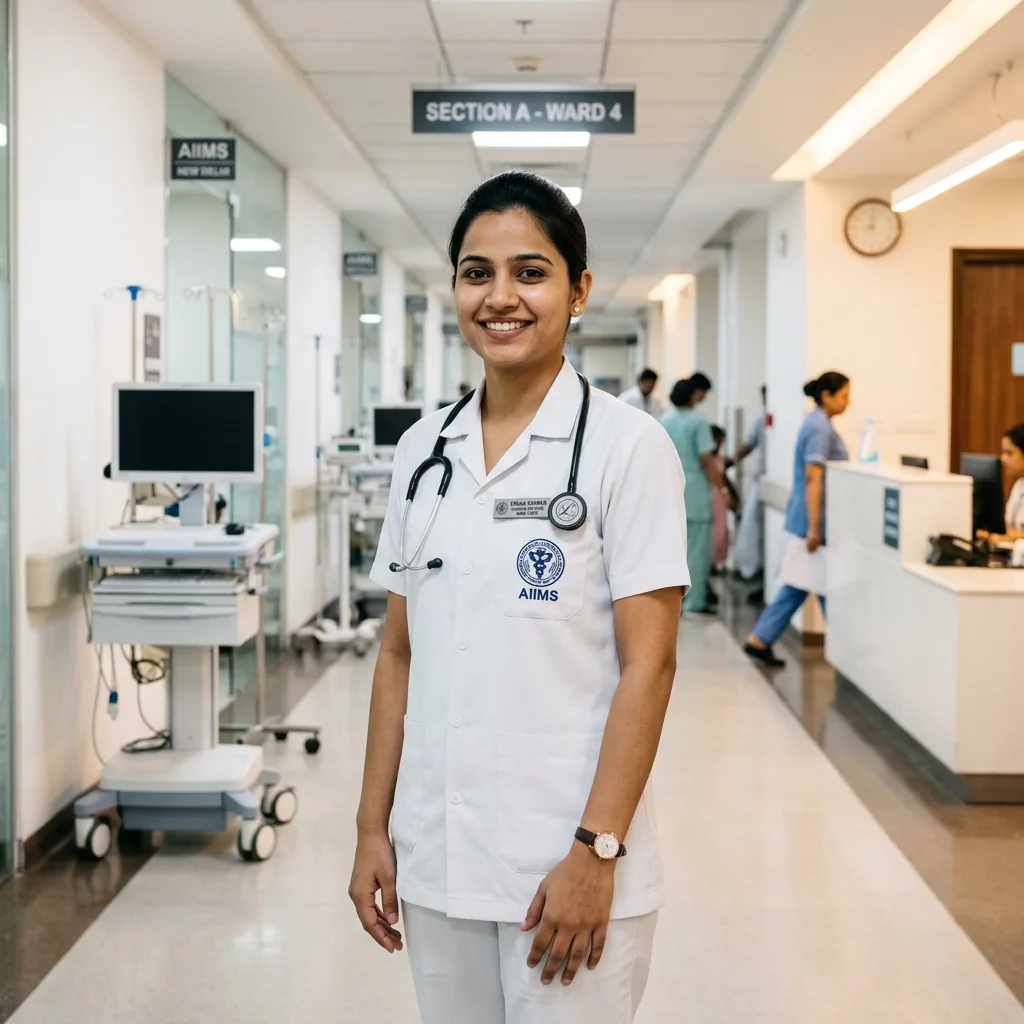
Introduction: Why UPSC CMS Is the Best Career Path for MBBS Graduates
Every year, lakhs of MBBS graduates face the same dilemma: pursue a government job (UPSC CMS), go for postgraduate (MD/MS), join private practice, or take up corporate hospital jobs? In 2026, the answer has become clearer than ever — UPSC CMS offers the best risk-adjusted career outcome for the majority of MBBS graduates.
Here is why:
- Rs.1,10,000-1,30,000 gross salary from Day 1 — more than most private hospital doctors earn in 3-5 years of experience
- Non-Practicing Allowance (NPA) — 25% of basic pay — a unique, doctor-specific allowance worth Rs.14,000+/month extra
- CGHS (Central Government Health Scheme) — premium medical coverage for self and family — doctors rarely need to pay for their own healthcare
- Government quarters near hospital/railway colony — saving Rs.15,000-30,000/month in rent
- No medical negligence suit pressure — government doctors operate under different legal protection compared to private practitioners
And most importantly: the UPSC CMS exam, while competitive, is far more accessible than UPSC CSE or MD/MS entrance. An MBBS graduate with 3-4 months of focused preparation can clear UPSC CMS.
Quick Reference:
- Exam Date: August 2, 2026
- Total Posts: 1,358
- Application: Closed (result/interview phase ongoing)
- Conducting Body: Union Public Service Commission (UPSC)
- Website: upsc.gov.in
- Pay Level: 10 (Basic Rs.56,100)
- Gross Salary: Rs.1,10,000-1,30,000
- In-Hand: Rs.90,000-1,00,000
Part 1: UPSC CMS 2026 — Complete Notification Details
Three Departments Under UPSC CMS:
| Department | Posts | Designation |
|---|---|---|
| Central Health Service (CHS) | 864 | Medical Officer (Grade 1) |
| Indian Railways | 450 | Assistant Divisional Medical Officer (ADMO) |
| Municipal Bodies (NDMC/MCD) | 44 | General Duty Medical Officer (GDMO) |
| Total | 1,358 | — |
Eligibility:
| Criterion | Requirement |
|---|---|
| Qualification | MBBS from recognized university (MCI/NMC recognized) |
| Internship | Completed (or completing by declared date) |
| Age | 32 years maximum (as on prescribed date) |
| Relaxation | SC/ST: 37 years, OBC: 35 years, PwBD: 42 years |
Selection Process:
Stage 1: Written Examination (CBT)
- Paper 1: General Medicine + Paediatrics + Dermatology + Psychiatry — 250 marks
- Paper 2: Surgery + Gynaecology & Obstetrics + ENT + Ophthalmology — 250 marks
- Total: 500 marks
- Duration: 2 hours each paper (4 hours total)
- Pattern: Multiple Choice Questions (MCQ)
- Negative Marking: 1/3 mark per wrong answer
Stage 2: Personality Test (Interview)
- 100 marks
- Final merit = Written (500 marks) + Interview (100 marks) — out of 600 total
Part 2: UPSC CMS Salary — Complete Breakdown Including NPA
The NPA (Non-Practicing Allowance) — Most Important:
Government doctors in India receive a special allowance called NPA (Non-Practicing Allowance) — because they are "not allowed to practice privately while in government service." This compensation is 25% of basic pay.
| Component | Amount |
|---|---|
| Basic Pay (Pay Level 10) | Rs.56,100 |
| NPA (25% of Basic) | Rs.14,025 |
| Dearness Allowance (DA @ 50%+ of Basic+NPA) | Rs.35,000-38,000 |
| HRA — Metro (8%) | Rs.4,488 |
| HRA — Urban (7%) | Rs.3,927 |
| HRA — Rural (6%) | Rs.3,366 |
| Transport Allowance | Rs.3,600-7,200 |
| Other Allowances | Rs.2,000-4,000 |
Gross Salary — City-wise:
| Posting Type | Gross Salary | In-Hand |
|---|---|---|
| Metro (Delhi, Mumbai, Bengaluru) | Rs.1,25,000-1,30,000 | Rs.1,00,000-1,05,000 |
| Urban (State capitals) | Rs.1,15,000-1,20,000 | Rs.93,000-97,000 |
| Semi-urban/Rural | Rs.1,08,000-1,12,000 | Rs.86,000-90,000 |
NPA + Effective CTC Breakdown:
| Component | Annual Value |
|---|---|
| Net In-Hand Salary | Rs.10,80,000-12,60,000 |
| NPS (14% employer contribution) | Rs.1,50,000+ |
| CGHS Medical Coverage (self + family) | Rs.2,00,000+ (equivalent value) |
| Government Quarters (rent saved) | Rs.1,80,000-3,60,000 |
| Transport Allowance (annual) | Rs.43,000-86,000 |
| Total Effective CTC | Rs.16-20 lakh/year |
Part 3: Central Health Service (CHS) — The Best UPSC CMS Department
What Is Central Health Service?
Central Health Service (CHS) is an elite cadre under the Ministry of Health and Family Welfare. CHS doctors work in:
- Central Government Hospitals (CGH, Safdarjung Hospital, RML Hospital in Delhi)
- ESIC hospitals across India
- Central Government dispensaries
- Port Health Organization (airports, seaports)
- Industrial health services
- Health Ministry administrative roles
CHS has approximately 10,000 sanctioned positions — making it the largest employer of UPSC CMS doctors.
CHS Promotion Ladder:
| Level | Designation | Pay Level | Timeline |
|---|---|---|---|
| Entry | Medical Officer Grade 1 | Level 10 (Rs.56,100) | 0 years |
| Promotion 1 | Medical Officer Grade 2 (SAG) | Level 12 (Rs.78,800) | 6-8 years |
| Promotion 2 | Senior Medical Officer (Specialist Grade 3) | Level 13 | 10-12 years |
| Promotion 3 | Chief Medical Officer (Specialist Grade 2) | Level 13A | 15-18 years |
| Top Level | Additional Director General / Director General of Health Services | Level 16-17 | 25-30 years |
CHS Work Profile:
In-patient and out-patient clinical work: Standard government hospital duties — OPD, ward rounds, emergency, on-call duties. Heavy patient load in central government hospitals (CGH).
Public health programs: National Health Mission, immunization drives, disease surveillance. CHS doctors at district and state level manage public health implementation.
Posting flexibility: CHS doctors can be posted across India — Ministry of Health, State Health Directorates (on deputation), international assignments (WHO, UN health programs for senior officers).
Administrative progression: At senior levels, CHS doctors move from purely clinical to administrative/policy roles — advising the government on health policy, managing hospital systems, representing India at international health forums.
Part 4: Railway ADMO — The Coveted Doctor Posting
Why Railway ADMO Is Preferred by Many:
Railway Assistant Divisional Medical Officer (ADMO) is the most sought-after posting among the three UPSC CMS departments. Here is why:
1. Railway Travel Pass: Self + family travel FREE in any class on Indian Railways — anywhere in the country. This single benefit is worth Rs.2-5 lakh/year for a doctor who travels frequently.
2. Railway Colony: Residential accommodation in Railway Colony — clean, well-maintained, subsidized rent. Many Railway colonies have their own schools, hospitals, clubs, and parks — a self-contained township.
3. Railway Hospital: Work in Divisional Railway Hospital or Zonal Railway Hospital — well-equipped, dedicated patient population (Railway employees + family). Much smaller case load than government general hospitals — better work-life balance.
4. Stable Patient Population: Only Railways employees and their families — roughly 12 lakh Railway employees + families = 40-50 lakh patients. Manageable, known population — unlike government general hospitals with unlimited walk-in patients.
5. Railway Canteen: Subsidized food at Railway canteen — meal for Rs.20-30 at the colony.
Railway ADMO Career Path:
| Level | Designation | Timeline |
|---|---|---|
| Entry | ADMO | 0 years |
| Promotion 1 | Divisional Medical Officer (DMO) | 5-8 years |
| Promotion 2 | Senior Divisional Medical Officer (Sr. DMO) | 10-12 years |
| Promotion 3 | Chief Medical Officer (CMO) | 15-18 years |
| Top | Chief Medical Director (CMD) | 25+ years |
Railway CMD is the apex medical position in a Railway zone — typically a SAG (Senior Administrative Grade) officer equivalent.
Railway ADMO Salary Extras:
Same basic + NPA as CHS, but additionally:
- Railway Kit Allowance: Annual allowance for clothing/uniform items
- Sports Allowance: Railways has excellent sports facilities
- Holiday Home: Access to Railway holiday homes at tourist destinations across India at nominal cost
Part 5: NDMC/MCD GDMO — Delhi Posting Advantage
General Duty Medical Officer (NDMC/MCD):
The Municipal bodies — NDMC (New Delhi Municipal Council) and MCD (Municipal Corporation of Delhi) — have 44 GDMO posts under UPSC CMS 2026.
Why NDMC/MCD Is Unique:
Delhi Posting Guaranteed: Unlike CHS or Railway (where posting can be anywhere in India), NDMC/MCD GDMO is posted only in Delhi. For candidates wanting Delhi base, this is ideal.
NDMC Area: NDMC covers the premium central Delhi areas — Lutyens' Delhi, Connaught Place, New Delhi station area. Working in NDMC means serving the most premium zone of India's capital.
Lower Patient Load: NDMC/MCD serve specific municipal areas — patient load is significantly less than central government general hospitals.
Salary Note: NDMC/MCD doctors also get Delhi government allowances on top of basic structure — effectively making Delhi posting's total package slightly higher than equivalent non-metro postings.
Part 6: Government Doctor vs Private Hospital Doctor — Honest Comparison
The most important decision for any MBBS graduate:
| Factor | Government Doctor (UPSC CMS) | Private Hospital Doctor |
|---|---|---|
| Starting Salary | Rs.1,10,000-1,30,000 gross | Rs.40,000-80,000 (junior) |
| 5-Year Salary | Rs.1,25,000-1,40,000 | Rs.80,000-1,50,000 (variable) |
| 10-Year Salary | Rs.1,50,000-1,70,000 (Level 12) | Rs.1,50,000-5,00,000 (variable) |
| Job Security | Lifetime — cannot be dismissed without due process | Contract — can be terminated |
| Private Practice | NOT allowed (hence NPA) | Allowed |
| Medical Negligence Risk | Protected — government doctors rarely face individual suits | High — personal liability |
| Work Hours | 8 hours + on-call (typically 1:3 or 1:4 call) | 10-14 hours + frequent nights |
| Holidays | 8 CL + 15 EL + 10 Restricted Holidays | 7-15 days per year |
| Maternity Leave | 180 days paid | 26 weeks legally but variable |
| Pension | NPS (14% employer) | EPF only (12% employer) |
| Housing | Government quarters or HRA | Market rent |
| Prestige | Very High — "Government Doctor" designation | High but depends on hospital brand |
| Transfer | Yes — every 2-5 years | Company decides posting |
| MD/MS Opportunity | Government Quota PG seats available for in-service doctors | Compete in open market |
The Government Doctor Advantage at Age 35:
A 22-year-old MBBS graduate joins as:
- Path A (UPSC CMS): Rs.1,10,000 gross from Day 1. By 35: Rs.1,40,000+ in Senior MO designation, own government quarter, CGHS, NPS corpus building.
- Path B (Private Junior): Rs.60,000 at 22. By 35: Rs.1,00,000-2,00,000 IF specialized — but enormous uncertainty, no pension, no housing security.
For the top 10% of MBBS graduates who will become very senior specialists — private practice can eventually surpass government. But for the vast majority — government medical career is safer, more stable, and by age 40, comparably compensating.
Part 7: In-Service MD/MS — Government Doctors Get PG Seat Advantage
One of the most powerful but least-known aspects of UPSC CMS career: In-service government doctors get reserved PG medical seats.
How It Works:
Government doctors who have served 3+ years are eligible to apply for In-Service Quota PG seats — seats in MD/MS programs reserved exclusively for government medical officers:
- Most states have 25-50% seats in their government medical colleges reserved for in-service doctors
- Competition is much lower than open NEET PG (lakhs competing vs hundreds of government officers)
- No age barrier — even a 40-year-old government doctor can apply for in-service PG seats
- Full salary continues during PG (government pays you while you study for MD/MS)
This means: Join as government doctor at 22 → work 3-5 years → clear in-service PG → become MD/MS specialist at 30 → salary jumps to Level 12 (Rs.78,800 basic) → total compensation Rs.1,50,000-1,70,000/month as specialist.
This pathway — government service + in-service PG — is arguably the most financially optimal path for an MBBS graduate in India.
Part 8: UPSC CMS 2026 Exam Pattern and Syllabus
Paper 1 — General Medicine + Allied Subjects:
| Subject | Approximate Weightage |
|---|---|
| General Medicine | 50-60 marks |
| Paediatrics | 40-45 marks |
| Dermatology and Venereology | 30-35 marks |
| Psychiatry | 25-30 marks |
| Radiodiagnosis (basic) | 25-30 marks |
| General topics | 20-25 marks |
| Total | 250 marks |
Paper 2 — Surgery + Allied Subjects:
| Subject | Approximate Weightage |
|---|---|
| General Surgery | 55-65 marks |
| Gynaecology and Obstetrics | 55-65 marks |
| ENT (Ear, Nose, Throat) | 30-35 marks |
| Ophthalmology | 30-35 marks |
| Orthopaedics | 30-35 marks |
| Anaesthesia | 20-25 marks |
| Total | 250 marks |
Preparation Strategy (Last 13 Days — August 2 Exam):
Day 1-4 (Revision Sprint — Medicine):
- Revise high-yield Medicine topics: Cardiology (MI management, heart failure), Respiratory (COPD, asthma, pneumonia), Gastroenterology, Neurology (stroke, meningitis), Infectious diseases (malaria, typhoid, dengue — very important for India context)
- Source: Davidson's + Last Recalled UPSC CMS Questions (2019-2024)
Day 5-8 (Revision Sprint — Surgery + OBG):
- Surgery: Thyroid, breast, hernia, appendicitis, bowel obstruction, trauma (ATLS basics)
- OBG: Normal labour, PPH, eclampsia, ANC schedule, common gynaecological conditions
- Source: Bailey & Love (selected chapters) + Mudaliar OBG
Day 9-11 (Revision Sprint — Short Subjects):
- Paediatrics: Neonatal emergencies, vaccination schedule, malnutrition (SAM/MAM)
- ENT: Vertigo, tonsil, sinusitis, nasal polyp
- Ophthalmology: Glaucoma, cataract, diabetic retinopathy, trachoma
- Dermatology: Psoriasis, vitiligo, leprosy, drug reactions
Day 12-13 (Final Revision):
- Previous year questions (UPSC CMS 2019-2024) — 100 questions daily
- Weak area targeted revision
- Light revision only — no new topics
- Sleep 8 hours minimum
Best Books for UPSC CMS:
| Subject | Book | Edition |
|---|---|---|
| Medicine (Main) | Davidson's Principles and Practice of Medicine | Latest |
| Surgery | Bailey and Love's Short Practice of Surgery | Latest |
| OBG | Mudaliar and Menon Clinical OBG | Latest |
| Paediatrics | O.P. Ghai Essential Pediatrics | Latest |
| ENT | Dhingra Diseases of ENT | Latest |
| Ophthalmology | Khurana Comprehensive Ophthalmology | Latest |
| Dermatology | Sacchidanand / Valia IADVL Textbook | Latest |
| Previous Year Questions | UPSC CMS Previous 10 Years — any publisher | Latest available |
Part 9: UPSC CMS vs NEET PG vs UPSC CSE — Which Is Best for MBBS Graduate?
| Factor | UPSC CMS | NEET PG (MD/MS) | UPSC CSE (IAS) |
|---|---|---|---|
| Exam Difficulty | Moderate | High (very competitive) | Extremely High |
| Preparation Time | 3-6 months (MBBS knowledge base) | 1-2 years intense | 3-5 years |
| Starting Salary | Rs.1,10,000-1,30,000 | Rs.50,000-80,000 (junior resident) | Rs.78,000-85,000 |
| Job Start Age | 25-26 years | 28-30 years (after MD 3 years) | 26-30 years |
| Specialization | General Physician role initially | Full specialist | Administrator |
| MD/MS Later | Yes — In-Service Quota (3 years service) | Main purpose | Not applicable |
| Private Practice | Not allowed during service | Allowed during residency | Not applicable |
| Prestige | High (Government Doctor) | Very High (Specialist) | Extremely High (IAS) |
| Work Pressure | Moderate — set shifts | Very High (resident years) | Extremely High |
| Long-term Income | Rs.1,50,000-2,00,000+ (specialist grade) | Rs.3,00,000-10,00,000+ | Rs.1,50,000-2,50,000 |
Recommendation by Profile:
If you are in Top 5% of NEET rank: Clear NEET PG → get a premium MD seat (super-speciality) → combine with government service later. The superspecialist route + government service eventually = highest possible government medical career.
If you are in Top 30% NEET rank: UPSC CMS is optimal. Better income from Day 1 than junior residency stipend. Use In-service quota for MD after 3-5 years in service.
If you missed NEET PG or want immediate stability: UPSC CMS is the clear answer. Start earning Rs.1,10,000 gross while preparing for in-service PG when eligible.
Part 10: Frequently Asked Questions
Q1. Can I prepare for UPSC CMS while doing hospital internship? Yes — many successful UPSC CMS qualifiers prepared during internship posting. Key strategy: Study during night duties (emergency postings have quiet periods), use posting rotations to strengthen corresponding subjects (Medicine posting → revise Medicine, OBG posting → revise OBG). Internship exposure actually helps retention — clinical cases make theory memorable.
Q2. Can I simultaneously appear for NEET PG and UPSC CMS? Yes — both exams are separate and non-exclusive. The syllabi overlap significantly (same MBBS subjects). Many MBBS graduates appear for both NEET PG and UPSC CMS in the same year. If you clear both: choose whichever posting you prefer (government service vs PG seat).
Q3. What happens if I get posted in a rural area under CHS? CHS rural postings come with: (1) Rural practice allowance (extra Rs.2,000-4,000/month) (2) Faster promotion consideration — rural service experience is credited positively (3) Community doctor role — very fulfilling if you enjoy primary healthcare. Rural CHS postings are typically 2-3 years before transfer to urban posting becomes available on request.
Q4. Is there a bond after joining UPSC CMS? Yes — a service bond of 3-5 years minimum service is required. If you resign within bond period, you may need to pay back training and administrative costs (typically Rs.1-3 lakh). After bond period, resignation is allowed with 3 months notice.
Q5. What is the interview (Personality Test) like for UPSC CMS? UPSC CMS Personality Test focuses on: (1) Medical knowledge — clinical scenarios "what would you do if a patient presents with..." (2) Motivation for government service over private practice (3) Social awareness — public health issues in India, recent health ministry schemes (4) Personality assessment — composure, communication, leadership potential. Duration: 20-30 minutes. A candidate who has basic clinical knowledge and clear communication generally clears the interview.
Q6. What is the NPA amount in 2026 for UPSC CMS doctors? NPA (Non-Practicing Allowance) = 25% of basic pay. At Pay Level 10 (Basic Rs.56,100): NPA = Rs.14,025/month. This is in addition to basic pay and all other allowances. Total NPA over a career (30 years): approximately Rs.50-60 lakh in additional earnings — purely because you gave up private practice rights by joining government service.
Q7. Can female MBBS graduates join UPSC CMS without any disadvantage? No disadvantage whatsoever. Female UPSC CMS officers receive: (1) 180-day maternity leave (full pay) (2) CCL 730 days over career (3) Night on-call duty considerations — government hospitals follow rules about pregnant/nursing doctor duty schedules (4) Gender-neutral promotion — based purely on seniority and performance. Many senior CHS officers and Railway CMOs are women.
Conclusion: UPSC CMS 2026 — Your Bridge to a Dignified Government Medical Career
The UPSC CMS is not just an exam — it is the gateway to one of India's most respected and financially secure professional careers. A government doctor in India commands:
- Social respect equivalent to IAS/IPS in many communities
- Financial security that no private hospital contract can replicate
- The ability to actually help patients without the pressure of revenue generation
- In-service PG opportunity — become a specialist while the government pays your salary
- NPA compensation for giving up private practice — nearly Rs.50-60 lakh extra over a career
If you are appearing on August 2, 2026:
- Focus on General Medicine and Surgery — these are the highest-mark subjects
- Previous year questions are your best friend — 40% of UPSC CMS questions repeat in some form
- Don't start new topics in the last week — revision + PYQs only
- Eat well, sleep 8 hours, carry your admit card and original ID
If you missed this cycle (applications closed): Start preparing NOW for UPSC CMS 2027. The 3-4 month preparation window starting September 2026 will put you perfectly on track for next year's examination.
Stay updated with UPSC CMS 2026 result, cut-off, interview schedule, and complete government medical career news at Government Job Result — India's most trusted government career resource.
Disclaimer: Salary figures based on 7th Pay Commission + 2026 DA rates. NPA at 25% of basic as per central government order. UPSC CMS 2026 details from official UPSC notification. Verify all dates and details from upsc.gov.in before making any decisions.
Part 11: Central Health Service — Department-wise Posting Reality
CHS Medical Officers are posted across a wide variety of roles. Understanding what each posting looks like helps you make an informed preference during document verification:
Type A — Central Government Hospital Posting (Delhi/State):
Major central government hospitals where CHS officers are posted include:
- Safdarjung Hospital, Delhi — One of India's largest government hospitals, 1,500+ beds
- Ram Manohar Lohia (RML) Hospital, Delhi — Major referral center for CGHS beneficiaries
- Lady Hardinge Medical College Hospital, Delhi — Women and children focus
- Central Government Health Scheme Dispensaries — Across all major cities, smaller OPD settings
Day-to-day work in Central Government Hospital:
- Morning OPD: 9:00 AM-1:00 PM — 50-100 patients per session (heavy load)
- Ward rounds: 1:00-3:00 PM
- Emergency on-call: 1 night in 3-4 (rotation with team)
- Documentation: Medical certificates, discharge summaries, case records
Challenge: Patient load in central government hospitals can be extremely high. Queue management, limited resources, and high patient expectations require both clinical skill and administrative patience.
Type B — Port Health Organization (PHO):
Port Health Officers serve at international airports and seaports. Functions include:
- Health screening of international travellers
- Disease surveillance and quarantine implementation (COVID-era responsibilities now institutionalized)
- Import/Export health certification
- Yellow fever vaccination centers
- International Health Regulations (IHR) implementation
Posting locations: Indira Gandhi International Airport Delhi, Mumbai (CSI, Nhava Sheva port), Chennai Port, Kolkata Port, Cochin Port, JNPT Navi Mumbai, and all major international airports.
Why it's sought after: PHO posting means working at an international airport — cosmopolitan environment, regulated working hours (shifts), no heavy emergency call pressure, international travel certification authority.
Type C — Industrial Health Organization (IHO):
CHS doctors posted in government-owned industrial establishments serve as Occupational Health specialists:
- Large public sector factories and plants
- BHEL, NTPC, Steel Authority, Ordnance Factories
- Occupational disease monitoring
- Factory first aid and emergency response
Why it's unique: Occupational medicine is an emerging specialty. CHS doctors in IHO can develop expertise in occupational health — a field with growing global demand.
Type D — Central Government Dispensary (CGD):
Smaller OPD settings attached to Central Government offices, ministries, and departments. Serves government employees and their families registered under CGHS.
Work profile: Typical outpatient clinic — seasonal illnesses, chronic disease management (diabetes, hypertension, thyroid), referral to hospitals for specialist care.
WLB advantage: CGD is the best work-life balance posting in CHS — smaller patient load, set hours (9:30 AM-5:30 PM), no emergency call.
Part 12: Railway ADMO — District and Divisional Postings Explained
Indian Railways Medical Organization Structure:
| Level | Designation | Location |
|---|---|---|
| Entry | Assistant Divisional Medical Officer (ADMO) | Divisional Railway Hospital |
| Mid-career | Divisional Medical Officer (DMO) | Divisional Headquarters |
| Senior | Senior DMO / Chief Medical Officer (CMO) | Zonal Headquarters |
| Apex | Chief Medical Director (CMD) | Railway Zone HQ |
Railway Zones and Their Headquarters (For Medical Postings):
| Zone | Headquarters | States Covered |
|---|---|---|
| Central Railway | Mumbai CST | Maharashtra, MP |
| Western Railway | Mumbai Churchgate | Gujarat, Rajasthan, Maharashtra |
| Northern Railway | New Delhi | Delhi, UP, Punjab, HP, J&K |
| North-Eastern Railway | Gorakhpur | UP, Bihar |
| North East Frontier Railway | Guwahati | Assam, Northeast |
| Eastern Railway | Kolkata | West Bengal, Jharkhand |
| South-Eastern Railway | Kolkata | Odisha, WB |
| South Central Railway | Secunderabad | AP, Telangana |
| Southern Railway | Chennai | Tamil Nadu, Kerala, Karnataka |
| South Western Railway | Hubballi | Karnataka |
| East Central Railway | Hajipur | Bihar |
| East Coast Railway | Bhubaneswar | Odisha, AP |
| West Central Railway | Jabalpur | MP |
| North Western Railway | Jaipur | Rajasthan, Gujarat, Haryana |
| South East Central Railway | Bilaspur | Chhattisgarh, MP |
| North Central Railway | Prayagraj | UP |
Preference strategy: Submit Railway zone preference based on your home state. North India candidates typically prefer Northern Railway (Delhi, UP, Punjab) or North Central Railway (Prayagraj, UP). South India candidates prefer Southern Railway or South Western Railway.
Railway Hospital Posting Reality:
Divisional Railway Hospital (50-200 beds):
- Serves Railway employees and family of the division
- OPD + indoor cases + minor surgical procedures
- Emergency on-call approximately 1 in 4 nights
- Moderate patient load — NOT like government general hospital
Railway Colony Living: Railway colonies are self-contained communities with:
- Government quarters (Type C or D for ADMOs — 2-3 bedroom)
- Railway school for children (subsidized fee or free)
- Cooperative store (subsidized grocery)
- Club/sports facilities
- Railway hospital for self (you are both employer and patient simultaneously — excellent care)
- Community social life — all residents are Railway employees/families
Railway free pass benefit (detailed):
- Silver Pass (ADMO level): AC 2-tier travel anywhere in India — unlimited
- Valid for self, spouse, and up to 4 dependent children
- Elderly dependent parents also get travel concession
- Used for annual family vacation, pilgrimages, medical appointments
Annual value calculation: Delhi-Mumbai AC 2-tier = Rs.3,500 × 4 family members × 2 trips = Rs.28,000/year minimum. If you travel more — Rs.50,000-1,00,000+ annual travel saving.
Part 13: CGHS — The Doctor's Own Premium Healthcare Benefit
This is one of the most valuable and least-discussed benefits of joining government service as a doctor:
What CGHS Provides:
CGHS (Central Government Health Scheme) is India's premier government healthcare scheme — available to all central government employees, including UPSC CMS doctors.
Ironic but true: Government doctors who treat patients under CGHS also receive CGHS coverage themselves. A UPSC CMS doctor gets:
| Coverage | Detail |
|---|---|
| OPD Treatment | Free at CGHS dispensary / empanelled hospitals |
| Indoor Treatment | Free hospitalization at CGHS hospitals + reimbursement at private empanelled hospitals |
| Medicines | Free medicines from CGHS pharmacy (extensive list) |
| Specialist Consultation | Referred from CGHS dispensary — free |
| Diagnostic Tests | Blood tests, X-rays, CT, MRI — free at CGHS labs or reimbursed at empanelled labs |
| Surgery | Major and minor surgeries — free or reimbursed |
| Dental | Dental care — limited but covered |
| Family Coverage | Spouse + children + dependent parents |
CGHS Empanelled Hospitals:
CGHS has empanelled hundreds of premier private hospitals across India:
- Apollo, Fortis, Max, Medanta, Manipal, Narayana Health, Columbia Asia
- Cashless treatment at empanelled hospitals (just show CGHS card)
- No pre-authorization needed for emergencies
Annual financial value of CGHS: Rs.2-5 lakh/year (approximate insurance equivalent value for comprehensive family coverage) — but unlike insurance, CGHS has NO premium deduction from salary.
Part 14: Government Doctors and COVID-19 — What the Pandemic Taught Us
The COVID-19 pandemic of 2020-2022 revealed important realities about government vs private medical careers:
Government doctors during COVID:
- Given government-supplied PPE, N95 masks, face shields — private hospital doctors often procured their own
- Risk allowance — government announced special compensation for COVID frontline workers
- No threat of salary cuts or joblessness — government salary continued uninterrupted
- CHS and Railway doctors received National Award for COVID service in many cases
Private hospital doctors during COVID:
- Many corporate hospitals cut salaries by 20-40% during first lockdown (2020)
- Junior resident doctors were most vulnerable — contracts not renewed
- PPE shortage was critical in many private hospitals early in pandemic
The key lesson: In national emergencies (pandemic, war, disaster), government employment provides stability that no private contract can guarantee. A UPSC CMS doctor's security was absolute throughout COVID — salary, housing, equipment.
Part 15: UPSC CMS Preparation — Complete Subject-wise Deep Dive
General Medicine — Highest Weightage (50-60 Marks):
Cardiology (10-15 marks expected):
Key topics:
- Myocardial Infarction: STEMI vs NSTEMI management, TIMI score, thrombolysis criteria
- Heart Failure: Systolic vs diastolic, NYHA classification, ACE inhibitor/ARB/BB/diuretic therapy
- Hypertension: JNC 8 guidelines, specific drug choices for comorbid conditions
- Valvular disease: Mitral stenosis (rheumatic — important in India), mitral regurgitation, aortic stenosis
- Arrhythmias: Atrial fibrillation (most tested) — rate control vs rhythm control, anticoagulation
Respiratory (8-12 marks):
- COPD: GOLD staging, management stepladder (SABA → LABA/ICS → triple therapy)
- Asthma: GINA steps, step-up and step-down
- Pneumonia: CURB-65 score, empirical antibiotics
- Tuberculosis: DOTS regimen, MDR-TB management — very important in Indian context
- Pleural effusion: Transudate vs exudate (Light's criteria)
Gastroenterology (6-8 marks):
- Cirrhosis: Child-Pugh, MELD score, complications (variceal bleed management)
- Hepatitis: HAV vs HBV vs HCV comparison, HBsAg interpretation
- Peptic ulcer: H.pylori triple therapy
- IBD: Crohn's vs ulcerative colitis (MUST KNOW distinction for MCQ)
- Pancreatitis: Ranson's criteria, severity assessment
Infectious Disease — VERY IMPORTANT IN INDIA (10-15 marks):
- Malaria: P.falciparum vs P.vivax, chloroquine resistance, artemisinin combinations
- Dengue: Warning signs, NS1 antigen vs IgM antibody timing
- Typhoid: Widal test interpretation, chloramphenicol vs ceftriaxone
- Leptospirosis: Weil's disease, doxycycline treatment
- Scrub typhus: Orientia tsutsugamushi, eschar, doxycycline treatment
- HIV/AIDS: CD4 count thresholds for opportunistic infections, ART initiation
Surgery — Second Highest Weightage (55-65 Marks):
Thyroid (8-10 marks):
- Graves' disease: TSH, T3, T4 patterns, treatment (antithyroid drugs, radioiodine, surgery)
- Thyroid cancer types: Papillary (most common), Follicular, Medullary (associated with MEN), Anaplastic
- Solitary thyroid nodule workup
Breast (8-10 marks):
- Breast cancer screening: FNAC, core biopsy, mammography
- TNM staging basics
- Management: Lumpectomy vs mastectomy, sentinel lymph node biopsy
- Fibroadenoma vs cyst vs cancer — clinical differentiation
Abdominal Surgery (10-15 marks):
- Appendicitis: Alvarado score, open vs laparoscopic
- Intestinal obstruction: Small bowel vs large bowel differences, clinical features, management
- Hernia types: Inguinal (direct vs indirect), femoral, umbilical — anatomy MCQs
- Gastrointestinal cancer: Gastric cancer (Virchow's node, Sister Mary Joseph nodule)
Trauma (5-8 marks):
- ATLS primary survey: ABCDE
- Head injury: GCS scoring, epidural vs subdural hematoma (CT differences)
- Abdominal trauma: Focused Assessment with Sonography in Trauma (FAST)
OBG — High Marks, Well-defined Syllabus (55-65 Marks):
Normal Obstetrics (10-15 marks):
- ANC schedule: Visits, investigations, vaccines (TT, Td, COVID)
- Physiological changes in pregnancy: Blood volume (increases 50%), cardiac output
- Labour: Stages, partograph, fetal monitoring
High-risk Obstetrics (15-20 marks — most tested):
- PIH/Preeclampsia/Eclampsia: Magnesium sulfate protocol (MUST KNOW doses)
- Antepartum Hemorrhage: Placenta previa vs abruption — clinical differences
- PPH (Postpartum Hemorrhage): 4 T's, oxytocin, Bakri balloon, B-Lynch suture
- PROM/PPROM: Management based on gestational age
Gynaecology (15-20 marks):
- PCOS: Diagnosis (Rotterdam criteria), management
- Fibroid: Classification, myomectomy vs hysterectomy
- Ovarian cysts: Functional vs neoplastic, management
- Cervical cancer: Pap smear, CIN grading, LEEP vs conization
- Endometriosis: "Chocolate cyst," laparoscopy gold standard
Part 16: Lifestyle as a Government Doctor — A Week in the Life
Week Schedule — CHS Medical Officer (Central Government Dispensary):
Monday:
- 9:30 AM: Report to dispensary
- 10:00 AM-1:00 PM: OPD — 30-50 patients. Mostly chronic disease management (diabetes, hypertension, thyroid), seasonal colds, referral letters
- 1:00-2:00 PM: Lunch — typically 1 hour
- 2:00-5:00 PM: Administrative work — medical certificates, insurance claims processing, health camp planning
- 5:30 PM: Leave for home
Tuesday (similar pattern) + Health camp at nearby government school
Wednesday:
- Specialist OPD day — CGHS beneficiaries coming for specialist consultation at empanelled hospital nearby. You prepare referral notes.
- Late morning: Follow-up cases from previous week
Thursday:
- Monthly health audit — reviewing vaccination records, chronic disease register
- Evening: Staff welfare committee meeting
Friday:
- Regular OPD
- Pharmacy stock review — ensure medicines are adequately stocked
Saturday: Second and fourth Saturdays off. First and third Saturdays: 9:30 AM-1:00 PM OPD only.
Sunday: Off.
Overall assessment: CGD (Central Government Dispensary) posting is the most comfortable, lowest-pressure medical government job available. The clinical work is routine primary care — good for doctors who prioritize life outside work.
Week Schedule — Railway ADMO (Divisional Hospital):
Monday:
- 8:30 AM: Morning rounds — indoor patients
- 10:00 AM-1:00 PM: OPD
- 2:00-4:00 PM: Procedures, follow-ups
- Every 3rd/4th night: On-call duty at hospital (emergency handling)
Tuesday-Friday: Similar rotation
Saturday: Alternate Saturdays working (1 in 2)
On-call nights: Railway hospital emergency — fractures (Railway accidents happen — work-related injuries), cardiac emergencies, obstetric emergencies. More clinically active than CGD but less hectic than large government general hospital.
Part 17: Financial Planning for UPSC CMS Doctors
Month 1 Salary (CHS Medical Officer, Urban Posting — Rs.95,000 In-Hand):
| Allocation | Amount | Purpose |
|---|---|---|
| Family contribution | Rs.10,000-15,000 | Helping parents — important |
| Rent (if govt quarter not yet allotted) | Rs.0-15,000 | HRA covers much of this |
| Food and expenses | Rs.10,000-15,000 | Groceries, transport |
| EMI (education loan, if any) | Rs.5,000-20,000 | Medical college loan repayment |
| SIP — Mutual Fund | Rs.15,000-20,000 | Long-term wealth building |
| NPS Additional (Tier 2) | Rs.3,000-5,000 | Extra pension corpus |
| Emergency fund | Rs.5,000 | Until 6-month buffer built |
| Personal spending | Rs.5,000-10,000 | Clothing, entertainment |
MBBS Education Loan Repayment Strategy:
Many MBBS graduates have education loans of Rs.10-20 lakh from private medical colleges. On joining UPSC CMS:
- Income Rs.95,000+ in-hand
- Use Rs.15,000-20,000/month for loan prepayment
- Education loan fully repaid in 3-4 years
- After loan clearance: redirect same amount to SIP
SIP at Rs.20,000/month from age 25:
- 30 years at 12% average return = Rs.6.5 crore at retirement
- Plus NPS corpus of Rs.80-100 lakh
- Plus government quarters (no housing cost ever)
Government doctor at 55 years = Rs.7+ crore net worth + pension — financial freedom achieved with certainty.
Part 18: UPSC CMS Cut-off Analysis — Previous Years
Understanding historical cut-offs helps set realistic preparation targets:
UPSC CMS Previous Year Cut-offs (Written Exam — Out of 500):
| Year | General Category | OBC | SC | ST |
|---|---|---|---|---|
| 2024 | 283-295 | 268-278 | 248-260 | 228-242 |
| 2023 | 278-290 | 262-272 | 243-255 | 222-238 |
| 2022 | 270-282 | 255-267 | 237-252 | 218-232 |
| 2021 | 265-278 | 249-262 | 232-248 | 215-228 |
| 2020 | 262-275 | 247-260 | 229-245 | 210-225 |
Key insight: General category cut-off has been trending upward. Around 280-295 marks out of 500 is the target zone for safe selection. That means 56-59% overall accuracy — very achievable with 3-4 months of focused revision for an MBBS graduate.
Mark Distribution Strategy (For Target 295/500):
| Paper | Target Score | How to Achieve |
|---|---|---|
| Paper 1 (250 marks) | 145-155 | Focus on Medicine + Paediatrics — highest yield |
| Paper 2 (250 marks) | 145-155 | Focus on Surgery + OBG — very structured topics |
| Total Target | 290-310 | Above cut-off by safe margin |
MCQ strategy:
- Attempt only questions you are at least 70% confident about
- Leave highly uncertain questions blank (1/3 negative marking)
- Never guess randomly — negative marking kills marginal candidates
- Clinical vignette questions: Read case carefully, identify the ONE most likely diagnosis/management
Part 19: After UPSC CMS — First 30 Days in Service
Joining Formalities:
Day 1 — Reporting to Ministry of Health:
- Report to Dte. General of Health Services (DGHS) office, Nirman Bhawan, New Delhi
- Submit original certificates, produce documents
- Medical fitness examination
- Service agreement signing
Week 1 — Administrative:
- Allotment to department (CHS/Railway/NDMC)
- Posting order received — your first posting location decided
- Service book opened — official government service record begins
- NPS account opened — employer contributions start from Day 1
Week 2-3 — Joining at Posting:
- Travel to posting location (LTC/joining travel allowance paid)
- Join at designated hospital or dispensary
- Relieving/handing-over from previous incumbent
- Introduction to hospital staff, systems, patient population
Week 4 — First Duty:
- First independent OPD session
- First on-call night
- First government medical certificate issued
First Salary: Credited in bank account approximately 45-60 days after joining date (government process takes time for first salary). Subsequent months: punctual monthly credits.
Government Doctor's Identity Change:
Joining UPSC CMS is not just a job change — it is an identity shift. You go from "MBBS intern" to "Government Medical Officer" — a title that carries authority in every government interaction:
- Medical certificates you issue are legally valid for all government purposes
- Your opinion on a patient's fitness carries legal weight
- You become a gazetted government officer — your signature is legally equivalent to a stamp of authority
Part 20: UPSC CMS vs Private Medical Practice — The Long-Term View
For MBBS graduates contemplating whether to join government service or pursue private practice:
Private Practice Reality in 2026:
Urban private practice competition:
- Every major Indian city now has dozens of multi-specialty private hospitals, hundreds of clinics
- Patient trust has shifted — patients prefer hospitals with technology (MRI, ICU) over standalone practitioners
- Setting up a private clinic: Rs.20-40 lakh investment in equipment, premises, staff
- Break-even time: 2-5 years minimum
- Income uncertainty: First 3-5 years of private practice — extremely variable Rs.20,000-80,000/month
Rural private practice:
- Less competition — but lower paying capacity of patients
- Infrastructure challenges
- Frequent non-payment issues in rural India
Government service reality:
- Day 1: Rs.95,000+ in-hand — no investment required
- Day 1: Legal protection of government employment
- Day 1: CGHS for your family
- Day 5: Government quarters application
10-year comparison:
| Year | Government Doctor (CMS) In-Hand | Private Doctor (Urban Solo Practice) |
|---|---|---|
| Year 1 | Rs.95,000 | Rs.30,000-50,000 |
| Year 3 | Rs.1,00,000 | Rs.50,000-80,000 |
| Year 5 | Rs.1,10,000 | Rs.80,000-1,50,000 |
| Year 10 | Rs.1,30,000-1,50,000 (Senior MO) | Rs.1,50,000-5,00,000 (if established) |
| Year 20 | Rs.1,80,000-2,00,000 (CMO) | Rs.3,00,000-15,00,000 (specialist established) |
Conclusion: For top 5-10% of MBBS graduates who have exceptional clinical/business skills — private specialist practice can eventually exceed government income. For the remaining 90% — government service provides better, more certain financial outcomes in the critical 25-40 age range.
The hybrid strategy: Join UPSC CMS → get stable income and housing → pursue In-Service MD/MS at 28-30 → become specialist while in government → move to teaching/research role at senior level (Professor-equivalent in CHS senior grade).
Extended FAQ (Part 2)
Q8. Does UPSC CMS doctor rank affect which department they get? Yes — your rank in the final merit list (written + interview combined) determines your preference allocation. Higher rankers get first choice of department. CHS and Railway ADMO are more popular (CHS — more posts, Railway — more perks). NDMC/MCD (44 posts) fills up quickly for those wanting Delhi posting. Low rankers may not get first choice — but all posts are good career opportunities.
Q9. What is the UPSC CMS interview preparation strategy? UPSC CMS interview (Personality Test) focuses on: (1) Why government service over private practice — have a genuine, thoughtful answer (2) Current public health scenario — National Health Mission, Ayushman Bharat PM-JAY, NPHCE (National Programme for Health Care of the Elderly) (3) Your medical interests — what specialty you prefer, what you would want to contribute (4) General current affairs — major news, India's health indicators (MMR, IMR, Life Expectancy) (5) Department preference — be ready to explain why you prefer CHS/Railway/NDMC. Board members appreciate genuine motivation and clear career thinking.
Q10. Can I do private consultations on weekends as a CMS officer? No — this is the core restriction. CMS officers receive NPA (Non-Practicing Allowance) specifically because they surrender the right to private practice during their tenure. Accepting consultancy fees, running a private clinic, or doing private surgeries while in government service is a conduct violation. However: Academic writing (books, articles), medical education (lecturing at medical college as visiting faculty — unpaid or with prior permission), medico-legal opinion — these may be permitted with departmental approval.
Q11. What is the service bond for UPSC CMS? Can I resign easily? UPSC CMS has a service bond of 3-5 years. If you resign before completing the bond period: (1) You must repay training costs and administrative expenses (typically Rs.1-3 lakh) (2) After bond period: Resignation with 3 months notice is straightforward. In practice, very few UPSC CMS officers resign — the security, salary, and benefits make it one of the most retention-friendly government careers. The typical reason for leaving: Getting an MD/MS through NEET PG (resigning to join full-time PG program) or getting a better UPSC CSE rank (joining IAS/IPS).
Q12. Is UPSC CMS 2026 the last chance or will there be 2027 exam? UPSC CMS is conducted annually — every year UPSC notifies this examination. UPSC CMS 2027 notification will be released approximately February-March 2027. If you missed the 2026 cycle (applications closed), begin preparation now for 2027. The syllabus remains consistent year to year. Start now → appear in 2027 → join service by 2028.
Q13. How does UPSC CMS medical officer differ from state government doctor? UPSC CMS → Central government service (higher pay, CGHS, all-India transfer). State government doctor → State public service commission (BPSC/RPSC medical officer) → Lower basic pay, state-level benefits, posting mostly within state. Key differences: Central government (7th Pay Commission Level 10 = Rs.56,100 basic) vs State government (varies — Level 7-9 = Rs.44,900-53,100 basic). CGHS (central) vs State health scheme (varies by state). Transfer (all-India for central) vs (state-level for state government doctor).
Conclusion (Final): Be the Doctor Who Serves the Nation
India has approximately 1.4 billion people and needs more than 600,000 additional doctors according to WHO norms. The government medical ecosystem — from AIIMS to district hospitals to Railway dispensaries — is the backbone of healthcare for the poorest 80% of Indians.
When you join as a UPSC CMS Medical Officer, you are not just taking a government job. You are:
- Providing dignity and healthcare to government employees and their families
- Serving as a Port Health Officer protecting India from international disease threats
- Managing Railway medical emergencies that save lives at accident sites
- Prescribing and counselling patients who cannot afford premium private hospitals
The Rs.1,10,000-1,30,000 salary, CGHS, free Railway pass, and government quarters are the compensation. The purpose — that is what makes UPSC CMS one of India's most meaningful careers.
Immediate Action Plan:
- Appearing August 2: Revision only — PYQs + high-yield topics. Sleep well July 31-August 1.
- Missed 2026: Begin systematic preparation September 2026 → Target UPSC CMS 2027
- Currently interning: Start noting clinical cases relevant to exam — experience + theory = power combination
Stay updated with UPSC CMS 2026 exam date, result, cut-off, interview schedule, and all government medical career news at Government Job Result — India's most trusted government career resource.
Disclaimer: Salary based on 7th Pay Commission + DA 2026. NPA at 25% of basic per standing central government order. UPSC CMS vacancy data from official UPSC notification. Cut-off ranges are indicative based on historical patterns — actual 2026 cut-off may vary. All exam dates — verify from upsc.gov.in.