Introduction: Why CTET & TET are Your Gateway to Teaching Career
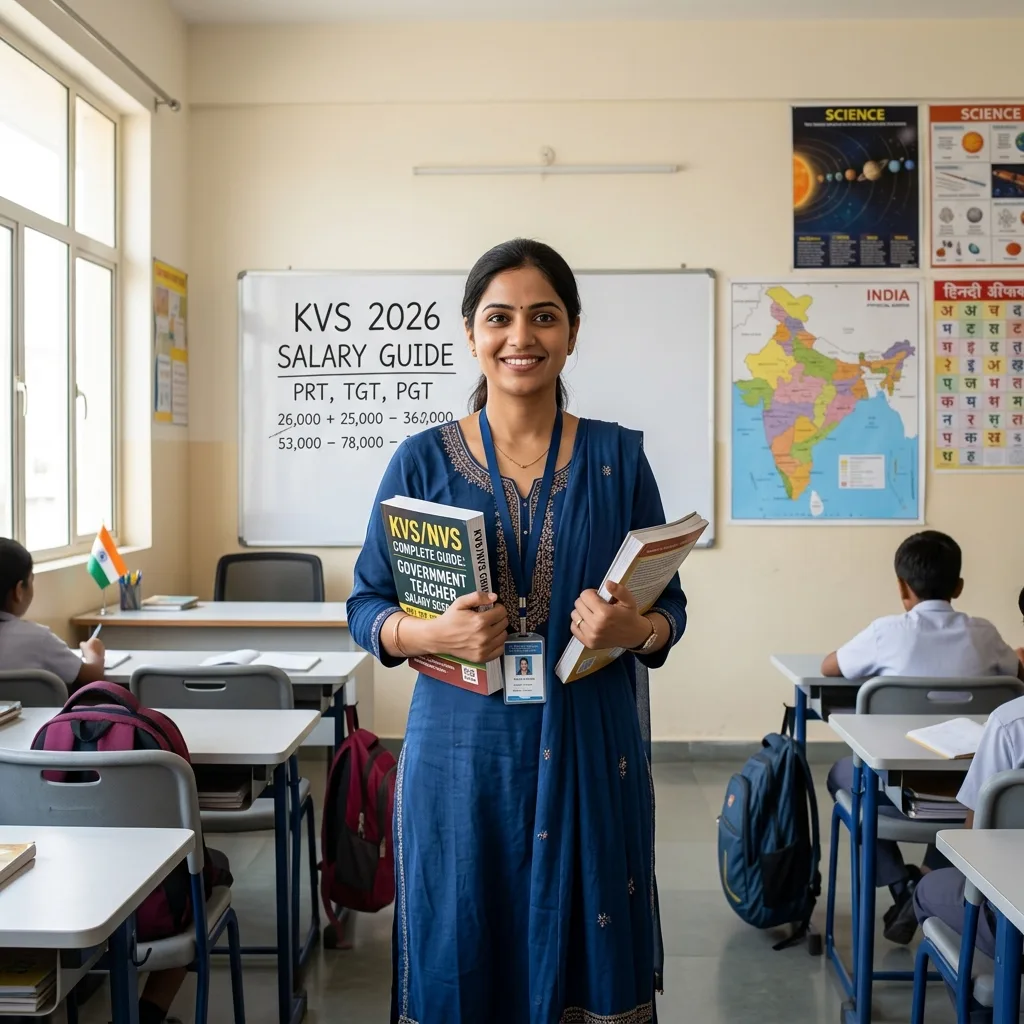
The CTET 2026 (Central Teacher Eligibility Test) and State TETs are mandatory eligibility tests for becoming a government teacher in India. Conducted by CBSE and respective state boards, these exams qualify candidates to teach in Classes I-VIII in government schools. With over 30 lakh candidates appearing annually and teaching being one of the most respected professions, CTET & TET offer stable career opportunities with good salary and benefits.
What Makes Teaching Career Special?
- Job Security: Permanent government position
- Attractive Salary: ₹35,000 - ₹1,00,000/month
- Work-Life Balance: Fixed hours, holidays, vacations
- Social Respect: Honored profession in society
- Pension Benefits: Secure retirement
- Career Growth: Regular promotions and increments
- Noble Profession: Shape future generations
CTET & TET 2026 Key Statistics
| Parameter | Details |
|---|---|
| Total Applicants (CTET) | 30+ Lakh |
| Total Applicants (State TETs) | 50+ Lakh |
| Qualifying Marks (General) | 60% (90/150) |
| Qualifying Marks (SC/ST) | 55% (82.5/150) |
| Validity | Lifetime (from 2021) |
| Success Rate | 5-7% |
CTET & TET 2026 Important Dates
CTET 2026
| Event | Expected Date |
|---|---|
| Notification | June 2026 |
| Registration | June-July 2026 |
| Exam Date | August 2026 |
| Answer Key | August 2026 |
| Result | September 2026 |
State TETs 2026
Varies by state - Check respective state board websites
CTET & TET 2026 Eligibility Criteria
Educational Qualification
For Primary Level (Classes I-V):
- Senior Secondary (12th) with 50% marks + 2-year Diploma in Elementary Education (D.El.Ed)
- OR Senior Secondary with 50% + 4-year B.El.Ed
- OR Senior Secondary with 50% + 2-year Diploma in Education (Special Education)
- OR Graduation + 2-year Diploma in Elementary Education
For Elementary Level (Classes VI-VIII):
- Graduation with 50% marks + 2-year B.Ed
- OR Graduation with 45% + B.Ed (as per NCTE norms)
- OR Senior Secondary with 50% + 4-year B.A/B.Sc.Ed or B.A.Ed/B.Sc.Ed
- OR Senior Secondary with 50% + 4-year B.El.Ed
- OR Graduation with 50% + 1-year B.Ed (Special Education)
Age Limit
No age limit for CTET & TET
Number of Attempts
No limit on attempts
CTET & TET 2026 Exam Pattern
Paper-I (Classes I-V)
Duration: 2.5 hours (150 minutes)
Total Questions: 150 MCQs
Total Marks: 150
Negative Marking: No
Section-wise Distribution
| Section | Questions | Marks |
|---|---|---|
| Child Development & Pedagogy | 30 | 30 |
| Language-I (Compulsory) | 30 | 30 |
| Language-II (Compulsory) | 30 | 30 |
| Mathematics | 30 | 30 |
| Environmental Studies (EVS) | 30 | 30 |
| Total | 150 | 150 |
Paper-II (Classes VI-VIII)
Duration: 2.5 hours (150 minutes)
Total Questions: 150 MCQs
Total Marks: 150
Negative Marking: No
Section-wise Distribution
| Section | Questions | Marks |
|---|---|---|
| Child Development & Pedagogy | 30 | 30 |
| Language-I (Compulsory) | 30 | 30 |
| Language-II (Compulsory) | 30 | 30 |
| Mathematics & Science | 60 | 60 |
| OR Social Studies/Social Science | 60 | 60 |
| Total | 150 | 150 |
Note: Candidates can appear for both Paper-I and Paper-II
CTET & TET 2026 Complete Syllabus
Section 1: Child Development & Pedagogy (30 Marks)
Child Development (Primary):
- Concept of development and its relationship with learning
- Principles of child development
- Influence of heredity and environment
- Socialization processes
- Piaget, Kohlberg, Vygotsky theories
- Child-centered and progressive education
- Critical perspective of construct of Intelligence
- Multi-dimensional Intelligence
- Language and thought
- Gender as social construct
- Individual differences
- Understanding differences based on diversity
- Language, caste, gender, community, religion
- Distinction between assessment for learning and assessment of learning
- School-based assessment
- Continuous and comprehensive evaluation
- Learner's perspective
- Preparing appropriate questions for assessing readiness levels
- Classroom learning climate
- Understanding learners' difficulties, errors, and misconceptions
Inclusive Education:
- Addressing learners from diverse backgrounds
- Addressing children with learning difficulties
- Addressing the talented, creative, specially-abled learners
Learning and Pedagogy:
- How children think and learn
- How and why children fail to achieve success in school performance
- Basic processes of teaching and learning
- Children's strategies of learning
- Learning as a social activity
- Social context of learning
- Child as a problem solver and scientific investigator
- Alternative conceptions of learning in children
- Cognition and emotions
- Motivation and learning
- Factors contributing to learning
Section 2: Language-I & II (30 Marks Each)
Language Comprehension:
- Unseen passages (prose or poem)
- Comprehension questions
- Inference
- Grammar
- Verbal ability
Pedagogy of Language Development:
- Learning and acquisition
- Principles of language teaching
- Role of listening and speaking
- Function of language
- Critical perspective on role of grammar in learning a language
- Challenges of teaching language in diverse classroom
- Language skills
- Evaluating language comprehension and proficiency
- Teaching-learning materials
- Remedial teaching
Section 3: Mathematics (30 Marks - Paper-I)
Content (15 Marks):
- Geometry
- Shapes and spatial understanding
- Solids around us
- Numbers
- Addition and subtraction
- Multiplication
- Division
- Measurement
- Weight
- Time
- Volume
- Data handling
- Patterns
- Money
Pedagogical Issues (15 Marks):
- Nature of mathematics/logical thinking
- Curriculum place of mathematics
- Language of mathematics
- Community mathematics
- Evaluation through formal and informal methods
- Problems of teaching
- Error analysis and related aspects of learning and teaching
- Diagnostic and remedial teaching
Section 4: Environmental Studies (30 Marks - Paper-I)
Content (15 Marks):
- Family and friends
- Food
- Shelter
- Water
- Travel
- Things we make and do
Pedagogical Issues (15 Marks):
- Concept and scope of EVS
- Significance of EVS, integrated EVS
- Environmental studies and environmental education
- Learning principles
- Scope and relation to science and social science
- Approaches of presenting concepts
- Activities
- Experimentation/practical work
- Discussion
- CCE
- Teaching material/aids
- Problems
Section 5: Mathematics & Science (60 Marks - Paper-II)
Mathematics (30 Marks):
Content (20 Marks):
- Number system
- Algebra
- Geometry
- Mensuration
- Data handling
Pedagogical Issues (10 Marks):
- Nature of mathematics
- Mathematics in curriculum
- Language of mathematics
- Evaluation
- Remedial teaching
- Teaching problems
Science (30 Marks):
Content (20 Marks):
- Food
- Materials
- The world of living
- Moving things, people and ideas
- How things work
- Natural phenomena
- Natural resources
Pedagogical Issues (10 Marks):
- Nature and structure of science
- Science in curriculum
- Science in everyday life
- Evaluation
- Problems of teaching
- Remedial teaching
Section 6: Social Studies/Social Science (60 Marks - Paper-II)
Content (40 Marks):
- History
- Geography
- Social and political life
- Pedagogy
Pedagogical Issues (20 Marks):
- Concept and nature of social science
- Classroom processes, activities and discourse
- Developing critical thinking
- Enquiry/empirical evidence
- Problems of teaching social science
- Sources (primary and secondary)
- Projects and activities
- Evaluation
Proven 3-Month Preparation Strategy
Month 1: Foundation Building
Daily Schedule (6-8 hours):
- Child Development & Pedagogy: 2 hours
- Language-I & II: 2 hours
- Mathematics/EVS/Science/Social Studies: 3 hours
- Revision: 1 hour
Weekly Tasks:
- Complete NCERT (Class 1-8)
- Solve 500+ questions
- Make notes
- Take weekly test
Month 2: Advanced Preparation
Daily Schedule (8-10 hours):
- Mock Test: 2.5 hours
- Analysis: 2 hours
- Subject Practice: 4 hours
- Revision: 1.5 hours
Weekly Tasks:
- Attempt 3-4 mocks
- Solve 1000+ questions
- Revise complete syllabus
- Focus on weak areas
Month 3: Intensive Practice
Daily Schedule (10-12 hours):
- Morning Mock: 2.5 hours
- Analysis: 2 hours
- Weak Topics: 4 hours
- Evening Mock: 2.5 hours
- Revision: 1 hour
Target Scores:
- CDP: 24+ marks
- Language-I: 24+ marks
- Language-II: 24+ marks
- Mathematics/EVS: 24+ marks
- Total: 96+ marks (64%)
Subject-wise Preparation Strategy
Child Development & Pedagogy Strategy
Preparation:
- Understand theories (Piaget, Vygotsky, Kohlberg)
- Learn teaching methods
- Practice previous year questions
- Focus on inclusive education
Target: 24-27 marks
Language Strategy
Preparation:
- Practice comprehension passages
- Learn grammar rules
- Build vocabulary
- Understand pedagogy
Target: 24-27 marks (each language)
Mathematics Strategy
Preparation:
- Master NCERT (Class 1-8)
- Practice all concepts
- Learn pedagogy
- Solve previous year questions
Target: 24-27 marks
EVS Strategy
Preparation:
- Read NCERT EVS (Class 3-5)
- Understand concepts
- Learn pedagogy
- Practice questions
Target: 24-27 marks
Best Books for CTET & TET 2026
Child Development & Pedagogy
- Child Development & Pedagogy - Arihant ⭐⭐⭐⭐⭐
- CDP - Himanshi Singh ⭐⭐⭐⭐
- Psychology - NCERT Class 11 ⭐⭐⭐⭐
Languages
- NCERT Hindi/English (Class 1-8) ⭐⭐⭐⭐⭐
- Language Pedagogy - Arihant ⭐⭐⭐⭐
Mathematics
- NCERT Mathematics (Class 1-8) ⭐⭐⭐⭐⭐
- Mathematics & Pedagogy - Arihant ⭐⭐⭐⭐⭐
EVS
- NCERT EVS (Class 3-5) ⭐⭐⭐⭐⭐
- EVS & Pedagogy - Arihant ⭐⭐⭐⭐
Science & Social Studies
- NCERT Science (Class 6-8) ⭐⭐⭐⭐⭐
- NCERT Social Science (Class 6-8) ⭐⭐⭐⭐⭐
Mock Test Strategy
When to Start: Month 2 onwards
Frequency:
- Month 2: 3-4 tests per week
- Month 3: 1 test daily
Analysis:
- Spend 2 hours analyzing
- Identify weak areas
- Revise concepts
- Maintain error log
Target:
- Attempt 50+ mocks
- Achieve consistent 90+ marks
Teaching Job Opportunities
Central Government Schools
KVS (Kendriya Vidyalaya Sangathan):
- Salary: ₹44,900 - ₹1,42,400/month
- PGT, TGT, PRT positions
NVS (Navodaya Vidyalaya Samiti):
- Salary: ₹44,900 - ₹1,42,400/month
- TGT, PRT positions
DSSSB (Delhi Schools):
- Salary: ₹35,400 - ₹1,12,400/month
- PGT, TGT, PRT positions
State Government Schools
Varies by state:
- Salary: ₹25,000 - ₹80,000/month
- Primary, Upper Primary, Secondary teachers
Private Schools
CBSE/ICSE Schools:
- Salary: ₹20,000 - ₹60,000/month
- CTET mandatory for many schools
Career Progression
Primary Teacher (PRT):
- Entry: ₹35,000/month
- 5 years: ₹45,000/month
- 10 years: ₹55,000/month
Trained Graduate Teacher (TGT):
- Entry: ₹44,900/month
- 5 years: ₹55,000/month
- 10 years: ₹70,000/month
Post Graduate Teacher (PGT):
- Entry: ₹47,600/month
- 5 years: ₹60,000/month
- 10 years: ₹80,000/month
Principal:
- Salary: ₹1,00,000 - ₹1,50,000/month
Frequently Asked Questions
Q1: Is CTET mandatory for teaching? A: Yes, for government schools (Classes I-VIII). Private schools may also require.
Q2: What is the validity of CTET? A: Lifetime (from 2021 onwards).
Q3: Can I appear for both Paper-I and Paper-II? A: Yes, you can appear for both in same sitting.
Q4: Is there negative marking? A: No, there is no negative marking.
Q5: What is qualifying marks? A: 60% for General (90/150), 55% for SC/ST (82.5/150).
Q6: Can I teach in private schools with CTET? A: Yes, many private schools prefer CTET qualified teachers.
Q7: Is NCERT enough for CTET? A: Yes, NCERT (Class 1-8) is sufficient for content. Pedagogy needs additional preparation.
Q8: How many times can I attempt CTET? A: No limit on attempts.
Q9: Can I teach in any state with CTET? A: CTET is valid for central government schools across India. For state schools, state TET may be required.
Q10: What after CTET? A: Apply for teaching jobs in KVS, NVS, DSSSB, and other government schools.
Success Stories
Topper 1: Priya Sharma (CTET 2023 - 148/150)
Strategy:
- 3 months preparation
- NCERT focus
- 60+ mock tests
- Strong in CDP
Key Advice: "NCERT is the key. Read it thoroughly. Practice mock tests regularly. Focus on pedagogy."
Important Resources
Official Website:
- CTET: https://ctet.nic.in/
Free Resources:
- NCERT PDFs
- Previous Year Papers
- YouTube Channels
All the Best for CTET & TET 2026!
Shape the future, become a teacher!
Last Updated: January 29, 2026